5x7 vs 6x9 Exercise Mat: How to Pick the Right Size for Your Space
One of the most common questions in our inbox is which Swankymat size to choose. The Oversized 5x7 and Oversized 6x9 share the same construction. The difference between them comes down to how the mat lives in the room and the practice it supports. Here is what we have learned from customers who own each.
The Two Oversized Sizes
The Oversized 5x7 measures 60 by 84 inches. The Oversized 6x9 measures 72 by 108 inches. Both are single-piece mats with no seams or tile lines. Both sit at 6mm of non-toxic, high-density foam that gives supportive cushion, with a waterproof, wipe-clean surface and Greenguard Gold certified inks. Construction and material are identical. Size is the variable.
Swankymat also offers a third option, the rollable Studio Mat, sized at 26 by 71 inches in the traditional studio-class shape for portable use.
What the 5x7 Is Built For
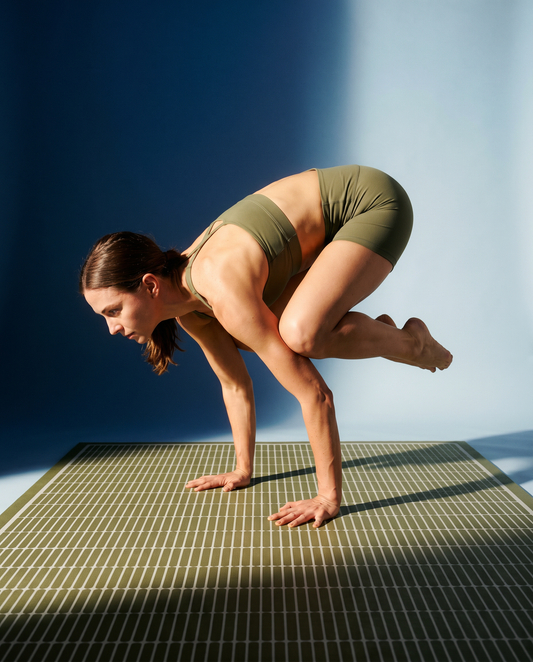
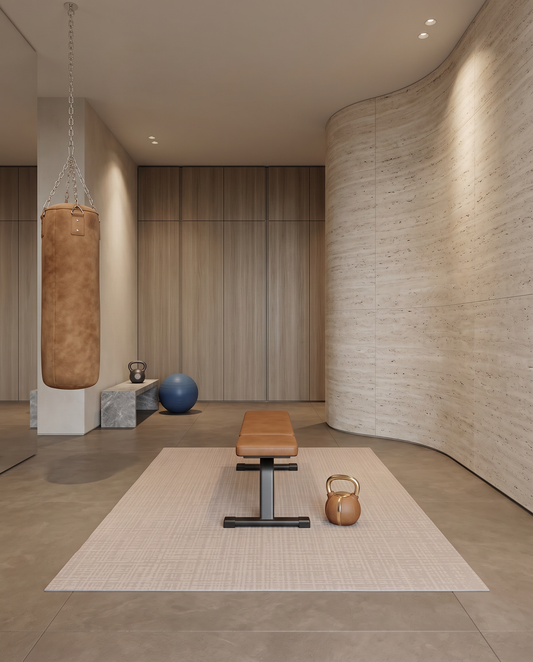
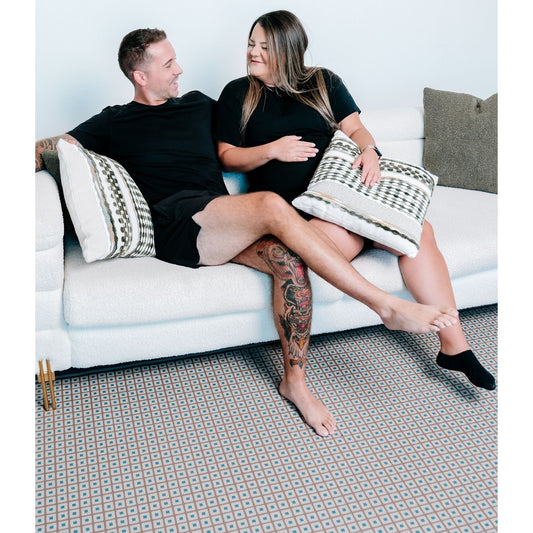
The 5x7 sits comfortably in defined zones. Solo yoga, mat Pilates, mobility work, daily stretching, strength sequences that stay close to center. It fits naturally under a 72-inch loveseat, beside a sectional, in a bedroom corner, or as the surface that anchors a nursery zone. Most single-person yoga flows live inside a 68 by 24 inch footprint, and the 5x7 gives meaningful clearance on all sides.
It is the right size when the practice is yours alone and the space is proportioned for one person at a time. Customers who choose the 5x7 typically have a specific spot for it and use it the same way every day. The smaller footprint reads as intentional in a smaller room rather than overwhelming the surrounding furniture.
What the 6x9 Is Built For
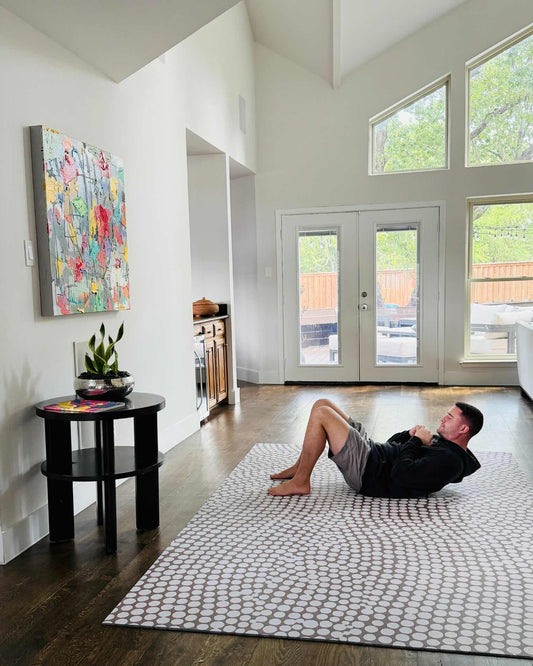
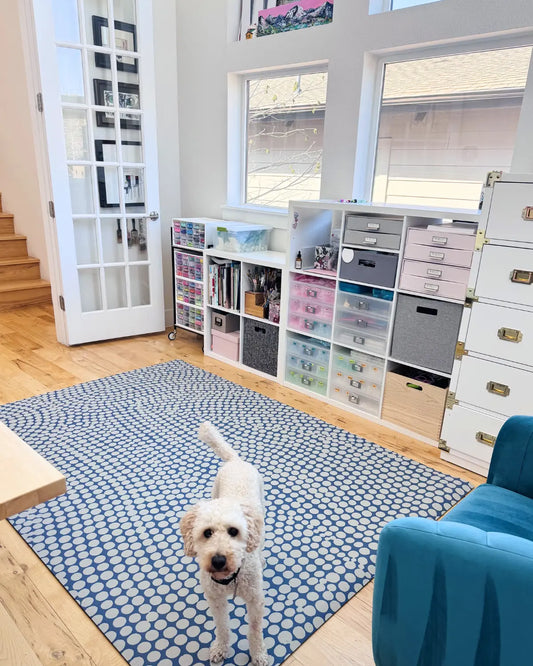
The 6x9 holds a full adult flow with arms extended, a complete Pilates sequence including hundreds and side-lying work, and two people moving at the same time without negotiating space. It is also proportioned to live where a standard 5x8 area rug would sit. A 6x9 mat in front of an 84-inch sofa has roughly 4 to 6 inches of margin on each side, which is the same visual relationship as a traditional living-room rug.
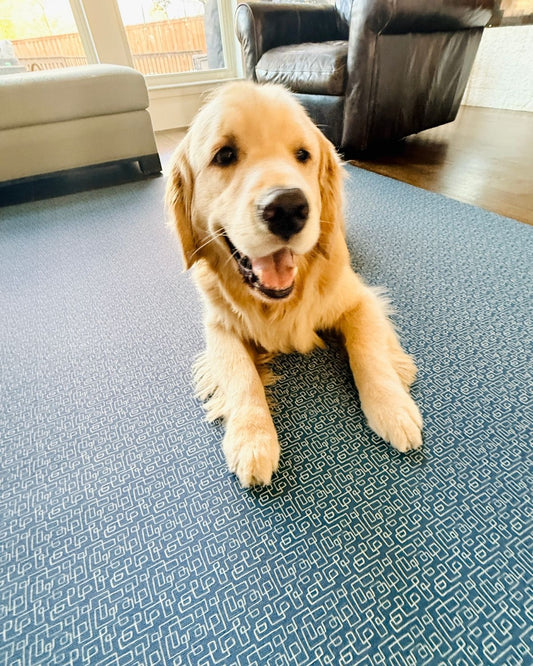
Households with kids or pets tend to choose the 6x9 because the extra surface gives more room for parallel activities. A toddler can play on one half while an adult moves through a flow on the other. For partner yoga or two-person mat work, the 6x9 gives both people room.
How to Decide
The decision usually comes down to who else uses the room and what the surrounding space allows. Three questions tend to surface the right answer.
First, who is on the mat with you? If the practice is solo and stays solo, the 5x7 is built for that. If a partner, a baby, or a dog shares the space during practice, the 6x9 is sized for that.
Second, where will the mat live? A nursery corner, a bedroom alcove, a small living room. These all accept the 5x7 naturally. A standard living room where the mat replaces the area rug suits the 6x9.
Third, what does your room measure? A 6x9 mat in a 10 by 12 room reads as wall-to-wall and changes the proportions of the surrounding furniture. The 5x7 sits more lightly. In a 12 by 14 living room or larger, a 6x9 anchors the room the way a rug does.
For a deeper look at how mats function inside a living room layout, this post on rugs versus stylish mats walks through the design logic. For households thinking about the multi-use case alongside the sizing question, the post on one mat that handles workouts and playtime covers the overlap.
What Stays the Same Across Both Sizes
Both Oversized mats are built to identical spec. Single-piece foam with no seams to collect dust or peel at the edges. The cushion holds firm enough for balance work and gives enough to protect joints during floor exercises. A waterproof, wipe-clean surface that handles spills, sweat, and daily use with a damp cloth and mild soap. Nothing to remove or launder. Greenguard Gold certified inks for the printed design, so the surface meets an air-quality standard for indoor use with children.
Neither mat needs to be put away after practice. Both are designed to live on the floor.
Seeing the Size and Color in Your Space
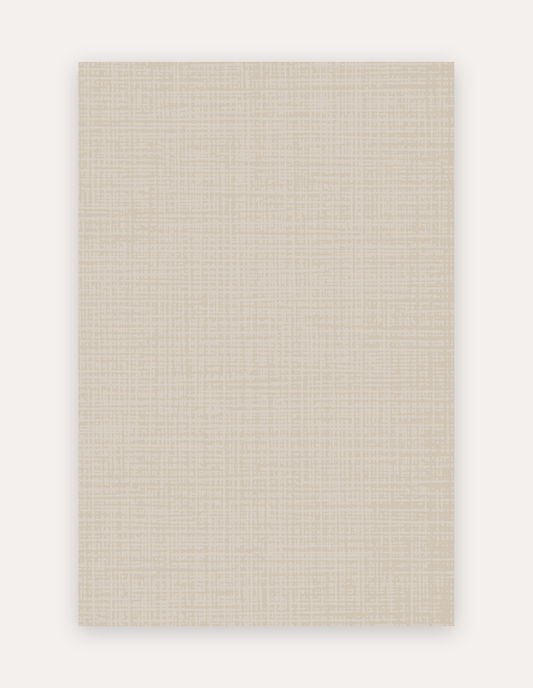
Size matters, but color is the other half of the decision, and color reads very differently in a home than on a screen. The swatch pack ships three real material samples so you can see the colors and texture in your space, which is the most reliable way to see how a palette reads against your floor before committing to either size.