The Best Mat for Morning Stretching at Home

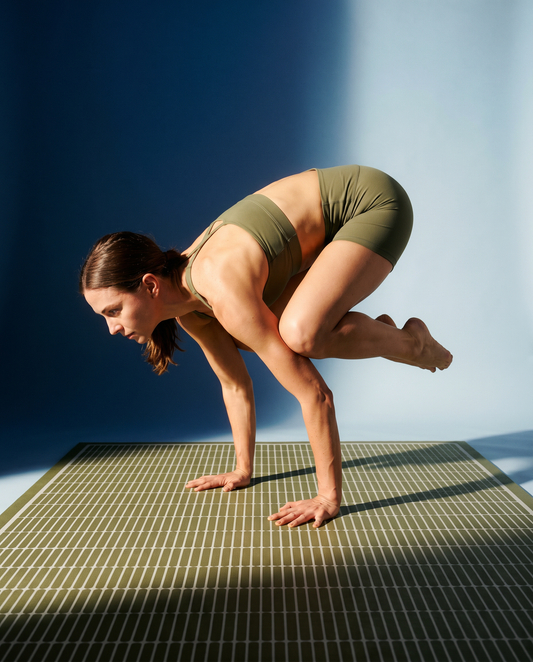
Morning stretching is the simplest piece of a routine and the one most women quietly want back. Ten minutes on the floor before coffee. A few long holds. A couple of twists. A slow settle before the day gets going. The routine sounds easy enough that most people assume any mat will do. Then the knee hits the floor through a thin yoga mat, and the ten minutes become five, and the five minutes become a maybe-tomorrow.
The quick answer most guides give is to pick a standard yoga mat and get on with it. That advice is a leftover from studios, where the mat is thin because the floor is already a sprung wood designed for movement. In a bedroom or a living room, the floor underneath is hardwood, tile, or thin carpet, and the thin mat does not do enough to make a morning stretch feel kind. The right mat for home is a different piece of gear.

What a morning stretching mat really needs to do
Morning stretch is quiet work. Long holds. Weight sitting on bone against the floor. A knee under a lunge, a hip against a seated twist, an elbow against a side bend. The one thing a mat has to do is cushion that bone against the floor without being so soft that the balance goes.
Thin studio mats fail the cushion test on hard floors. Thick fitness tiles solve the cushion and fail the look. A dense foam foundation, roughly a half inch thick, gives you the quiet support you want for long holds without rolling an ankle when you stand on it.
Why size matters more than you expected
A standard yoga mat is 24 inches wide by 68 inches long. Lie on your back, open your arms into a T, and your hands are already on the hard floor. Stretch out into a cross-body hold and your knee rolls off. The mat was built for a tall column of upright poses in a studio, not for the kind of ground work most morning routines really use.
A 5 by 7 opens the whole picture. Arms wide. Knees falling open. Legs long into a hamstring stretch without the heel on hardwood. A 6 by 9 is the piece that lets you move around on the floor without ever checking whether you are still on the mat. That spatial generosity is a quiet part of why the routine sticks for most women.
Dense foam versus thin studio mat
The honest comparison between a thin yoga mat and a dense foam foundation shows up in the long holds. In pigeon on a thin mat, the hip bone grinds. On dense foam, the hip settles. In cat-cow with the knees on a thin mat, the kneecaps complain by the fourth round. On dense foam, you can do fifteen rounds and still want more.
The payoff is time on the floor. Comfort is not the point in itself. Comfort is what lets you stay long enough for the stretch to land. A mat that supports you through a two-minute hold is doing more for your morning than a mat that forces you to come up early because the knee hurts.
Where the mat lives shapes whether you use it
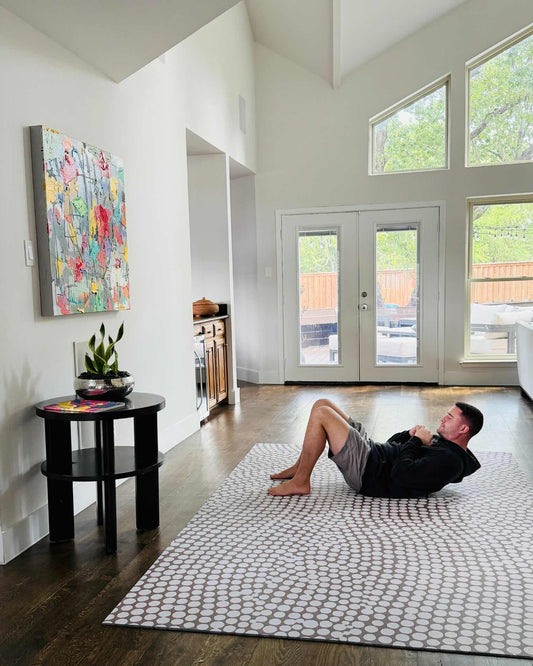
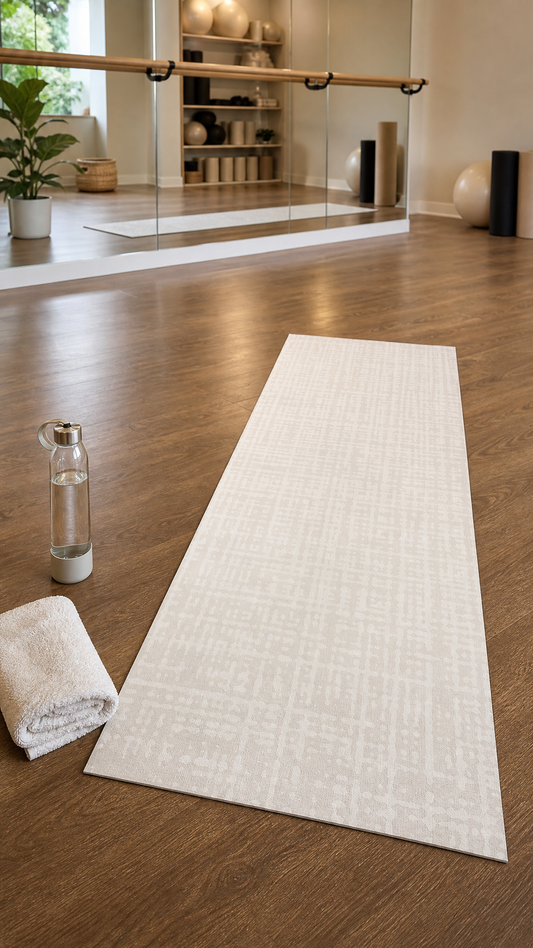
The best mat is the one that stays out. Rolled up in a closet, any mat is a maybe. Rolled out in a corner of the bedroom or the living room, the same mat is a yes. The question for a morning stretch mat is whether it is beautiful enough to live in the room where the morning really happens.
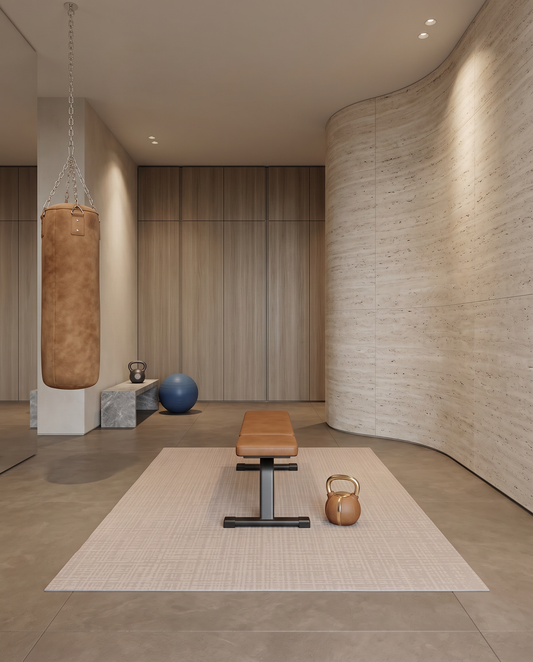
That is where color and surface come in. A black yoga mat on a bedroom rug looks like gym equipment someone forgot to put away. A soft dusty neutral on the same rug looks like part of the room. The mat earns its place by looking like it belongs. Then it stays out. Then you use it.
Supportive surface, waterproof too
Morning routines are rarely dry. A water glass on the floor. A spilled coffee. A damp towel from a shower. A mat that absorbs water is a mat that smells like a locker room by week two. The surface you want is one you can wipe with a damp cloth and move on.
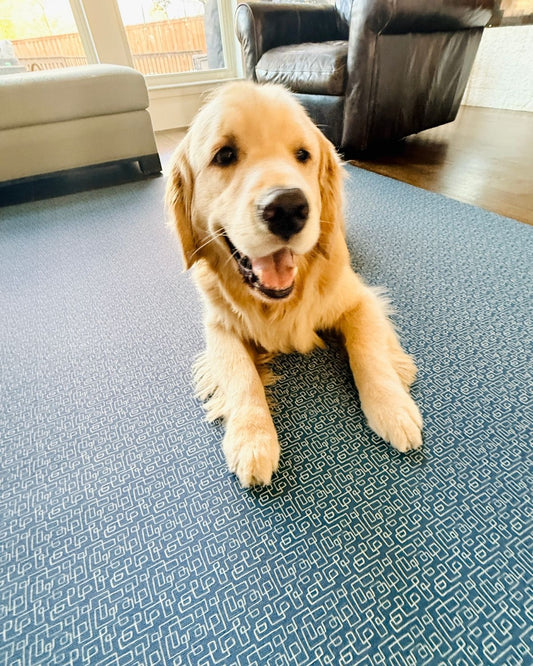
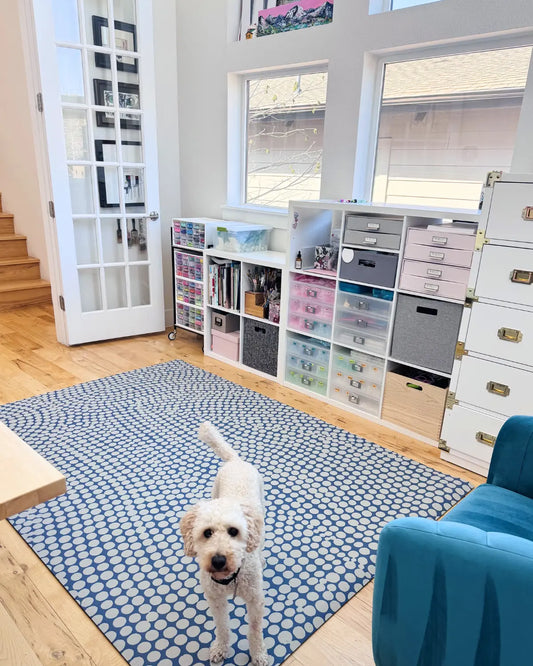
A sealed waterproof top solves this quietly. It also solves the question of whether to roll up the mat before a dog walks across it or a kid runs through the room. The answer is no. The mat handles it.
A ten-minute sequence most mornings can hold
The sequence that works for most women is short, repeatable, and forgiving. Start on your back with knees to chest for a minute, which signals the body that the day is beginning. Roll into a seated forward fold for a minute, letting the hamstrings open. From there, a few rounds of cat-cow on the hands and knees, then a thread-the-needle for a minute each side to open the thoracic spine. Finish in child's pose, breathing for two minutes.
Nothing in that sequence is heroic. Nothing requires a studio. Nothing demands more than you have at seven in the morning. The whole thing takes ten minutes and gives back for the next sixteen hours. The piece that makes it repeatable is the floor underneath it, which is why the mat decision is more important than the sequence.
Why morning stretching sticks when the setup is right
Habits form on friction. The lower the friction, the more often the habit happens. If the mat is in a closet, the friction is high. If the mat is rolled out next to the bed, the friction is low. If the mat is beautiful enough that it belongs there, the friction stays low because nobody is asking you to put it away.
The whole case for a dedicated morning stretching mat is this. You are not buying a piece of fitness equipment. You are buying a lower-friction version of a habit you already want. The mat is the furniture that makes the ten minutes before coffee a near-automatic yes.
And once the habit sticks for a month, the mat starts earning its keep in a quieter way. Mornings begin on your terms. The day opens on the floor instead of on a phone. Shoulders feel looser going into the first meeting. Nothing dramatic shows up on any one morning, and that is exactly how a lasting routine looks from the inside.
Where Swankymat fits for morning stretching
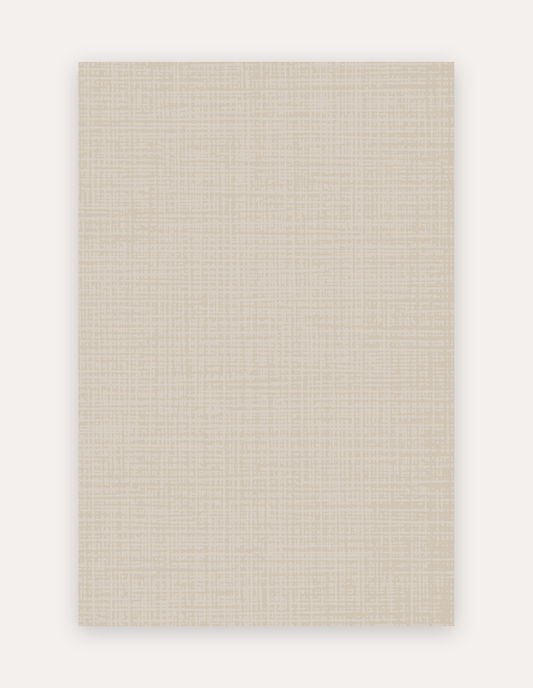
The Sloane Dust Oversized Mat is the one most women reach for when they want a morning stretch mat that lives in the bedroom. A warm dusty neutral, close to oatmeal, with a quiet subtle texture that reads as textile. The 5 by 7 fits a bedroom nook or the foot of a bed. The 6 by 9 gives you full arm-span space for the long holds that most routines really use.
Non-toxic high-density foam, roughly a half inch thick, gives real cushion under knees and hips without the squish that makes balance work feel unstable. The surface wipes clean. The mat stays out. The ten minutes before coffee happen more often than they did last winter.
The Confidence Path to the Right Mat
Three steps keep this simple.
Start with the Perfect Match Quiz. Three questions about your room, your floor, and your routine. It points you toward the color and size that fits your home instead of asking you to guess.
Then order a swatch pack. Fifteen dollars, credited back to your mat. You feel the foam and see the color under your actual bedroom light.
And once your swatches arrive, you are covered by the No Sweat Guarantee. If the mat shows up and you do not love it, swap it or send it back for a full refund within 7 days.
The Swankymat Promise
Four commitments on every mat.
- Non-toxic high-density foam with Greenguard Gold certified inks, so the mat is safe to live with every day.
- Supportive cushion that holds up under knees, hips, and long holds without going flat.
- A waterproof wipe-clean surface that handles water, dust, and the occasional spilled coffee.
- No Sweat Guarantee, for anyone who orders a swatch pack first. Swap it or send it back for a full refund within 7 days, no sweat.