

Skip to content
Cart
Man and child on Swankymat non toxic rug alternative mat for yoga and play. Man and child exercising on Swankymat non toxic large yoga mat in modern green neutral pattern

The Only Mat Your Home Needs

Non-toxic, wipe-clean, and built for workouts, play, and real life.

feature-item-1
KID + PET FRIENDLY
feature-item-2
RIGOROUSLY NON-TOXIC
feature-item-3
GREENGUARD GOLD INKS
feature-item-4
HSA/FSA ELIGIBLE

Designer Athletic Gear: When Workout Pieces Belong in the Closet, Not the Gym Bag

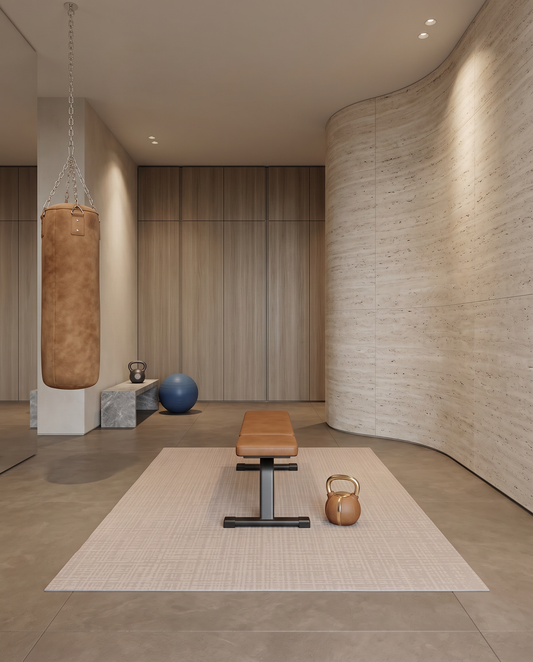
Designer athletic gear and a considered Swankymat in a modern home space

Designer athletic gear used to mean expensive logo workout clothes. Over the last decade, the category has shifted. What counts as designer in athletic wear now has more to do with fabric, fit, construction, and longevity than with brand visibility. The pieces that earn the label tend to be the ones that hold up across years of use, look right at the school pickup as well as the studio class, and reflect the same design sensibility as the rest of your closet.

The reshaping of athletic apparel has implications for the rest of the equipment that surrounds a home practice. The same questions that drove the shift in clothing (material quality, design integrity, longevity, aesthetic fit) are now being asked of the equipment that fitness leaves in a room.

What Makes Athletic Gear Worth Investing In

Five qualities tend to separate considered athletic pieces from disposable ones.

Material quality. Fabrics with high recycled content, low chemical processing, and natural fiber blends tend to last longer and feel better after dozens of washes than polyester-heavy alternatives. The cost difference is real, and the cost-per-wear math usually favors the better material.

Considered fit. Pieces designed for actual movement (rather than the photograph of movement) hold up to a flow, a lift, a run, and a school drop-off without restriction or readjustment.

Longevity. Pilling, seam separation, waistband memory loss, and color fade are the four most common failure modes in athletic wear. Pieces engineered against all four tend to survive years rather than seasons.

Aesthetic fit. Designer pieces in 2026 read as part of a closet that has neutral palettes, considered textures, and pieces that work together. They do not stand out as gym clothes.

Production transparency. Brands publishing factory partners, material sourcing, and labor standards are easier to trust than those that do not. The category has matured enough that opacity is now a flag.

The Apparel-to-Equipment Shift

The progression athletic apparel has gone through (from gym-only utility, to street-wear crossover, to wardrobe staple) is now happening at the equipment level. Dumbbells with painted finishes, foam rollers in muted neutral tones, branded resistance bands sold alongside ceramic vases. Equipment companies have realized that customers who do not want to look at a gym in their living room also do not want to hide their tools in a closet.

The shift is real, and it is changing what categories qualify as design objects. A few years ago, no one would have described a kettlebell as part of their decor. Today, the design-forward kettlebell exists, costs three times the basic version, and sells well.

Floor Equipment Is the Largest Surface

Among home fitness equipment, the floor surface is the single largest visual element. A workout mat or a foam tile set takes up more square footage than any other piece of gear in a home gym. Which means the aesthetic decisions made about the floor surface matter more, visually, than the decisions made about anything else.

The conventional category answer (a rolled yoga mat, a foam tile set, a folded gym mat) has the same problem athletic apparel had a decade ago. Built for utility, not for the room. Hidden after use, because the design does not hold up to being seen.

The post on a decorative yoga mat covers the broader shift in mat design. The post on modern alternatives to rugs and workout mats goes further into the visual logic.

What Designer Looks Like on the Floor

The principles are the same as in apparel. Material that holds up across years. Construction designed for real use. Aesthetic that fits a designed room. Production transparency on materials and certifications.

Single-piece construction (no tile lines or interlocking edges) reads as a furnishing rather than as equipment. Neutral palettes and considered patterns work alongside other room elements. Cushioning calibrated for both balance work and floor exercises gives the surface multi-use range without compromising on either.

The Floor as a Design Object

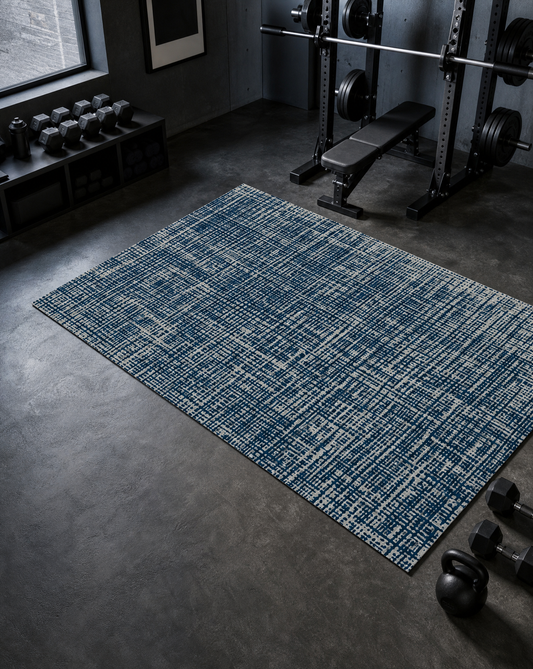
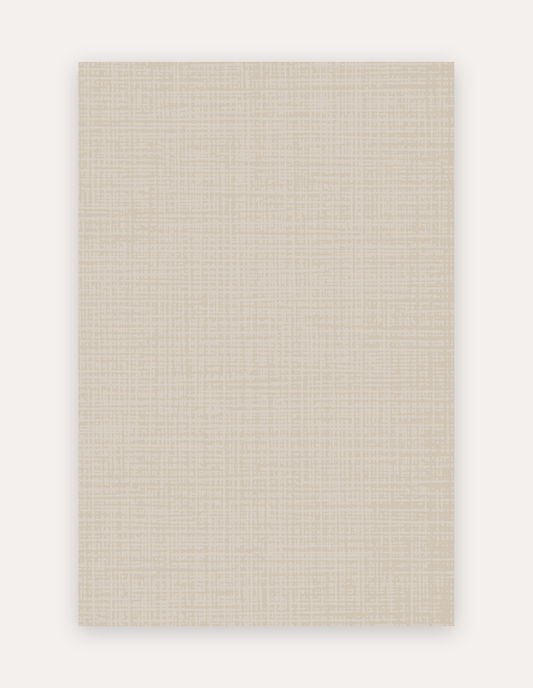
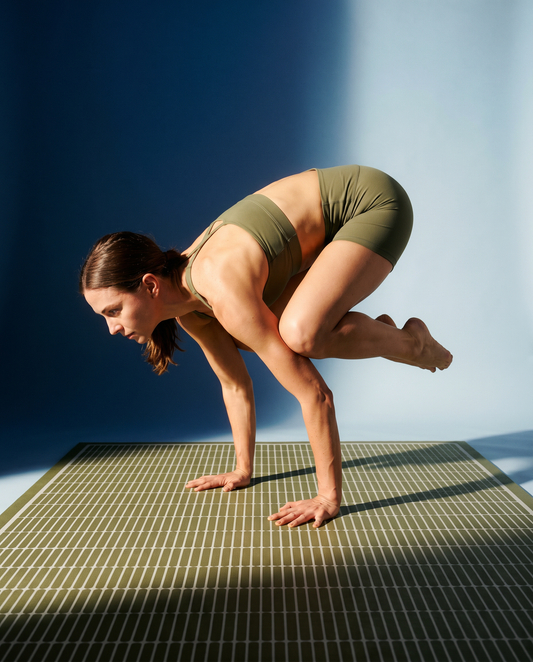
Swankymat sits in the same space for floor surfaces that designer athletic apparel sits in for clothing. The mat is sized like an area rug, designed in neutral palettes and considered patterns, and built to live on the floor permanently rather than to be rolled and stored. Sloane Dust, Rhodes Camel, Circa Sandstone, and the new Sloane Midnight are among the palettes that read well alongside warm wood and considered furniture.

For a broader view of how mat selection plays into modern home aesthetics, the post on choosing the perfect neutral mat walks through palette decisions. Browse the full neutral mats collection to see what fits your space.

Back to blog

Learn More About Yoga and Exercise Mats

Swankymat Sloane Navy non-toxic eco-friendly exercise mat and play mat with yogurt spill showing easy-to-clean wipeable surface

Style meets function.

Swankymat is the largest wipeable, single-piece mat on the market, with a sleek design you’ll actually want to keep on display. No folding. No rolling up. Just a durable, stylish surface that’s always ready for your next workout.

FIND YOUR PERFECT MAT

Shop Our Best Sellers

What's your style?

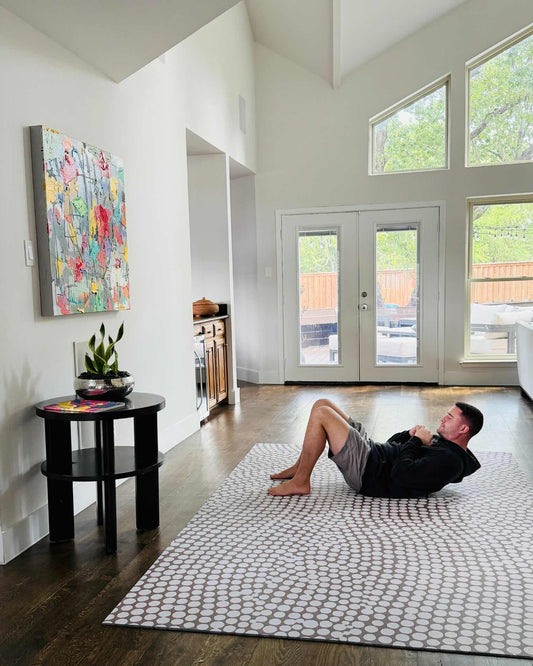
Person doing sit-ups on the Circa Sandstone oversized exercise mat, a non-toxic high-density foam mat in a warm sandstone pebble pattern, during a home workout

Neutral Styles

SHOP NEUTRAL
Neutral Brown and tan mat rug alternative for home, yoga, and play

Modern Flair

SHOP MODERN
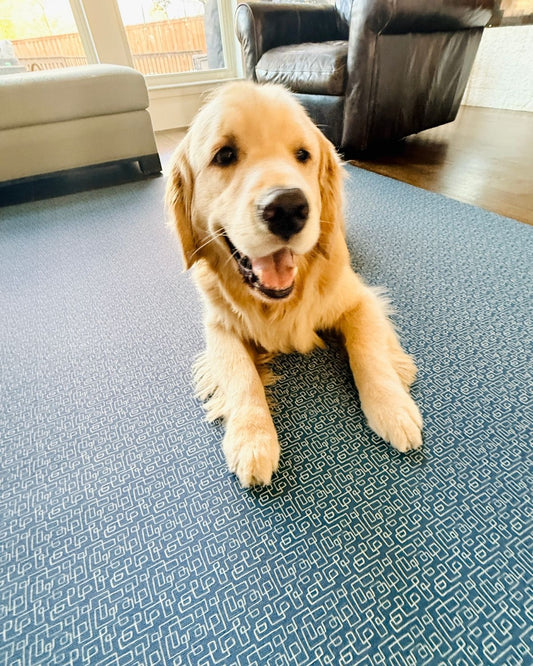
Swankymat stylish blue non toxic mat for yoga and play and tummy time

Blue Hues

SHOP BLUE
Woman doing yoga at home on colorful stylish mat by Swankymat

Pop of Color

SHOP FUN

Ready to transform your space?

Person doing sit-ups on the Circa Sandstone oversized exercise mat, a non-toxic high-density foam mat in a warm sandstone pebble pattern, during a home workout

The oversized mat you've been waiting for

A fitness mat that fits your life.

Whether you’re flowing through yoga, powering through HIIT, or carving out a home gym corner, our exercise mat and play mat is built for movement. The supportive 6mm cushion protects joints during lunges and planks, while the firm surface keeps you stable for balance poses. Unlike standard yoga mats, it’s generously sized at 5'x7' or 6'x9' to give you the freedom to move without stepping off the edge. And when the workout’s over, the sleek design blends right into your living space.

Woman doing yoga at home on colorful stylish mat by Swankymat

SOPHISTICATED AND FUNCTIONAL

Where style and movement live in harmony.

Our 6mm thick, non-slip mats offer the joint protection and shock absorption you need—without sacrificing the style your home deserves. From high-impact workouts to low-key Sundays, from yoga flows to dinner parties, Swankymat is made to move with you and look good doing it.

Swankymat Sloane Navy non-toxic eco-friendly exercise mat and play mat with yogurt spill showing easy-to-clean wipeable surface

EASY TO CLEAN

You've cleaned enough rugs.

Life happens. Our mats don't cry over spilled milk (or wine). The waterproof exterior prevents liquids, dust, dander, and odors from penetrating, making it easy to clean. Simply vacuum, mop, or wipe with mild detergent. Our products are robot vacuum-friendly.

MORE ON MAT CARE
Woman exercising on pink yoga mat in stylish living room styled with neutral and pink colors

NON-TOXIC AND ECO-FRIENDLY

Clean. Inside and out.

Our mats are made from eco-friendly, high-density foam and ink that are non-toxic and free from harmful chemicals. We go above and beyond industry standards to ensure peace of mind for you and your loved ones. Our products have undergone rigorous testing by a world leading Consumer Product Safety Commission accredited laboratory.

  • Phthalate-Free (16P Free): No harmful plasticizers that could affect your health.
  • Latex-Free & Silicone-Free: Safe for those with allergies and sensitivities.
  • Certified European POPs Regulation Compliant Ink: Meets strict European safety standards for environmental and human health protection.
  • GREENGUARD Gold Certified Inks: Solvent and VOC free contributing to safer, healthier air.

With our product, you can trust that you're choosing a safe, responsible, and high-quality option for your home.

SAFETY STANDARDS

Frequently Asked Questions

What makes athletic gear designer in 2026?

Designer athletic gear is defined less by brand visibility and more by material quality, considered fit, longevity, aesthetic integration, and production transparency. The pieces that earn the label hold up across years of use and read as part of a designed wardrobe rather than as gym clothes.

Is investing in higher-end athletic wear worth it?

The cost-per-wear math usually favors better-made pieces. Higher-end athletic wear tends to last years rather than seasons, holds shape after dozens of washes, and integrates with the rest of a closet. Across the lifespan of a piece, the per-use cost is often lower than disposable alternatives.

Does designer aesthetics matter for home fitness equipment?

It matters more than is often acknowledged. Equipment that does not read as part of the room tends to get stored away, which makes it harder to use. Floor surfaces, in particular, take up significant visual space and benefit from being designed to live in the room permanently.