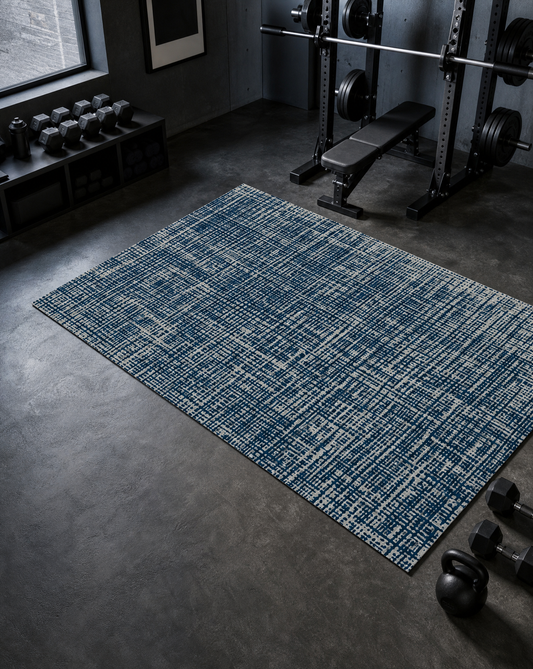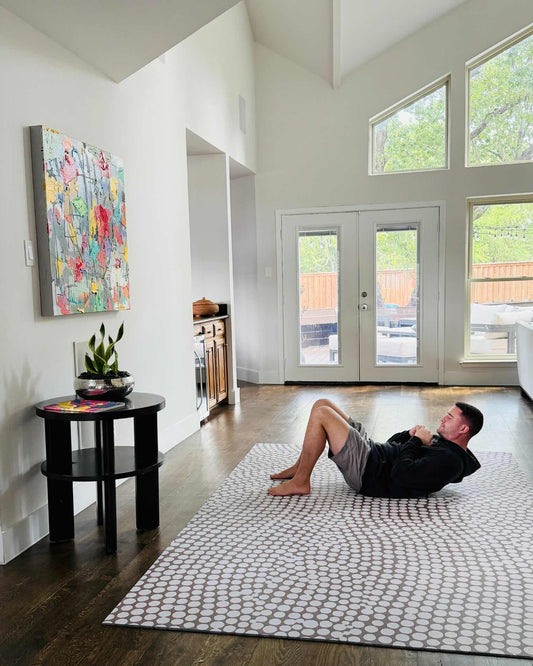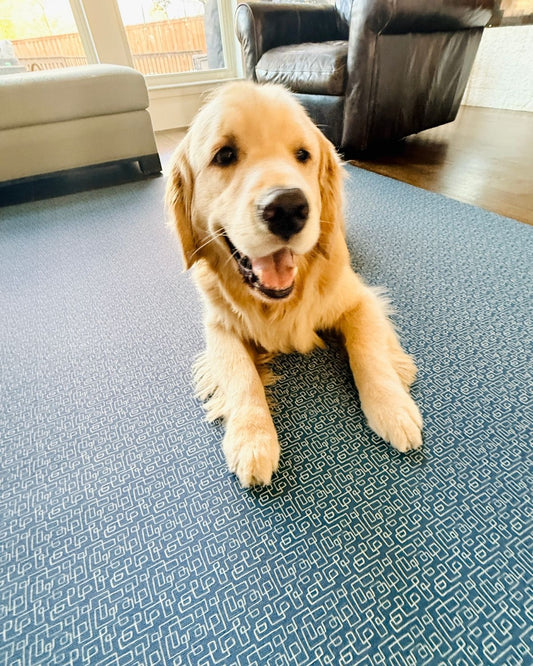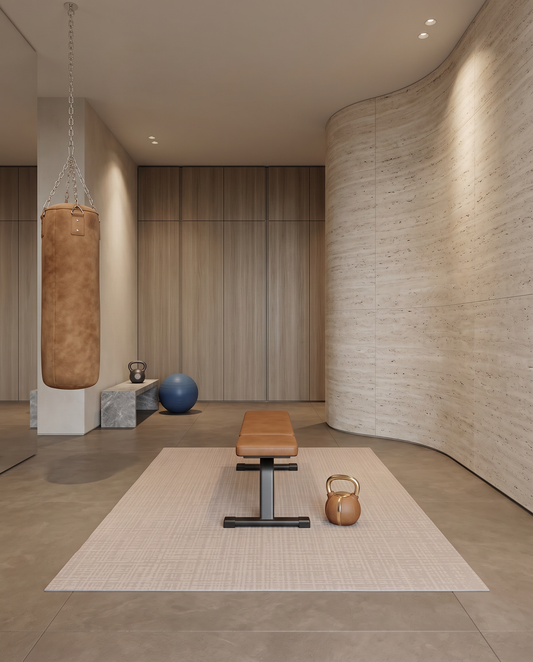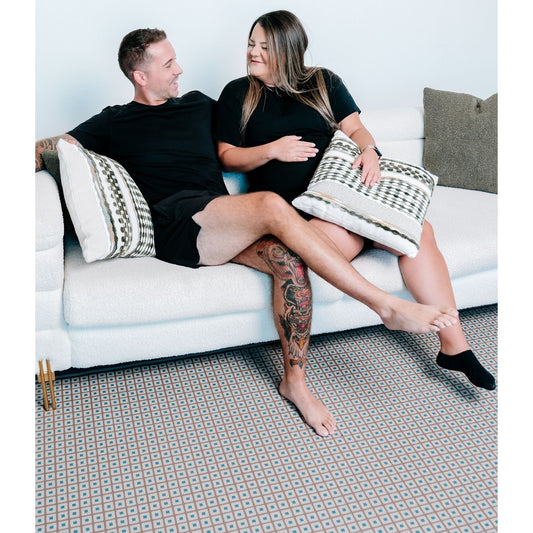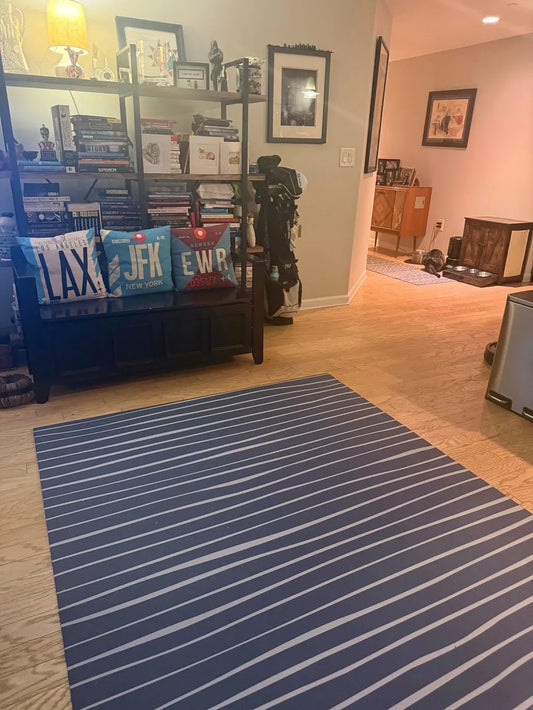


Man and child on Swankymat non toxic rug alternative mat for yoga and play. Man and child exercising on Swankymat non toxic large yoga mat in modern green neutral pattern

The Only Mat Your Home Needs

Non-toxic, wipe-clean, and built for workouts, play, and real life.

feature-item-1
KID + PET FRIENDLY
feature-item-2
RIGOROUSLY NON-TOXIC
feature-item-3
GREENGUARD GOLD INKS
feature-item-4
HSA/FSA ELIGIBLE

Foam Rolling and Mobility Work: The Recovery Mat Setup

A recovery mat in Rhodes Camel for foam rolling and mobility work

Recovery is no longer optional for consistent athletes. The research on daily mobility work, foam rolling, and structured recovery has moved from performance-optimization territory into general adult fitness. The 30 to 45 minutes per day that goes into recovery practice tends to produce more real-world quality-of-life impact than the equivalent time added to training itself.

The catch: most home setups treat recovery work as an afterthought. The floor surface, the tools, and the time all get squeezed into whatever remains after the actual training. Understanding what recovery work actually requires from the setup changes the daily practice meaningfully.

What Recovery Work Actually Looks Like

Modern recovery practice combines four categories that collectively fill the daily practice window.

Foam rolling and myofascial release. Sustained pressure on tissue with a foam roller, lacrosse ball, or massage tool. Requires enough floor space to move the roller under the full body and enough cushion to protect bony contact points.

Dynamic mobility drills. Hip circles, thoracic rotations, shoulder pass-throughs, ankle mobilizations. Requires floor space for full-range movement and a stable surface for standing balance work.

Static stretching. Held positions targeting specific tissue for one to three minutes. Requires cushion for extended holds and a surface that stays stable during long durations.

Restorative practice. Supported inversions, restorative yoga poses, breathwork. Requires cushion, adequate space for props, and a mat that stays permanently placed in the room.

What the Recovery Floor Needs

Recovery work puts different demands on the floor than active training does. Five specifications matter specifically for the recovery use case.

Adequate cushion for extended holds. Recovery work involves long durations in single positions. 6mm of supportive high-density cushion is the practical minimum for daily foam rolling and static stretching without joint pain.

Firm enough for foam roller stability. Overly soft mats compress under the roller, which reduces the effectiveness of the pressure application. The mat needs to be dense enough to provide a stable base for the roller.

Enough room to roll the roller under the full body. Foam rolling covers the length of the body plus the roller working area. A standard yoga mat is too narrow for lateral positions and too short for the roller travel across the full posterior chain.

Waterproof and wipe-clean. Recovery sessions involve sustained body contact. Sweat, body oils, and daily cleaning have to be handled without material degradation.

Aesthetic that keeps the mat permanently placed. Recovery work only produces the compounding daily benefits if it actually happens daily. A mat that stays out in the living space gets used; a mat that gets rolled and stored gets skipped on tired days.

The 30-Minute Daily Recovery Session

The recovery session that produces meaningful long-term change tends to look similar across formats. Adaptable to individual needs, but the general structure holds.

Ten minutes of foam rolling. Posterior chain (calves, hamstrings, glutes, back) and any active problem area. Slow, sustained pressure.

Ten minutes of dynamic mobility. Hips, thoracic spine, shoulders, ankles. Full-range movement targeting the areas that need it most.

Ten minutes of static stretching or restorative work. Held positions for tissue that needs sustained attention. Restorative poses for parasympathetic activation.

Why Recovery Consistency Beats Training Volume

Research on adult athletes consistently shows that recovery consistency produces better long-term outcomes than training volume increases. Ten additional minutes of daily mobility work produces more real-world impact than the same time added to training itself, particularly past age 35 when tissue recovery capacity begins its gradual decline.

The practical implication: the mat that supports daily recovery is often more important than the mat that supports peak training. Recovery is where consistency lives, and consistency is where the compound benefits come from.

The Swankymat Fit for Recovery Work

Swankymat is built for the daily consistency that recovery work requires. Single-piece non-toxic high-density foam with 6mm of supportive cushion handles extended foam rolling and static stretching without joint pain. The firm density provides a stable base for foam rollers and lacrosse balls, without the compression that undermines pressure application on softer mats. The waterproof surface handles daily body contact and cleaning. Hand-drawn patterned designs keep the mat visible in the living space rather than hidden as workout gear.

Available in Oversized 5x7 for solo recovery practice, Oversized 6x9 for larger recovery zones with room for props and multiple tools, and the rollable Studio Mat for portable recovery work. All three sizes handle the full recovery practice from foam rolling through restorative poses.

For a related practice framework, the post on mobility work after 50 covers the age-specific recovery framework. For material feel before ordering, the swatch pack ships three real samples with $15 off the first Oversized mat.

Back to blog

Learn More About Yoga and Exercise Mats

Swankymat Sloane Navy non-toxic eco-friendly exercise mat and play mat with yogurt spill showing easy-to-clean wipeable surface

Style meets function.

Swankymat is the largest wipeable, single-piece mat on the market, with a sleek design you’ll actually want to keep on display. No folding. No rolling up. Just a durable, stylish surface that’s always ready for your next workout.

FIND YOUR PERFECT MAT

Shop Our Best Sellers

What's your style?

Person doing sit-ups on the Circa Sandstone oversized exercise mat, a non-toxic high-density foam mat in a warm sandstone pebble pattern, during a home workout

Neutral Styles

SHOP NEUTRAL
Neutral Brown and tan mat rug alternative for home, yoga, and play

Modern Flair

SHOP MODERN
Swankymat stylish blue non toxic mat for yoga and play and tummy time

Blue Hues

SHOP BLUE
Woman doing yoga at home on colorful stylish mat by Swankymat

Pop of Color

SHOP FUN

Ready to transform your space?

Person doing sit-ups on the Circa Sandstone oversized exercise mat, a non-toxic high-density foam mat in a warm sandstone pebble pattern, during a home workout

The oversized mat you've been waiting for

A fitness mat that fits your life.

Whether you’re flowing through yoga, powering through HIIT, or carving out a home gym corner, our exercise mat and play mat is built for movement. The supportive 6mm cushion protects joints during lunges and planks, while the firm surface keeps you stable for balance poses. Unlike standard yoga mats, it’s generously sized at 5'x7' or 6'x9' to give you the freedom to move without stepping off the edge. And when the workout’s over, the sleek design blends right into your living space.

Woman doing yoga at home on colorful stylish mat by Swankymat

SOPHISTICATED AND FUNCTIONAL

Where style and movement live in harmony.

Our 6mm thick, non-slip mats offer the joint protection and shock absorption you need—without sacrificing the style your home deserves. From high-impact workouts to low-key Sundays, from yoga flows to dinner parties, Swankymat is made to move with you and look good doing it.

Swankymat Sloane Navy non-toxic eco-friendly exercise mat and play mat with yogurt spill showing easy-to-clean wipeable surface

EASY TO CLEAN

You've cleaned enough rugs.

Life happens. Our mats don't cry over spilled milk (or wine). The waterproof exterior prevents liquids, dust, dander, and odors from penetrating, making it easy to clean. Simply vacuum, mop, or wipe with mild detergent. Our products are robot vacuum-friendly.

MORE ON MAT CARE
Woman exercising on pink yoga mat in stylish living room styled with neutral and pink colors

NON-TOXIC AND ECO-FRIENDLY

Clean. Inside and out.

Our mats are made from eco-friendly, high-density foam and ink that are non-toxic and free from harmful chemicals. We go above and beyond industry standards to ensure peace of mind for you and your loved ones. Our products have undergone rigorous testing by a world leading Consumer Product Safety Commission accredited laboratory.

  • Phthalate-Free (16P Free): No harmful plasticizers that could affect your health.
  • Latex-Free & Silicone-Free: Safe for those with allergies and sensitivities.
  • Certified European POPs Regulation Compliant Ink: Meets strict European safety standards for environmental and human health protection.
  • GREENGUARD Gold Certified Inks: Solvent and VOC free contributing to safer, healthier air.

With our product, you can trust that you're choosing a safe, responsible, and high-quality option for your home.

SAFETY STANDARDS

Frequently Asked Questions

What is the best mat for foam rolling and stretching?

A firm high-density mat with 6mm of supportive cushion is the reliable configuration for foam rolling and mobility work. The density provides a stable base for the roller without compressing under the pressure, and the cushion protects joints during extended static holds. Standard yoga mats are usually too soft for effective foam rolling.

How long should a daily recovery session actually be?

Thirty minutes daily is a practical target for adults with consistent training practice. The session typically breaks into 10 minutes of foam rolling, 10 minutes of dynamic mobility, and 10 minutes of static stretching or restorative work. Shorter sessions (15-20 minutes) still produce meaningful benefit; longer sessions produce diminishing returns.

Is recovery work really as important as training?

Research on adult athletes consistently shows that recovery consistency produces better long-term outcomes than training volume increases, particularly past age 35 when tissue recovery capacity begins its gradual decline. Ten additional minutes of daily mobility work often produces more real-world impact than the same time added to training itself.