

How to Set Up a Home Workout Space in a Small Apartment

Setting up a home workout space in a small apartment is mostly a question of constraints. Square footage matters, but it is often less limiting than the lease (no drilling, no permanent changes), the aesthetics (workout gear that looks like workout gear can disrupt a designed space), and the noise (impact transfer to floors below).
A setup that works around these realistically can fit comfortably into a 600 square foot apartment without taking over the room. The principles below apply whether you are in a studio, a one-bedroom, or a rental with shared walls.
The Real Constraints Worth Designing Around
Most small-apartment workout content focuses on square footage, but the harder problems usually live elsewhere.
The lease is the first one. Renters cannot drill into walls or mount pull-up bars to door frames in most leases, which rules out roughly half of typical home gym solutions before they start. The setup needs to lie flat on the floor and lean against walls.
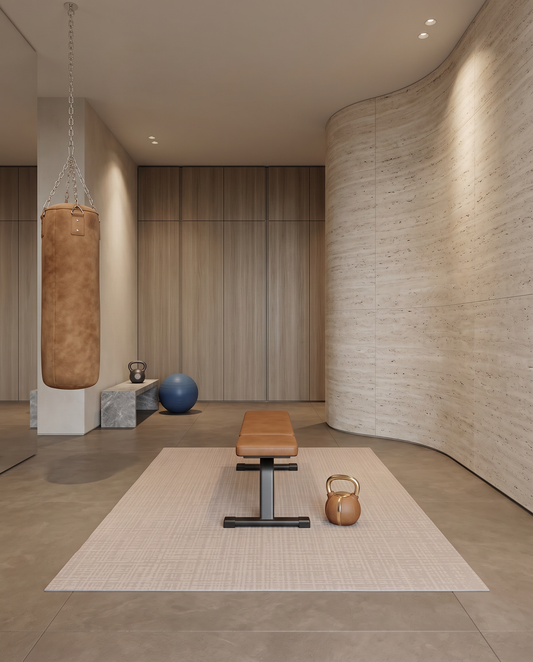
The aesthetics come second. A small apartment shows everything. Workout equipment that looks like workout equipment, like bright foam tiles, folding benches, and cable racks, competes visually with the rest of the room and tends to get hidden away, which makes it harder to use.
Noise is the third. Downstairs neighbors will hear impact movements through any apartment floor, regardless of what is underneath. The programming choices matter more than the equipment for managing this.
Square footage matters too, but a thoughtful 35 to 45 square foot zone (roughly the footprint of an area rug) is enough for most floor-based practices.
A Minimal Equipment List
The setup below works for most floor-based formats, including Pilates, yoga, mobility, bodyweight strength, and light dumbbell work. Everything other than the floor surface itself stores flat or in a basket.
- A primary floor surface (more on this below).
- A set of loop resistance bands at three to five resistance levels. They flat-pack into a drawer.
- Light to medium dumbbells or an adjustable set, 5 to 15 pounds for most floor work.
- A foam roller, which leans against a wall when not in use.
- A set of small sliders, two flat discs.
- A Bluetooth speaker.
- A woven basket or bin to hold bands, sliders, and small items so they read as a design object rather than gym storage.
For ideas on what to do with this setup, the exercise mat exercises post covers structured options by muscle group.
Working Around Noise
Impact movements like jumping rope, burpees, and plyometric work transfer through any apartment floor regardless of what is underneath. Cushioning absorbs some impact but is not designed as soundproofing.
Most floor-based formats sidestep the issue. Pilates, yoga, sculpt, mobility, barre, and dumbbell floor work are quiet by nature. Cardio that does not involve impact, like stationary bike, rowing, or jump-free HIIT sequences, works too. Plyometric work tends to fit better in a gym or a ground-floor unit.
Where to Put the Workout Zone
Three placements work consistently in apartments.
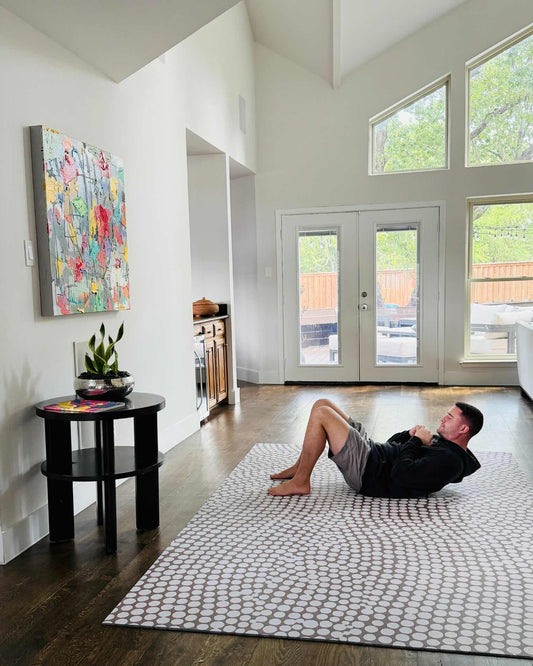
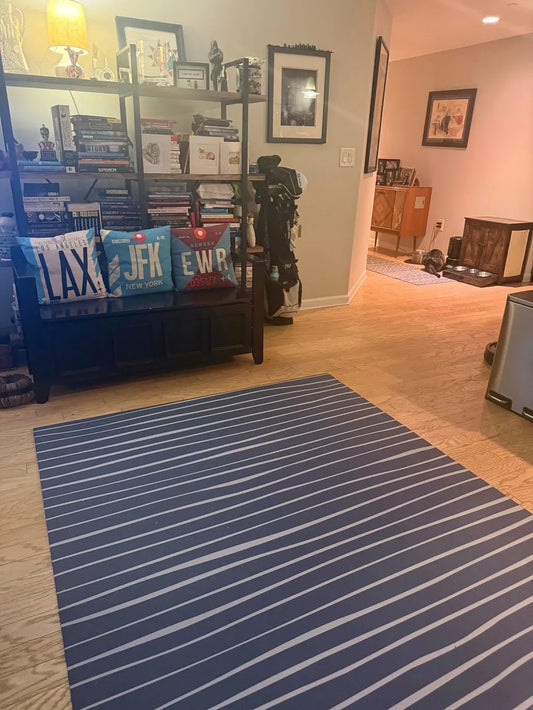
Living room corner. A floor surface placed in an open corner with six to eight inches of clearance reads as a rug rather than a workout zone. A small basket nearby holds the rest of the equipment. Guests usually do not register it as a workout setup.
Foot of the bed. In a bedroom, the foot-of-bed placement is space-efficient. The surface occupies floor that tends to be otherwise empty and anchors the room visually.
A dedicated nook. Some apartments have a small alcove, an unused dining area, or a transition space that could function as a movement zone. A floor surface, a plant, and a basket transform an underused space into something useful.
For more on how a workout zone integrates with shared use across kids and adults, the post on a mat that handles workouts and playtime covers the overlap.
Storage Notes
The non-floor items need a home that is within reach but off the floor.
A woven basket beside the workout zone handles bands, sliders, and a small towel. Sized and styled correctly, it reads as a design choice rather than gear.
The back of a closet or bedroom door fits a pocket organizer well for lightweight items.
Under the sofa accommodates a foam roller or light dumbbells on a flat tray in apartments where even a basket would add visual clutter.
Equipment Worth Thinking About Carefully
A few categories tend to be harder to integrate into a small apartment.
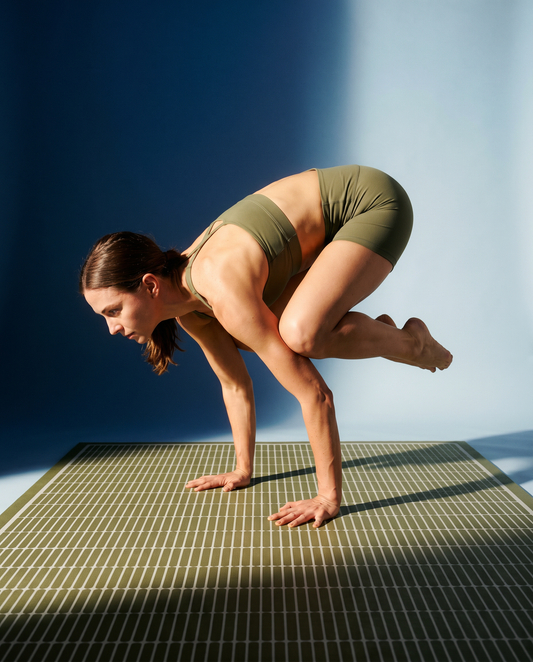
Foam tile sets solve cushion but introduce a visual register that can be difficult to reconcile with a designed room. A single-piece surface is generally a cleaner fit.
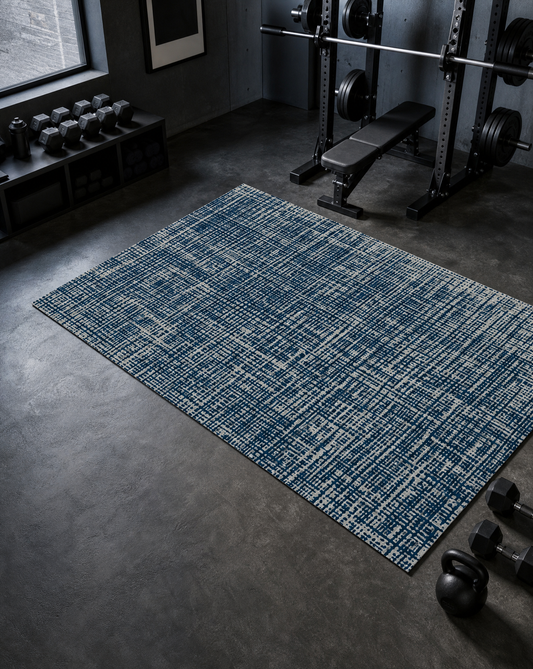
Folding weight benches take up significant floor space for a single use. Many bench exercises can be done on the floor with dumbbells.
Large cardio equipment occupies a fixed footprint that may compete with living space in a one-bedroom. Apartment-scaled alternatives, like jump ropes, under-desk bikes, or walking pads that slide under furniture, tend to integrate more easily.
On Friction and Consistency
Home workout routines tend to lose momentum at the setup step. The mat is buried under coats, the bands are in another room, the floor needs to be cleared. A small-apartment setup where the workout surface is already on the floor as a permanent piece of the room removes that step from the daily decision.
The goal is not maximizing the equipment in a small space. It is making the practice easy enough to keep returning to.
The 5x7 in a Small Apartment
Of the Swankymat sizes, the Oversized 5x7 tends to be the right call for most small-apartment setups. It anchors a defined zone, reads as an area rug in a living room corner or foot-of-bed placement, and leaves enough surrounding floor for the rest of the room to breathe. The 6x9 tends to overwhelm a one-bedroom and is better suited to larger living rooms.
For renters who move often, the rollable Studio Mat is a portable alternative that fits in a moving box. For the visual design side of the question, the post on designing a stylish home gym covers how to make the workout space read as part of the apartment. And the post on large yoga mats for home workouts covers the broader case for a quality home floor surface.