Lower back floor work and what the right cushion solves

Your lower back has been talking to you. Not loudly, and enough that you want to spend a few minutes on the floor each day giving it some room. The problem is that lying on a hardwood floor makes the whole thing worse within a minute, and lying on a thick carpet pads the discomfort without doing much for the shape your spine is actually in.
The default move is a yoga mat you already own, folded in half for extra padding. That is a short-term fix that collapses after two weeks of real use. The right surface for lower-back floor work is a different piece of equipment. Thicker, denser, flat, and large enough that the arms can rest at your sides without hanging off the edge.


What a mat does for the lower back on the floor
When you lie on your back on a hard floor, the lumbar spine presses into a surface that gives nothing back. The muscles around the spine stay slightly braced, because the brain reads the hardness as unsafe. On a dense, supportive mat, the surface gives just enough that the muscles can let go, and the spine can settle into whatever shape it needs for the stretch to count.
The thickness is doing one job. The density is doing another. A thick mat with low density compresses to the floor almost immediately, which puts you back on hardwood with a layer of foam in between. A thick mat with high density holds its shape under weight. The spine lands, the surface gives, and the surface comes back. That is the right surface for a long floor session.
Why thin mats and thick carpets both fall short
Thin travel mats are built for the gym bag. They assume you'll stand on them more than you lie on them, and they protect the knees for about two minutes of a slow stretch before you start to feel the floor underneath. For a longer floor session on the back, that is not enough surface.
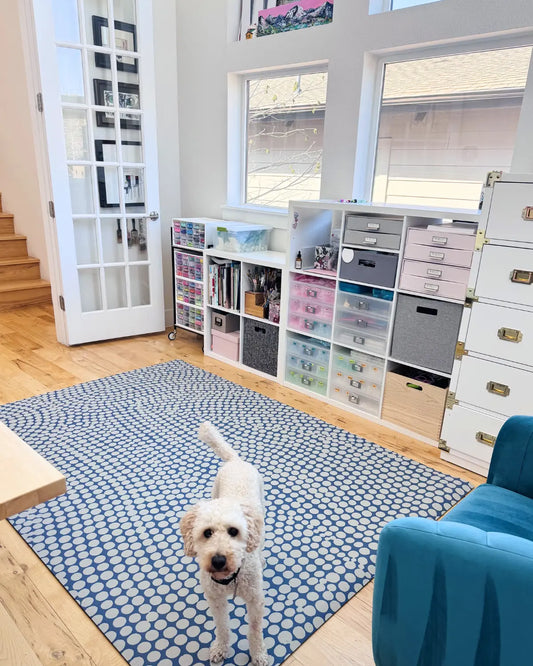
Thick carpet gives the opposite problem. It feels soft, and it is not flat. The body sinks into dips and lumps, which pulls the spine out of neutral the whole time you're trying to let it settle. A good mat on a hard floor is more stable than a thick rug, which is counterintuitive until you've tried both for ten minutes.
Three low-back floor shapes
Three shapes do most of the quiet work for the lower back on a mat. A slow knees-to-chest, with both hands under the knees, held for one to two minutes. A supine twist on each side, with the knees falling to the opposite side and the opposite shoulder trying to stay down. A pelvic tilt, with the knees bent and the feet flat, where the lower back presses gently into the mat on an exhale and lifts away on an inhale.
None of these shapes are stretches in the stop-the-watch sense. They are long, slow conversations between the spine and the surface underneath it. The right surface lets the conversation last long enough to count.
Where arms, head, and heels land
A mat that is too small sends the arms, the back of the head, or the heels onto a bare floor, and the body cannot let go when any one of those is on hardwood. The whole shape has to fit on the surface, including a wide T of the arms in a twist, or the full length of the body in a long relaxation hold.
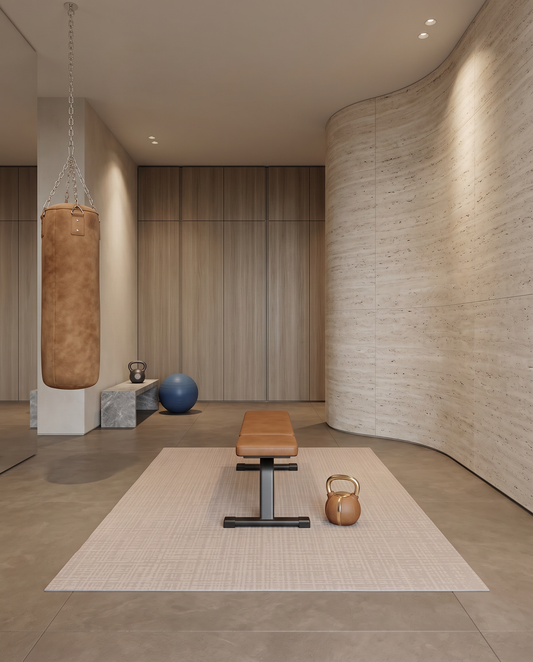
An Oversized 5x7 holds the body width-wise with arms out. An Oversized 6x9 holds the body full length with room to spare, which is the kinder size when the back is the thing you're trying to settle. Scale is comfort, and comfort is the whole point.
How often to do low-back floor work
Daily is better than long and occasional. Five minutes of the three shapes above, done most days, moves the needle more than one thirty-minute session on a weekend. The surface being already laid out is what makes the daily version possible. If the mat is in a closet, the floor work loses to the dishes.
Keep the mat near a chair you already read in or a corner by the window where you already stand with coffee. Floor work follows path of least friction.
What a mat cannot do
A supportive mat is a surface for comfort during gentle floor work. It is a surface, not a treatment and not a diagnosis. If the lower-back discomfort is sharp, worsening, or paired with numbness, or if it changes the way you walk, see a physical therapist or physician. The home work in this piece is the kind of unhurried floor time most adults can safely add to the rest of their week.
The right surface is the thing that makes the small, consistent work happen. It cannot replace a clinician for anything beyond ordinary stiffness.
Why a bestseller color sits well in a shared room
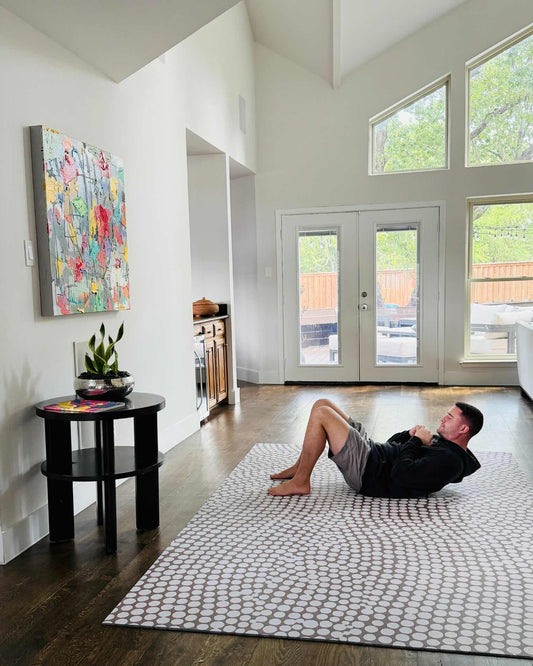
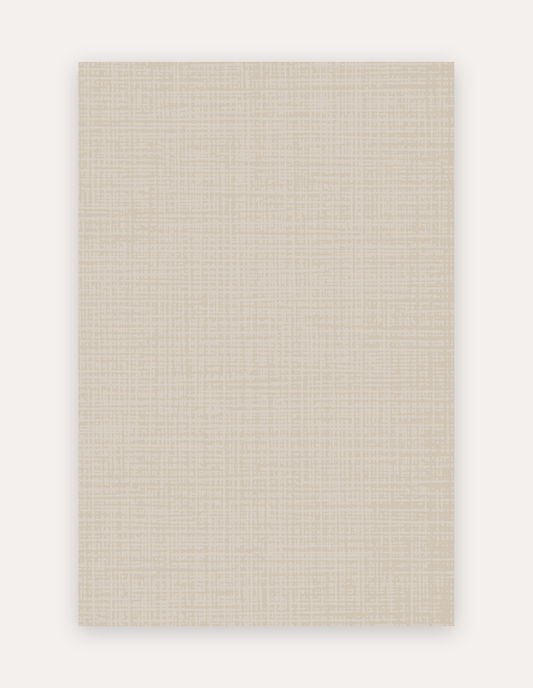
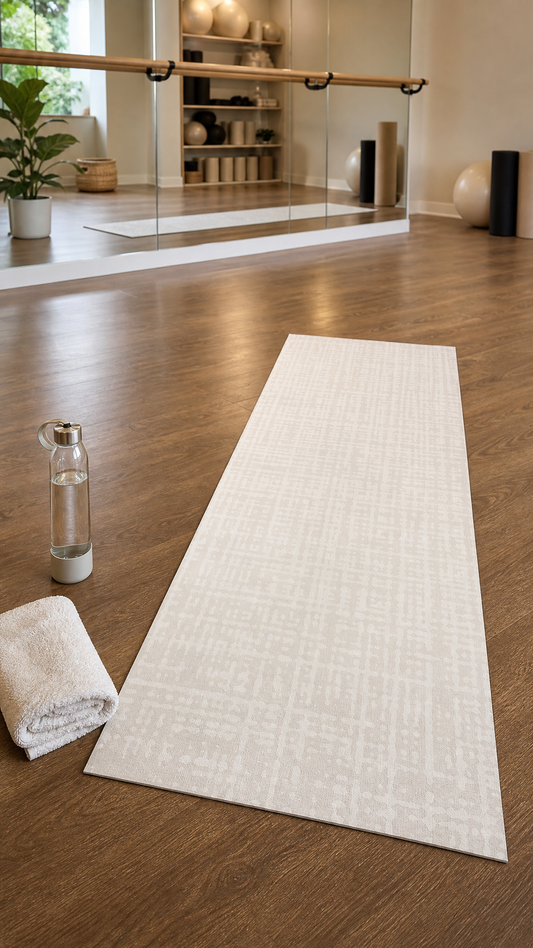
Soft neutrals do a lot of invisible work in a living room. A warm dust pattern reads like linen or raw silk, which is why the mat can sit out between sessions without pulling the room into a workout aesthetic. The visibility is what keeps the daily five minutes alive.
If the room is already warm (oak floors, cream walls, soft wood tones), a dust neutral is almost always the right call. If the room runs cool, consider cooler neutrals when you order a swatch pack. The point of the swatch is to decide in the room where the mat will live.
Where Swankymat fits in lower-back floor work
Sloane Dust Oversized is our bestseller for a reason. The surface is non-toxic high-density foam with supportive cushion that holds its shape through long, slow floor sessions on the back. The soft dust pattern lives in warm living rooms without reading as workout gear, which is how the mat earns a corner it can keep.
The Oversized 5x7 holds the arms wide in a supine twist. The Oversized 6x9 holds the full length of the body with room on either side for a bolster, a folded throw, or a small block within reach. Both are built for the quiet floor time the lower back responds to.
The Confidence Path to the Right Mat
Choosing a mat you'll live with for years is easier when you can see it in your room first. There are three steps that make the decision feel settled before you commit.
Start with the Swatch Pack for $15, credited back toward your mat. The samples arrive quickly, and you can lay them on the floor where the mat will live, next to your rug, your couch, and the light that hits that corner in the morning. Color on a screen is a guess. Color in your room is an answer.
Take the Perfect Match Quiz if you're torn between a few patterns or sizes. It asks a short set of questions about your room, your floor, and how you plan to use the mat, then points you toward the shortlist that fits. It's a few minutes of clarity that saves you a long scroll.
Once your swatches land and you've sat with them for a day, order the mat you kept coming back to. That slower sequence is how most of our favorite reviews start.
The Swankymat Promise
Four things we commit to on every mat that leaves the studio.
- Non-toxic high-density foam with supportive cushion that holds up to daily use on a hard floor.
- Three sizes for real rooms: Oversized 5x7, Oversized 6x9, and a rollable Studio Mat.
- Patterns designed to live in your room instead of fighting it, so the mat can stay out between sessions.
- No Sweat Guarantee, for anyone who orders a swatch pack first. Swap it or send it back for a full refund within 7 days, no sweat.