Mats That Look Like Rugs: What the Category Actually Is
Mats that look like rugs is a category that barely existed five years ago, and now it is one of the most searched flooring questions among people furnishing a modern home, right alongside rug alternatives for living rooms and washable area rugs. What people are looking for is not a trend. It is an answer to a practical question. What if the floor itself did more than one job.
A traditional rug anchors a room visually, but it collects everything. Dust that will not vacuum out of a dense weave. Coffee that soaks past the fibers. Water that pools after a workout. Washable area rugs handled some of this, foam puzzle tiles handled the cushion part, and neither solved the full problem for anyone who wanted their living room to also function as a stretching space, a studio corner, or just a soft place to sit on the floor with a book. The mats-that-look-like-rugs category sits in the space those two options missed, a single surface that reads as a designed rug and performs as a cushioned, cleanable mat.

Why the category exists at all
Most of what gets listed on Google and Amazon under "exercise mat" or "yoga mat" was never designed to be seen when it was not in use. The visual language of fitness equipment is black foam, rubber texture, bright color blocks for the kids category. None of it reads as part of a styled room. The design-conscious buyer who wants a cushioned floor has had to choose between hiding the mat between sessions or putting up with something that visibly does not belong.
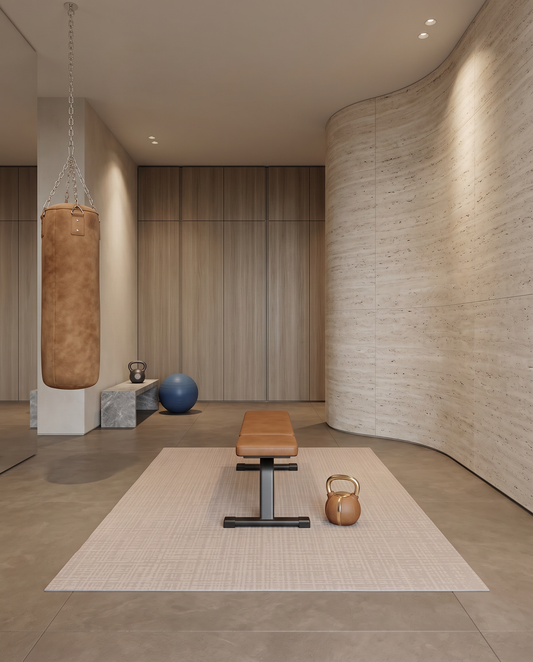
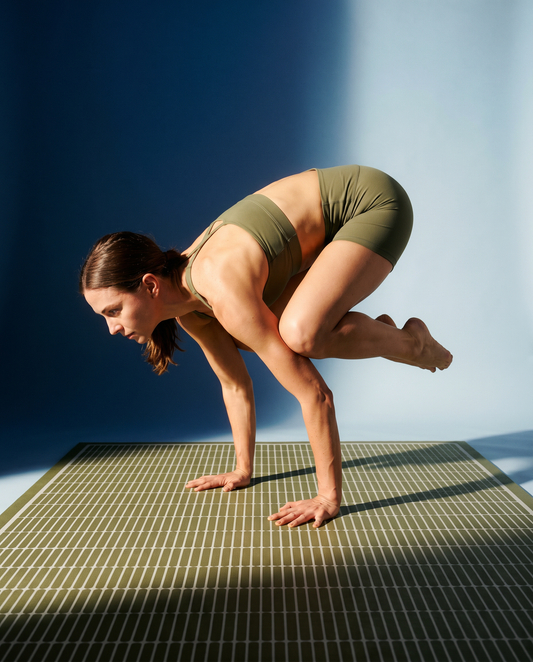
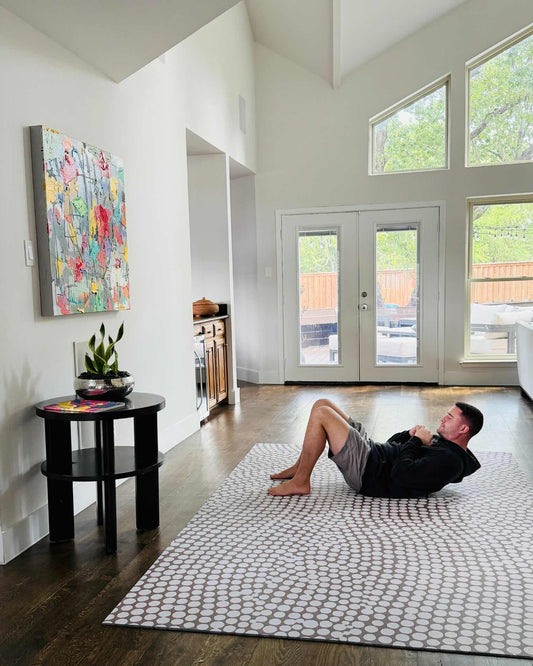
Interior design shifted around that gap. More people are working from home, more are practicing yoga and pilates at home instead of a studio, and more homes are built with great rooms and open plans where the living room is also where you stretch, meditate, read on the floor, or watch something unfold at ground level. The mat has to look right in the room, because the room is doing more than one thing now.
What people actually mean when they search "mats that look like rugs"
Looking at the real questions people type, the brief is remarkably consistent. The mat needs to:
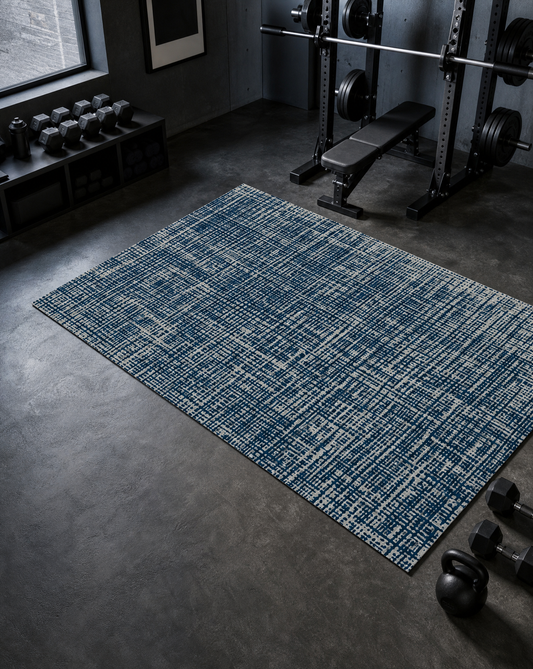
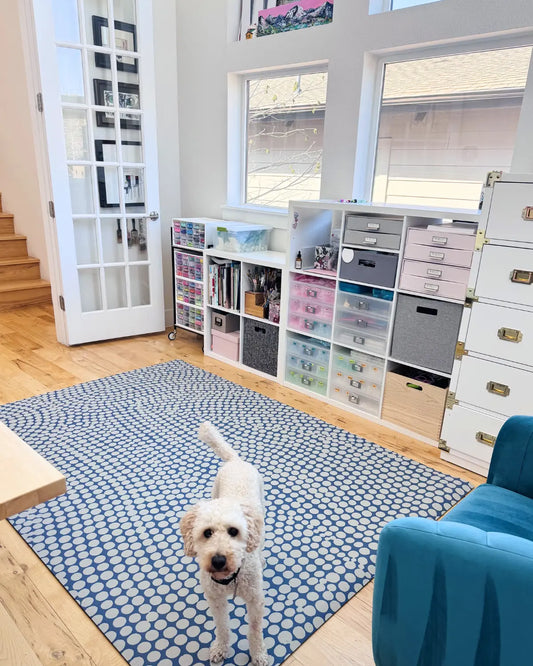
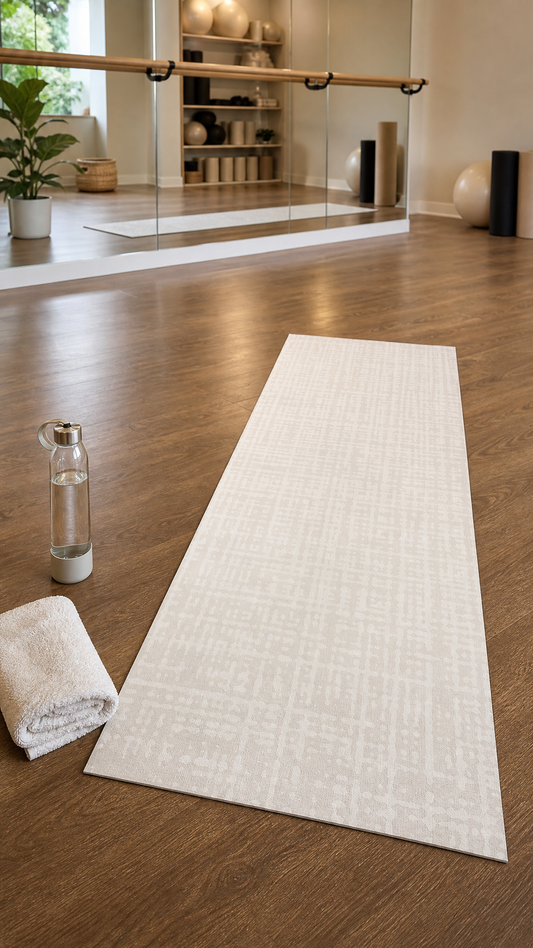
- Have a visual pattern or texture that reads as an area rug, not as gym flooring
- Come in a size that fills a defined zone like an area rug would, not a 24-inch yoga strip
- Lie flat and seamless, with no interlocking foam-tile edges
- Hold up to spills and cleaning the way a mat does, not the way a woven rug does
- Match a style of home, not a kids-only aesthetic
That list rules out most of what shows up on Amazon under the search. The traditional foam tile category fails on the first and third points. The yoga mat category fails on the second. The washable rug category passes the first point but goes back to failing on cushion and daily durability.
What separates a rug-look mat from an actual rug
The surface. A rug is woven or tufted fiber, which means it absorbs everything that lands on it. A rug-look mat has a solid, waterproof surface that wipes clean, so a spilled glass of water sits on the surface for a few seconds and comes off with a cloth. For a floor that is also used for floor exercise, a snack on the floor, or a dog, that difference matters.
The underfoot feel. A rug is thin fiber over hard floor. A rug-look mat has a high-density foam core underneath the printed surface, usually around 6mm thick, which gives the floor a cushion similar to a quality mat. People who use it describe it the way they describe a pilates mat, not the way they describe a rug.
The construction. A real rug has a backing that can slide, bunch at the corners, or trip you on a transition. A single-piece foam-core mat lies flat without a pad underneath and does not travel. On hardwood or luxury vinyl plank, this ends up being the biggest practical difference day to day.
What separates a rug-look mat from a workout mat
Mostly the print and the size. The materials and construction are often similar at the top of the category. A good exercise mat and a good rug-look mat can be the same product with different art direction. The best versions in this new category are built as exercise mats first and designed to look like area rugs, rather than designed as rugs and padded as an afterthought, because the engineering of the foam and the surface is harder than the engineering of the print.
Size matters here too. A yoga mat is 24 by 68 inches. An area rug is 5 by 7 feet at the small end and 6 by 9 feet or larger as it goes up. A mat that is going to replace the rug function in a room has to come in those area-rug sizes, which rules out most of what the fitness category offers.
What to look for when you shop
The questions that matter the most, in rough order:
Material disclosure, specifically. Look for a brand that names what the mat is made of and discloses what has been tested for. Non-toxic, high-density foam with Greenguard Gold certified inks is a credible claim. SGS or REACH testing for phthalates, BPA, and brominated flame retardants is a credible claim. "Eco-friendly" and "non-toxic" without specifics are not claims, they are vibes.
Single-piece construction. Interlocking foam tiles collect dirt and liquid in the seams, which is both a hygiene issue and a visual tell that this is kids equipment, not a styled piece. A single-piece mat eliminates both issues.
A size that fits the actual floor. Measure the zone you want the mat in. A 5x7 is right for defining a single zone, like in front of a sofa or at the foot of a bed. A 6x9 is right for anchoring a larger room or working across the whole floor of a smaller one.
A pattern you would have picked for a rug. If you would not have bought this pattern as an area rug for the same room, you will not keep it rolled out. The whole point of the category is that it stays visible.
A surface that cleans by wipe, not by laundry. Waterproof wipe-clean with mild soap is the standard. If the surface description mentions machine washing or a removable cover, that is a different product category and tends to come with the puzzle-tile aesthetic.
Where Swankymat fits
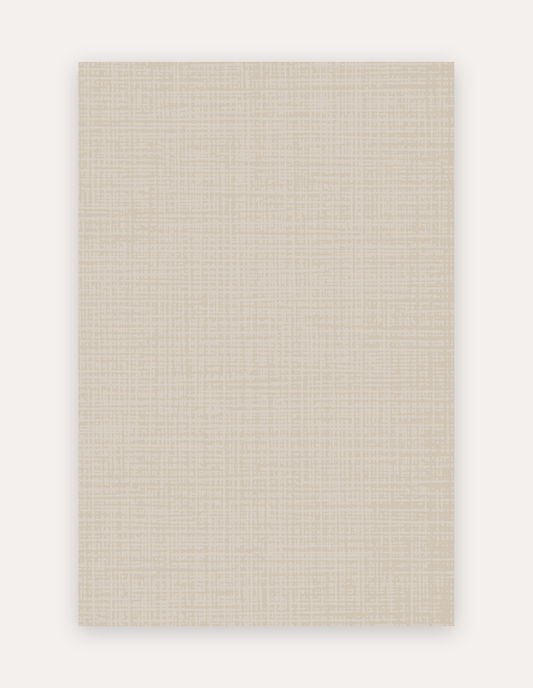
Swankymat was built for exactly this crossover. The Oversized Mat comes in 5x7 and 6x9, single-piece construction, with a non-toxic, high-density foam core and a waterproof, wipe-clean surface. The prints were art directed with modern homes in mind, patterns that read as area rugs in muted colorways like Sloane Dust, Circa Sandstone, Arlo Olive, and Rhodes Mocha. SGS testing shows no detectable phthalates, BPA, or brominated flame retardants, and the inks are Greenguard Gold certified.
The mat is around 6mm of cushion, which is thick enough to work for floor-based movement and thin enough to lie flat as a rug replacement. On hardwood or LVP it does not slide. In a shared living room, it does what a rug does visually and what an exercise mat does functionally.
If you are not sure which colorway reads right in your room, the Swatch Pack ships physical swatches of every current Oversized colorway for $15, credited back when you buy a mat.