

Movement Microhabits: How 5 Minutes a Day Outperforms an Hour Once a Week

The most consistent finding in habit research is that frequency tends to outperform duration. A five-minute movement practice done six days a week produces better long-term outcomes than a sixty-minute session done once a week, even though the total time is similar. This is true for strength, mobility, mental health, and sleep quality.
The reason is mostly about activation energy. A workout that takes thirty seconds to start has a much lower barrier than one that takes thirty minutes to gear up for. When the threshold to begin is low, the practice survives bad days, travel, sick weeks, and full schedules.
What Counts as a Microhabit
A movement microhabit is short, specific, and tied to a moment already in your day. The structure follows three rules: it takes under five minutes, it requires no setup, and it happens at the same time every day.
What it is not: a workout, a class, a planned session, anything that requires a schedule to be cleared. It lives inside the existing pockets of a day.
Three Five-Minute Sequences
The sequences below cover the most common windows where a short floor practice fits. None require equipment beyond a clear floor surface.
Morning: Activation
Five minutes of gentle activation before coffee or before the kids are up. Cat-cow for one minute. Hip circles, thirty seconds each direction. A slow squat with arms reaching overhead, ten repetitions. A short downward dog hold, thirty seconds. Done.
Midday: Reset
Five minutes to interrupt a long sitting block. Standing forward fold, one minute. A low lunge with reach, one minute each side. Spinal twist seated on the floor, one minute total.
Evening: Wind-Down
Five minutes of restorative movement before bed. Legs up the wall (or against a sofa), two minutes. Supine spinal twist, one minute each side. Child pose, one minute.
None of these sequences will replace a structured workout. That is not what they are for. They keep the body moving daily, which compounds over a year in a way that occasional long sessions do not.
The Compounding Math
Five minutes a day, six days a week, for one year, adds up to roughly 26 hours of dedicated movement time. Sixty minutes once a week, for one year, adds up to about 52 hours. On paper, the weekly session wins. In practice, very few people maintain a weekly hour-long routine for a full year. The dropout rate is high.
The five-minute version has a near-zero dropout rate when it is tied to an existing daily anchor (morning coffee, midday lunch, evening routine). And the body changes from daily low-dose movement are different from those produced by infrequent intense sessions. Range of motion improves more steadily. Sleep quality shifts. Lower back pain decreases.
The One Setup Question
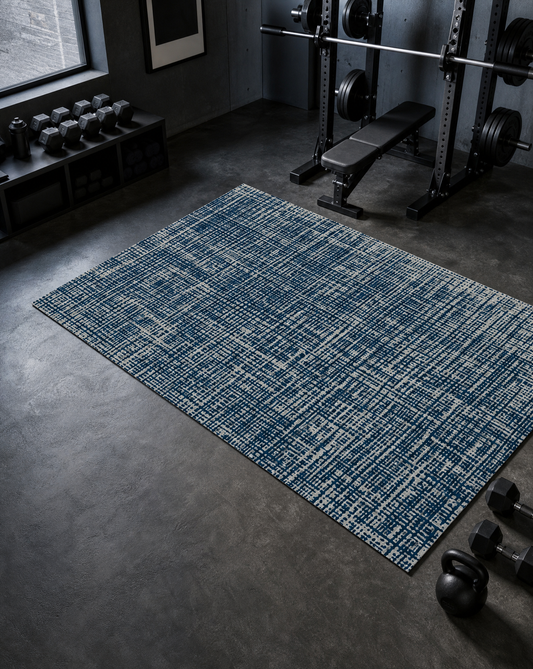
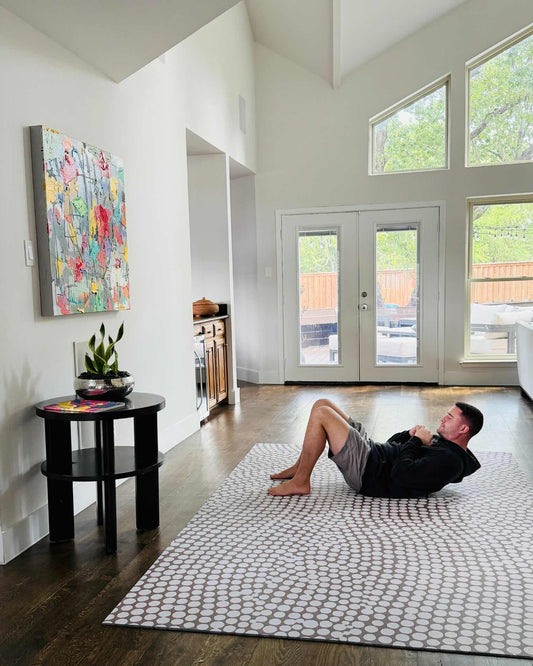
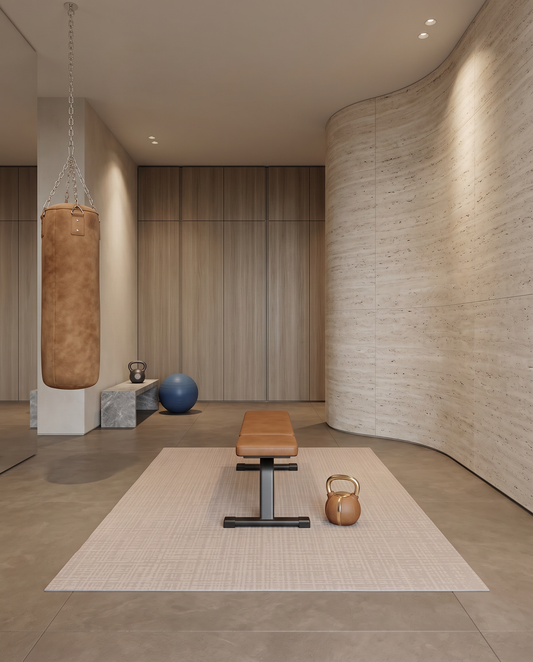
The biggest barrier to a microhabit is whether the surface is ready when you are. If the mat lives in a closet and needs to be unrolled, the five minutes turns into ten by the time you have set up. The practice fails on busy days.
A practice that fits into the cracks of a day depends on the surface being part of the room. Rolling, storing, and re-rolling adds friction the microhabit is designed to avoid.
Removing the Setup Step
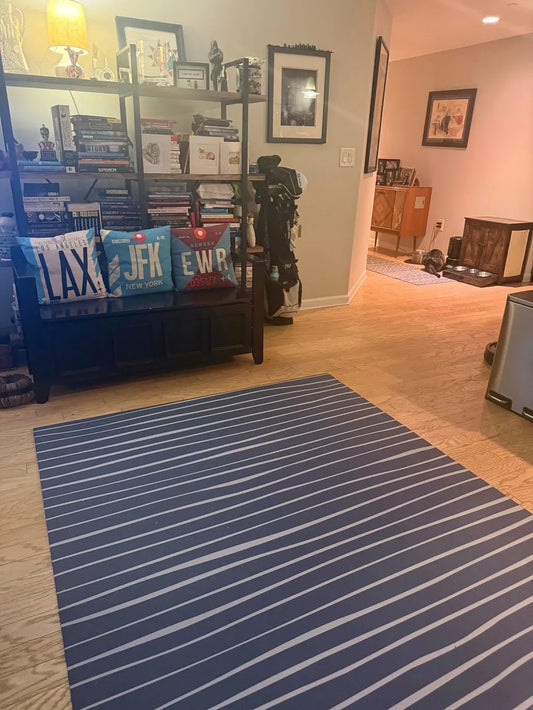
The strongest argument for a permanent floor surface is what it removes from the daily decision. A mat that lives in a closet adds five to ten minutes of setup before each session. A mat that lives on the floor adds zero. For a practice measured in minutes, that difference often determines whether it happens at all.
For more on building a movement practice that holds up to a busy schedule, the post on how to make movement part of your daily routine covers the habit science. For a longer-form view, the post on setting realistic movement goals goes deeper into how to scale a routine to a real schedule. And the Studio Mat is a rollable option for the days you want to move the practice to a class or to a different room.