

What My Years as a NICU Nurse Taught Me About Safe Surfaces at Home
Article By Emilie Vannguyen
The Environment Shapes the Body
Before founding Swankymat, I spent years working as a NICU nurse. In that environment, every surface mattered.
Premature infants are fragile. Their positioning, muscle tone, joint alignment, and comfort are influenced by the smallest environmental factors. We were trained to think constantly about support — what was underneath them, how pressure was distributed, and how movement interacted with their surroundings.
That clinical lens stayed with me long after I left the hospital.
While adults are obviously not premature infants, the principle is the same: the body responds to its environment. Supportive surfaces matter more than most people realize.
Why Floor Surfaces Matter for Movement
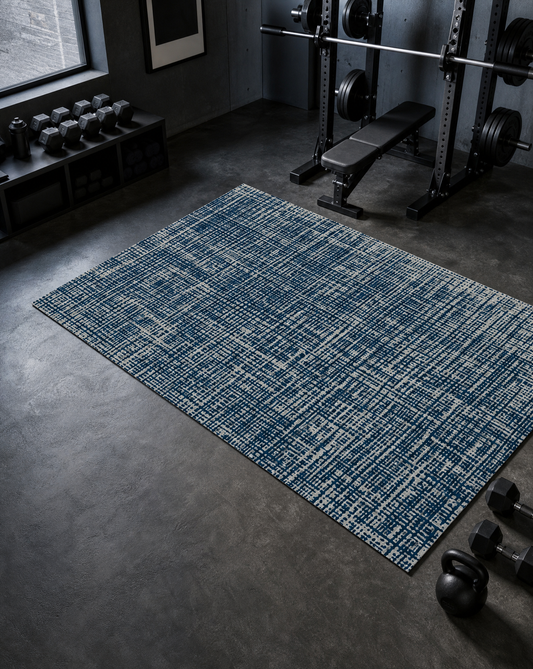
When people think about home workouts, they focus on equipment — dumbbells, resistance bands, reformers.
But the surface underneath you determines:
• Stability during strength training
• Comfort during floor-based mobility
• Pressure distribution on joints
• Trip and separation hazards
• Willingness to stay consistent
Hardwood floors are unforgiving. Traditional rugs slide and bunch. Small yoga mats restrict range of motion and create edge transitions mid-workout. Over time, these small friction points reduce consistency. Consistency is what actually drives physical progress.
Joint Protection Is Not Just for Injury
In the NICU, we were hyper-aware of pressure points and joint positioning. In adult movement, similar principles apply — especially during:
• Postpartum recovery
• Core rehabilitation
• Low-impact strength training
• Mobility and stretching routines
• Knee-supported exercises
• Tummy time and play with babies and kids
A supportive, stable surface helps reduce unnecessary strain on wrists, knees, hips, and shoulders during floor-based movement. This is not about padding for comfort alone.
It is about creating an environment that encourages proper form and repeatable movement patterns.
The Overlooked Problem with Rugs
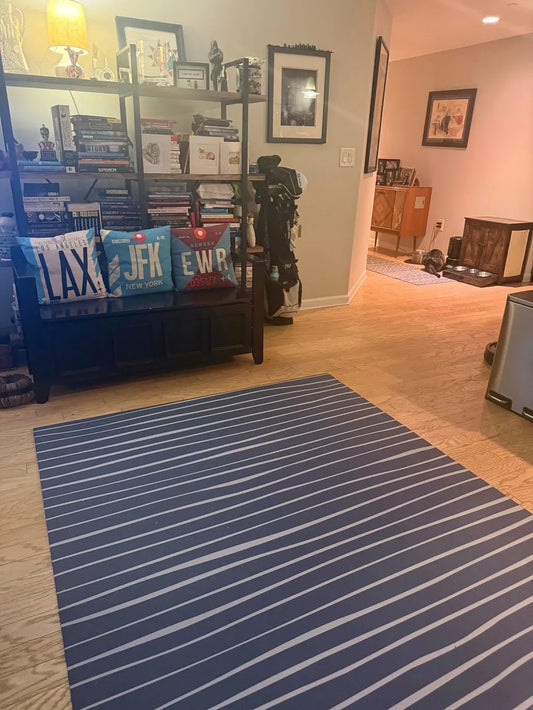
Many families work out directly on rugs. The issue is not aesthetics — it is structure.
Rugs:
• Compress unevenly
• Shift under lateral movement
• Absorb sweat
• Trap dust and allergens
• Create friction points at edges
When we began designing Swankymat, I kept returning to a simple idea: What if the floor itself could become a supportive wellness surface?
Not a temporary yoga mat.
Not interlocking foam tiles.
But one uninterrupted foundation.
Creating Safer Movement Environments at Home
You do not need a commercial gym to create a supportive environment.
You need:
• Stability
• Cushioning appropriate for joint support
• A surface large enough to eliminate edge transitions
• Materials that are non-toxic and easy to clean
These principles apply whether you are:
• Lifting weights
• Doing Pilates
• Practicing yoga
• Supporting postpartum core recovery
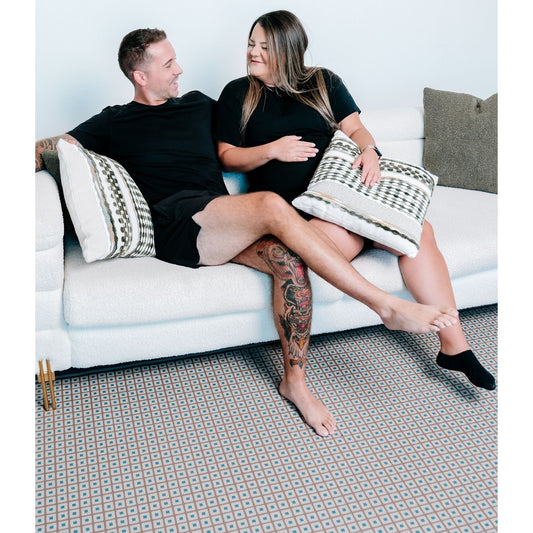
• Moving alongside your children
The body adapts to the environment it is given. When the environment supports movement, consistency follows.
From Clinical Awareness to Modern Living
Swankymat was born from a simple realization: Homes deserve surfaces that support both movement and everyday life. As a former NICU nurse, I learned that safe environments are intentional. They are designed — not accidental. Today, that same awareness shapes every mat we create:
• Seamless construction
• Stable cushioning
• Non-toxic materials
• Waterproof, wipe-clean surfaces
• Large-format design
If you are building a home that supports strength, recovery, and real life, start from the ground up. Your surface matters more than you think.