

Non-Slip Yoga Mat: What Actually Keeps a Mat From Sliding

Non-slip is one of the most-searched yoga mat attributes and one of the most misunderstood. When practitioners say they want a non-slip mat, they usually mean two different things at once: the surface should hold their hands and feet during poses, and the mat itself should stay in place on the floor. These are two separate engineering problems, and most yoga mats solve one at the expense of the other.
This post covers what non-slip actually requires from both sides of the mat, why most mats compromise on one, and what to look for when the practice needs both.
The Two Directions Non-Slip Has to Solve
Grip on a yoga mat is bidirectional.
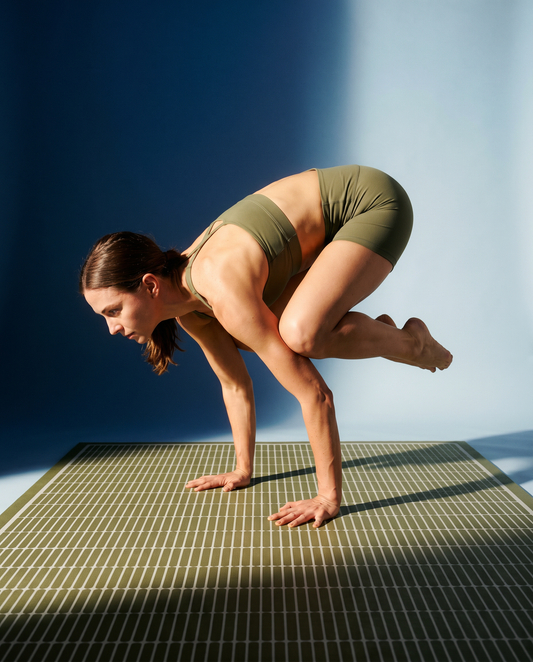
Surface grip (top side). The surface has to hold the hands and feet during standing poses, arm balances, and any position where body weight loads a small contact area at an angle. Grip has to work when the surface is dry, when it is sweaty, and when the practitioner is transitioning between poses.
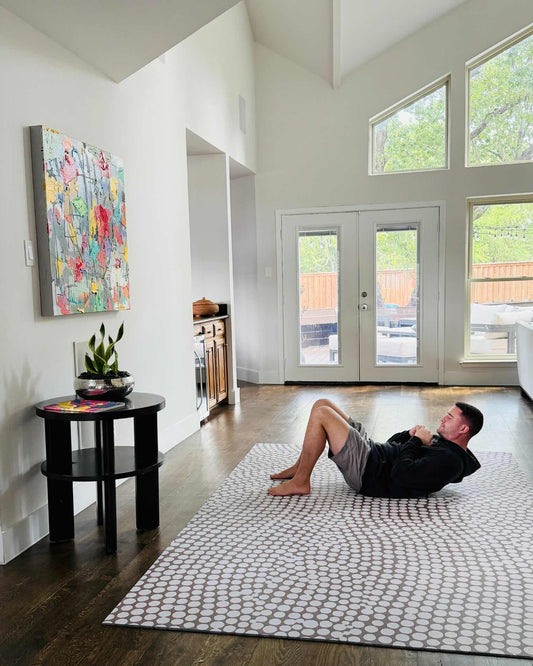
Underside grip (bottom side). The mat itself has to hold position on the floor underneath. This matters more at home (hardwood, tile, laminate) than in a studio (carpeted or rubberized floors). Any lateral force during standing work, dynamic transitions, or weighted training will slide a mat that lacks underside grip.
Why Most Yoga Mats Solve Only One Direction
The engineering tradeoff is real. Materials optimized for surface grip (polyurethane top layer, textured natural rubber) are often not the same materials optimized for underside grip on hard floors. Mats that grip strongly on the top often slide on hardwood underneath. Mats with strong underside grip often have less grippy top surfaces.
Four common configurations, each with a tradeoff:
Polyurethane top over rubber base. Excellent top grip when dry, moderate top grip when wet, tends to slide on hardwood without a rug pad.
Natural rubber top and bottom. Strong grip in both directions for hot yoga and heavy sweat, but the material has category-specific constraints (rubber smell, latex sensitivity, UV degradation, water absorption).
PVC top and bottom (standard). Moderate grip in both directions, requires break-in period, adequate but not exceptional in either direction.
Non-toxic high-density foam with textured underside. Consistent grip on both sides, no break-in, no rubber constraints. This is the configuration that solves both directions without the category tradeoffs.
What Non-Slip Fails Look Like in Practice
Three specific failure modes come up consistently.
The mat migrates during lateral movement. Skater jumps, side lunges, lateral shuffles, and any footwork drill that puts sideways force on the mat causes it to walk across the floor. Repositioning every few minutes breaks the practice flow.
Hands slip during downward-facing dog. Sweat accumulates in the primary contact zones (front of the mat where hands land). The surface grip fails as moisture builds, and downward dog becomes an exercise in preventing a hand-slide rather than in the pose itself.
The mat bunches during transitions. Poses that involve stepping forward or back with force (Warrior transitions, chaturanga) can bunch a mat that is not gripping the floor. The bunching becomes a fall risk.
What Actually Delivers Reliable Non-Slip
Four attributes tend to define reliably non-slip mats in both directions.
Textured underside on hard flooring. Not adhesive, not requiring a rug pad. The mat surface itself grips hardwood, tile, and laminate through its underside texture.
Consistent top-surface grip from day one. No break-in period required. The mat works the first time it is unrolled and does not require salt scrubs or extended wear to become functional.
Grip that holds under moisture. Sweat is inevitable during any serious yoga or fitness practice. The surface has to maintain grip as it gets wet rather than becoming a slip hazard.
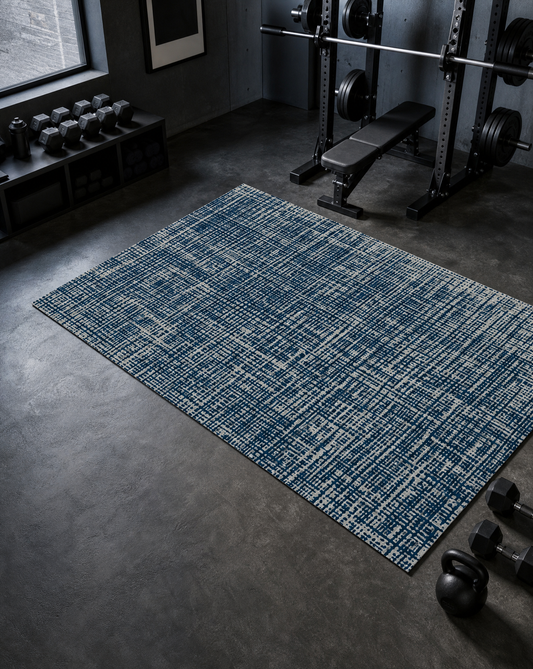
Weight distribution across a substantial footprint. A larger mat with adequate cushion distributes the practitioner's weight across a wider base, which itself increases the friction with the floor. Standard yoga mat size (68 by 24) migrates more easily than an oversized mat.
The Swankymat Approach to Non-Slip
Swankymat is engineered for reliable grip in both directions without the tradeoffs of the layered-mat category. Single-piece non-toxic high-density foam with a textured underside that grips hardwood, tile, and laminate without a rug pad. The top surface delivers consistent grip from day one, holding hands and feet during standing poses, arm balances, and dynamic transitions. No break-in period.
The larger footprint (Oversized 5x7 or 6x9) distributes practitioner weight across a wider base than a standard yoga mat, which itself contributes to floor grip through weight distribution. The Studio Mat in the classic yoga size shares the same non-slip construction in a portable format.
The Confidence Path to the Right Mat
For anyone whose practice is being undermined by a slipping mat, two low-risk starting points work well.
The Perfect Match Quiz takes 60 seconds and recommends a colorway and size based on your practice and space. Free.
The swatch pack ships three real material samples for $15, credited to your mat. Testing the surface texture in hand is the reliable way to evaluate grip characteristics. Ordering swatches first unlocks the Perfect Match Guarantee: if the colorway is not right once your mat arrives, you switch the mat for a different colorway one time, free. Swatch it, switch it free.
The Swankymat Promise
Every Swankymat is backed by four commitments. Built to Last, Backed for a Year (a 1-year quality guarantee on manufacturing defects and premature wear). Easy 30-Day Returns (live with your mat and if it is not right, send it back within 30 days). Spills Happen (waterproof and wipe-clean, so real life wipes right off). Perfect Match Guarantee (for anyone who orders a swatch pack first). Free shipping on all orders in the Continental US, including HSA/FSA orders through TrueMed.