

The Peloton Companion Mat: Bike, Tread, and Floor Work Setups

Peloton households often add the bike or Tread first and think about the floor underneath only after damage or noise complaints emerge. The Peloton companion mat category exists because both problems are common enough to spawn an entire aftermarket. Understanding what the floor actually needs to do, and how the Peloton content ecosystem uses floor space beyond the bike, changes the mat selection meaningfully.
This post covers the specific loads Peloton equipment puts on the floor, why the standard Peloton branded mat is usually not the right answer, and what to consider for the full Peloton content experience including off-bike floor work.
What the Bike, Tread, and Guide Put on the Floor
Three Peloton products create three different floor demands.
Peloton Bike and Bike+. Continuous vibration from the flywheel and drivetrain. Sweat drops during class. Point loads from the bike feet (roughly 135 pounds distributed across four small contact areas). Foot-strike vibration during out-of-saddle riding.
Peloton Tread and Tread+. Motor vibration. Foot-strike impact multiplied by treadmill design. Sweat accumulation over long sessions. Substantial point loads from the tread footprint (roughly 300 pounds concentrated on four feet).
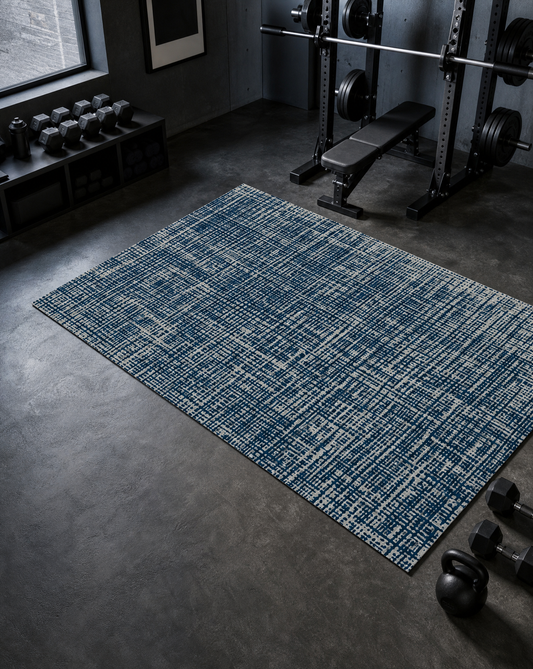
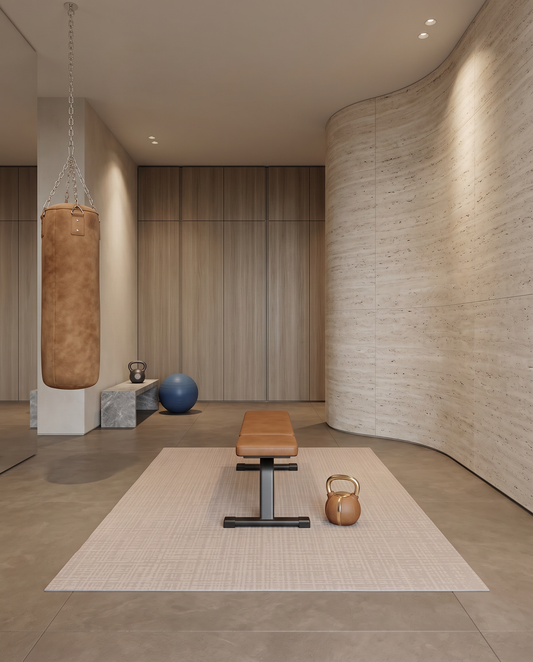
Peloton Guide. No direct floor load, but the strength content requires floor space for kettlebell work, dumbbell work, and floor-based strength sequences. The Guide setup effectively needs a proper strength training floor.
Why the Standard Peloton Mat Is Usually Not the Right Answer
Peloton sells a branded bike mat that covers the bike footprint plus modest margin. Three reasons it is often not the reliable choice.
Too small. The Peloton branded mat covers the bike but leaves the surrounding floor exposed to sweat, dropped items, and the natural spread of a workout. Sweat drops that miss the mat land on hardwood.
Aesthetic mismatch. Black rubber mat in a living room or bedroom where the bike often lives reads as gym equipment in a space that was not designed as a gym.
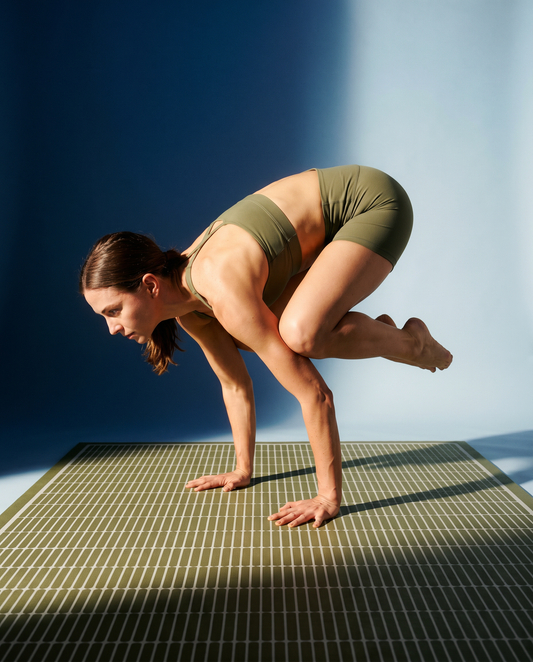
Does not support off-bike work. The Peloton app includes yoga, strength, meditation, and outdoor running content that happens off the bike. The bike mat does not serve any of that.
What a Real Peloton Companion Mat Solves
A properly sized companion mat serves the full Peloton ecosystem, not just the bike or tread footprint.
Bike zone protection. Full coverage under the bike footprint plus margin for sweat drops and dropped items (water bottles, weights during Bike Bootcamp classes).
Vibration dampening. 6mm high-density foam meaningfully reduces vibration transmission to floors below. Critical for apartment dwellers.
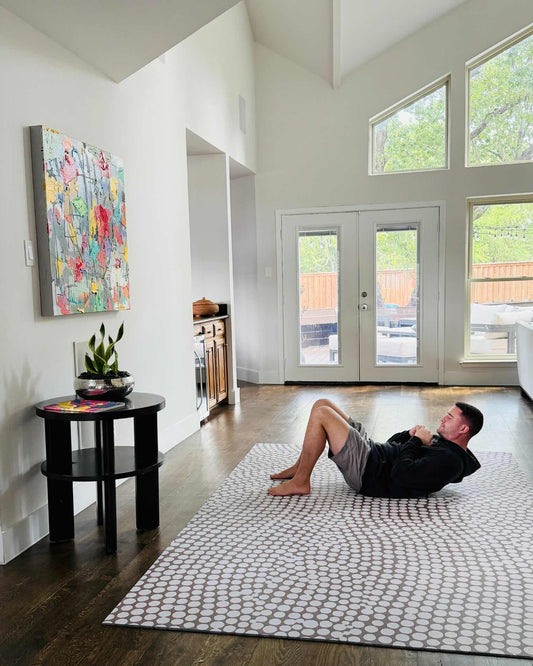
Off-bike floor space. Room for the yoga, strength, and stretch content that Peloton members increasingly use. The mat becomes the floor for the entire Peloton practice, not just the bike.
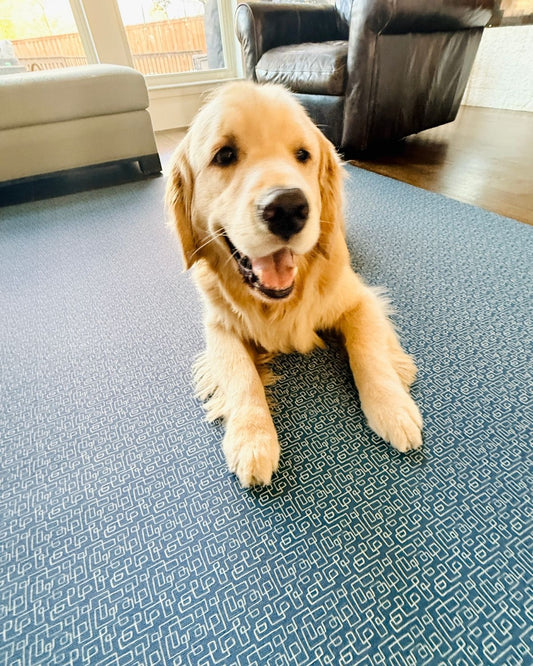
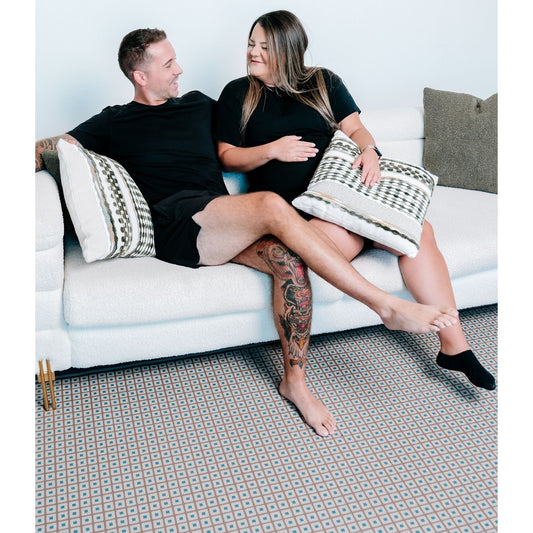
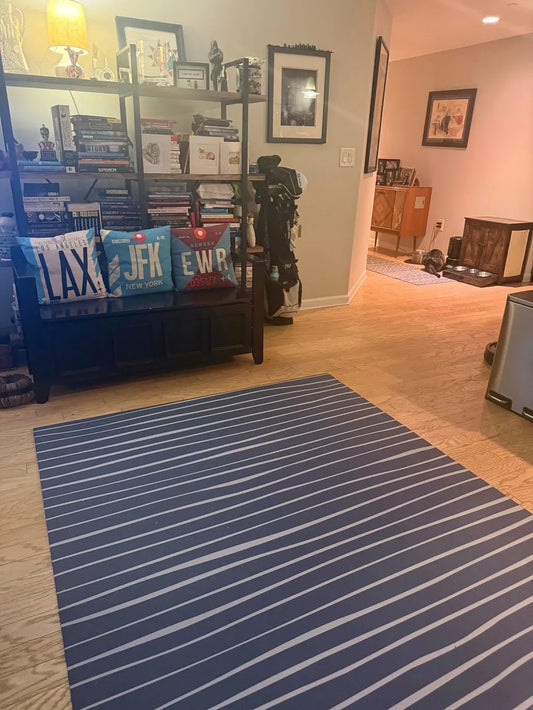
Aesthetic integration. Design-forward pattern that reads as decor in the living space where the Peloton often lives.
Size Recommendations by Setup
Three configurations that cover most Peloton households.
Bike-only setup. Oversized 5x7 fits the bike with adequate margin for sweat and dropped items. Provides room for post-ride floor work (stretching, cool-down) that the Peloton app increasingly includes in class content.
Bike plus dedicated strength training. Oversized 6x9 fits the bike plus a full strength training zone next to it. Accommodates Peloton Bike Bootcamp classes where you cycle between the bike and floor-based dumbbell or bodyweight work.
Tread setup. Oversized 6x9 for the tread plus margin. The tread footprint is larger than the bike and produces more sweat and impact spread.
The Sweat Consideration
Peloton classes are sweat-heavy. Instructors regularly hit the peak zones that produce meaningful sweat volume. A mat that absorbs sweat rather than shedding it becomes a maintenance problem within weeks.
Waterproof single-piece construction is the reliable configuration. Sweat drops sit on top and wipe clean with a damp cloth. Daily cleaning is straightforward and the mat surface does not degrade under repeated cleaning.
The Apartment Consideration
For apartment dwellers, the vibration transmission question is often the primary reason to use a companion mat. Peloton bike noise to the neighbors below is one of the most common complaints in urban buildings and one of the most common reasons Peloton subscriptions get cancelled.
A 6mm high-density foam mat under the Peloton meaningfully reduces the transmitted vibration to floors below. It does not eliminate it, but it usually brings it below the complaint threshold for most buildings.
The Swankymat Fit for Peloton
Swankymat serves the full Peloton use case rather than just the bike or tread footprint. Single-piece non-toxic high-density foam with 6mm of supportive cushion absorbs vibration and provides the strength-and-yoga floor for off-bike content. Waterproof wipe-clean surface handles the sweat volume Peloton classes produce. Non-slip underside stays in place under the bike load and under the lateral force of Bike Bootcamp floor work. Hand-drawn patterned designs integrate with the living space rather than announcing the setup as gym equipment.
Available in Oversized 5x7 for bike-only setups and Oversized 6x9 for bike-plus-strength or tread configurations. For material feel and cushion response before ordering, the swatch pack ships three real samples with $15 off the first Oversized mat.
For the broader home fitness integration question, the post on carving out a home wellness space covers layout and design considerations.