The Physical Therapy Mat That Keeps You Doing the Work Every Day

The surgeon or the PT sent you home with a list. Four exercises, twice a day, every day, for six weeks or six months. Nothing on the list is hard. The hard part is doing it tomorrow and the day after and the day after that. The mat you were given at your first appointment is thin, blue, and lives in a plastic bin in the hall closet. You stop pulling it out around day nine.
The surface answer is to buy a bigger mat. That helps for about three days, then the bigger mat goes into the same closet. The mat is not the problem. The storage is the problem. If the mat has to come out of a closet, your rehab is a project every time, and projects get skipped. The mat has to stay out.

Why rehab lives or dies on the first ninety seconds
Physical therapists have a quiet rule: the longer the setup, the lower the adherence. If you have to roll out a mat, grab a band from a drawer, dim the lights, and find a video, you've lost most people before the first rep. The exercises are the easy part. The friction before the exercises is the hard part.
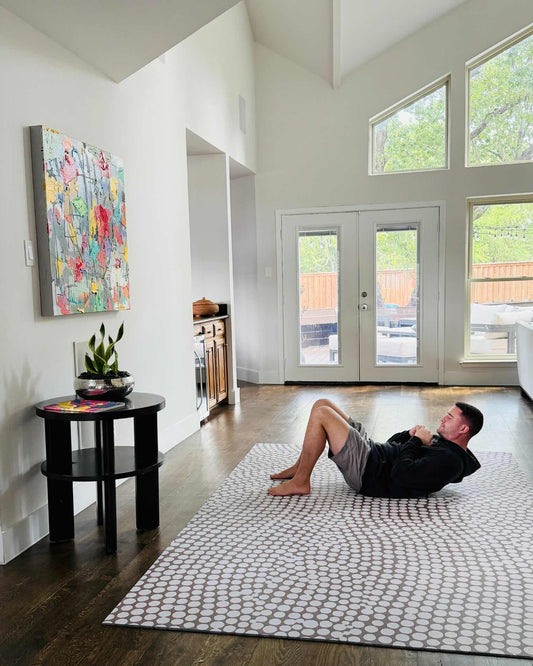
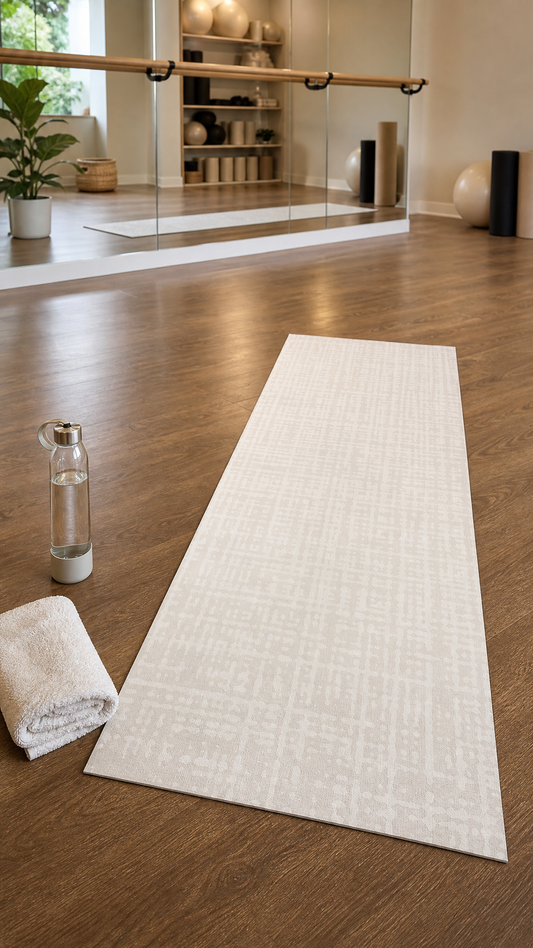
A mat that stays flat on your bedroom floor cuts the setup to one step. You walk in, you lie down, you do the five minutes. There's no "I'll do it later" because later is now. The behavior change is about design, more than discipline.
What a daily-rehab mat has to do
The mat has to be comfortable enough for the stuff that aches: lying on your back with your knees up, pressing a shoulder into the floor, holding a side plank on an elbow that still complains, kneeling in a split stance for a hip stretch. If the mat is thin, you cheat the position. If the mat is memory-foam soft, you lose stability. The sweet spot is high-density cushion, enough to spare the bony parts and firm enough to hold a plank.
It also has to be big enough for the full range of your rehab. If your program has supine work with your arms out to the sides, a standard mat clips you at the shoulders. If your program has quadruped work with a long back leg, a standard mat clips you at the toes. The mat shouldn't ask you to shrink.
Low back, hip, knee: three common programs and the sizes they need
For a low-back program, you'll spend time supine with knees up, doing dead bugs, pelvic tilts, bridges, and single-leg marches. A 5x7 handles this with room; a 6x9 lets your arms open fully in a dead bug without your wrist landing on hardwood. For a hip program, you'll be kneeling, lunging, and doing side-lying clamshells. A 6x9 is kinder here because the long side gives you cushion from head to foot in a side-lying series. For a knee program, you'll be doing a mix of supine straight-leg raises, quadruped work, and standing exercises next to a counter. A 5x7 handles the floor pieces, and the standing work can come off the mat.
Match the size to the longest exercise in your program, not the shortest. If the hardest exercise is the one your mat barely holds, you'll quietly stop doing it.
Grip, cushion, and the quiet details that matter
A rehab mat has to grip the floor. Any slide during a bridge or a dead bug trips the point of the exercise, which is loading a stabilizer under slow control. A mat that moves under you teaches the opposite habit. A mat that grips the floor and grips you lets you load the muscle, instead of fighting the surface.
Cushion matters where the mat meets bone. Shoulder blades, hip points, kneecaps, the heel of your hand. Non-toxic high-density foam gives at those points and comes back without staying compressed. A memory-foam mat looks cushier on paper and feels worse in use, because every rep sinks a little differently.
One quiet detail: the mat has to clean up fast. Rehab happens in sweatpants, with socks on, sometimes with ice packs that leak a little. A one-piece surface wipes with a damp cloth. Textured mats hold grime. Simpler is better here.
Designing a rehab zone you'll come back to
Pick the spot in your home where you already spend time. Next to the bed, in the corner of the living room, in the home office where you take morning calls. Lay the mat down there. Keep a band, a small ball, and one block in a basket beside it. Put the printed exercise list from your PT on the wall or inside a kitchen cabinet door you open every day. The visual cue plus the laid-out mat plus the ninety-second setup is what makes rehab stick for six months instead of nine days.
If the mat lives where life happens, so does the rehab. The whole system runs on friction, and the mat that stays out is the lowest-friction part of the chain.
Where Swankymat fits in a daily rehab setup
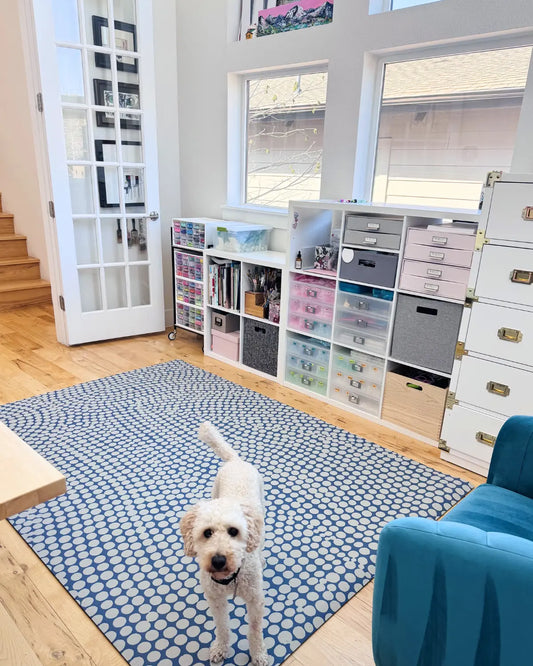
Circa Cove is the one we point people toward when the mat has to live out. The pebble-pattern cool blue reads calm, almost coastal, which is why it works in a bedroom, an office, or a corner of the living room where you've carved out a rehab zone. It's a mat you stop seeing as gear and start seeing as part of the room. That's exactly the shift that keeps the work going on day forty-two of a six-week program.
Underneath, Circa Cove is built on non-toxic high-density foam that holds a dead bug, a glute bridge, a side-lying clam, and a long savasana at the end. The surface is printed with Greenguard Gold certified inks. One piece, flat, grippy. You lie down, you do the five minutes, you move on with your day. The mat is quiet enough that the habit becomes louder than the mat.
The Confidence Path to the Right Mat
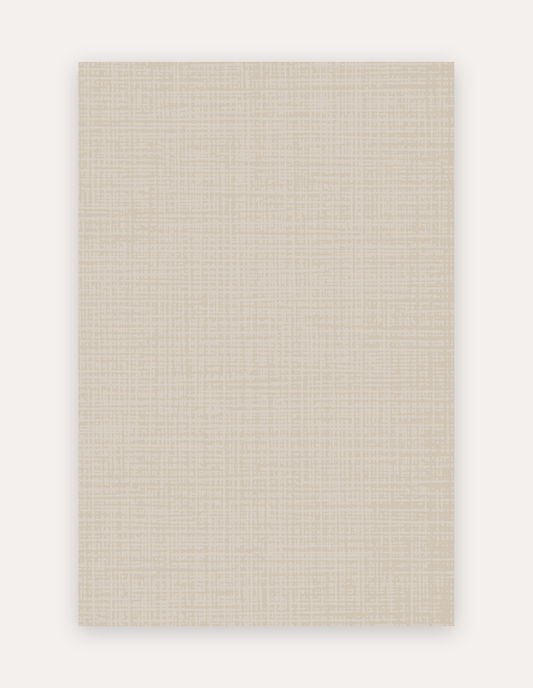
Picking a mat you'll stand on every day deserves more than guesswork. The Swatch Pack is $15, credited back to your mat, and it's the simplest way to see how a color reads in your room, on your floor, in your light. Hold the fabric-weight prints against the rug, the sofa, the chair you reach for most. The one you keep looking at is the one to order.
If you'd rather we point you toward a shortlist, the Perfect Match Quiz asks a handful of questions about your floor, your room, and the kind of movement you do, then matches you to the two or three mats most likely to feel right. Short, honest, useful.
Start with the Swatch Pack and let the room decide.
The Swankymat Promise
Non-toxic, high-density foam. Supportive cushion built to be stood on, kneeled on, lived on. Odor-free out of the box.
Design-first colorways. Patterns and tones that read like a rug, so the mat belongs in your living room, your bedroom, your office.
Greenguard Gold inks. The print layer is certified for low chemical emissions, so what you see on top isn't off-gassing underneath you.
No Sweat Guarantee, for anyone who orders a swatch pack first. Swap it or send it back for a full refund within 7 days, no sweat.