


The Play Mat That Doesn't Look Like a Play Mat
You wanted a floor your kid could fall on. What you found, mostly, was foam. Primary-color squares that lock together like a daycare. A puffy mat covered in cartoon giraffes. Something gray and rubbery that announces, to anyone who walks in, that a small person lives here and has taken the room.
There is a quieter version of this problem, and most parents recognize it: you want the cushion without the eyesore. You want the living room to still look like the living room. The question isn't whether to protect the floor — it's how to do it without surrendering the way the room looks.
Here's how to find a stylish play mat that earns its place in a real home, and what to look for so it works as a kid-proof living room rug instead of a piece of gear you hide when guests come over.
Why most play mats wreck the room
The standard options each fail the design test in their own way.
Interlocking foam tiles are the worst offender. The seams trap crumbs and dirt, the pieces shift and pop apart under a crawling baby, and the bright primary colors were designed for a classroom, not a home you've decorated. They read as temporary because they are.
Puffy printed mats (clouds, animals, alphabets) are soft enough, but they commit the whole room to a nursery aesthetic. The print dates fast, and there's no version of "swirled pastel giraffes" that coordinates with the rest of your furniture.
Thin foam roll-outs bottom out under any real weight, curl at the edges, and slide on hard floors. They photograph fine and disappoint in person.
A regular rug looks great and fails the function test. It soaks up spills, it isn't cushioned enough for a head-first tumble, and it's a nightmare to clean when a sippy cup goes over.
The gap is obvious once you name it: there's no reason a surface that's safe for a kid has to look like it's for a kid.
What to look for in a stylish play mat
If you want one that disappears into the room instead of taking it over, four things matter.
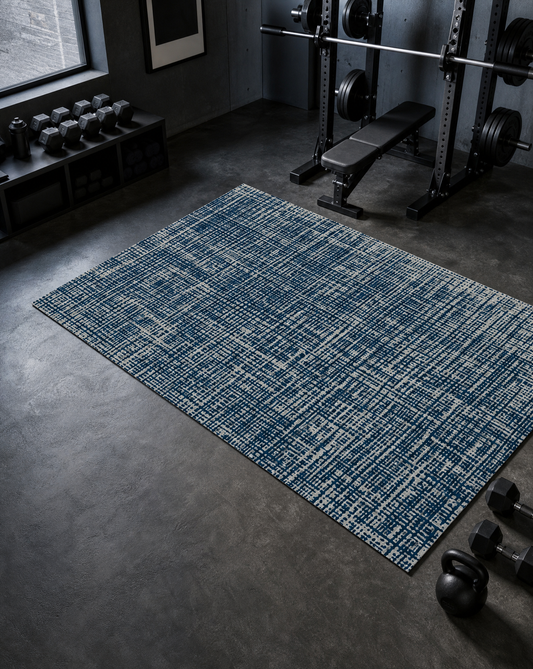
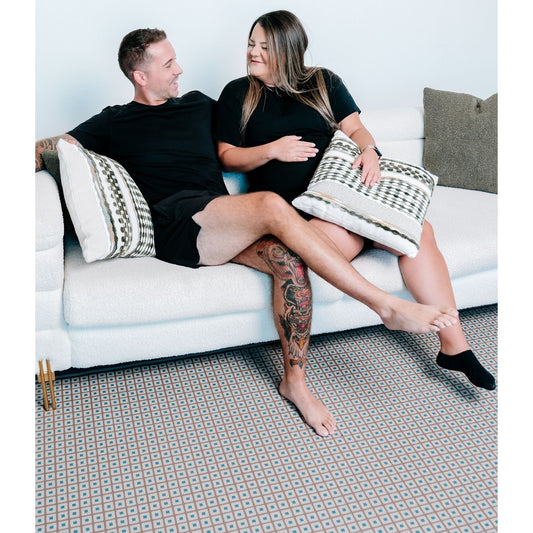
A grown-up palette. Neutrals, a single quiet pattern, a color that coordinates instead of competes. A hand-drawn crosshatch or a soft abstract reads as design; a row of cartoon characters reads as plastic. The best stylish, patterned play mats look like something you chose, not something you tolerated.
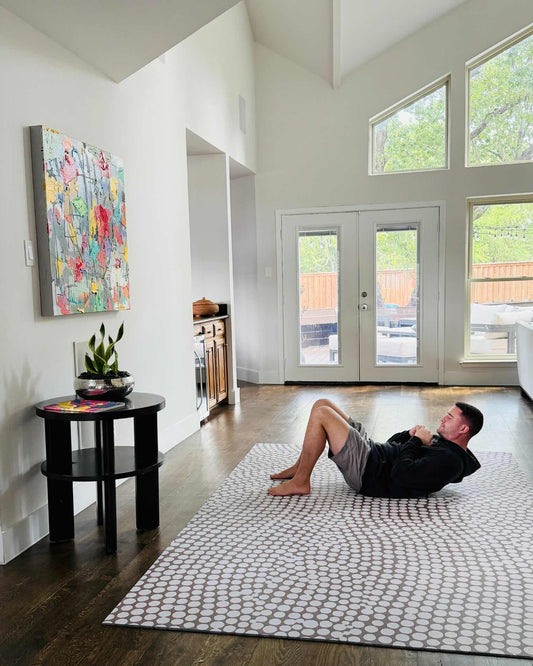
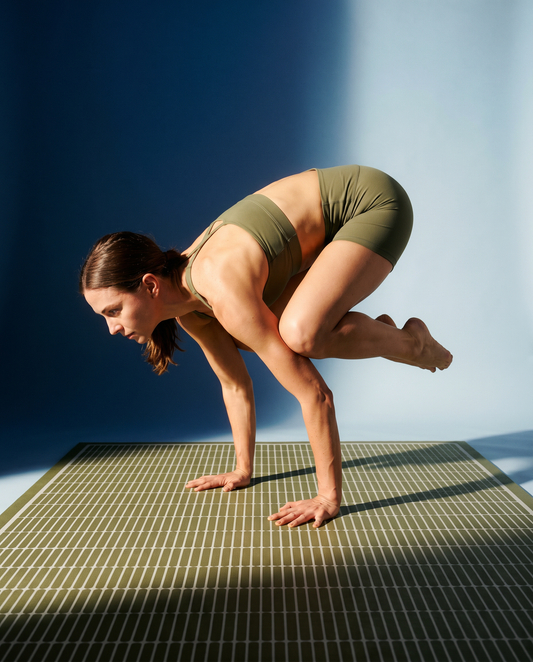
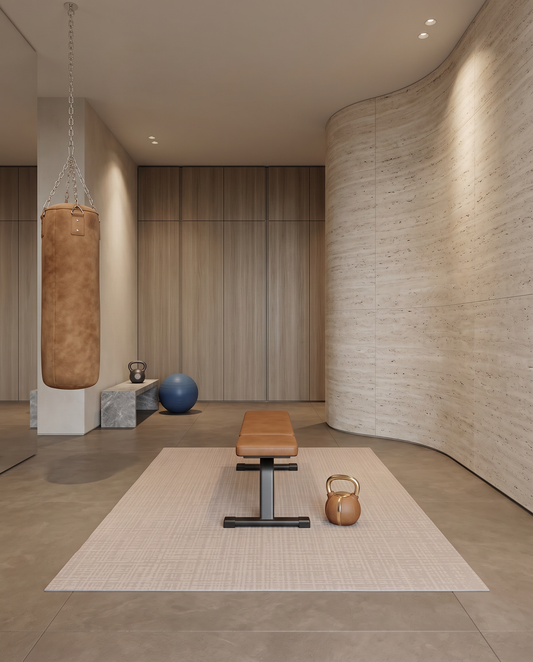
Real cushion, not just a soft top. For a floor that protects a falling toddler and supports a barefoot workout, you want a genuinely supportive surface: non-toxic, high-density foam that holds up under weight without bottoming out. Thickness you can feel underfoot is the difference between a play mat and a place mat.
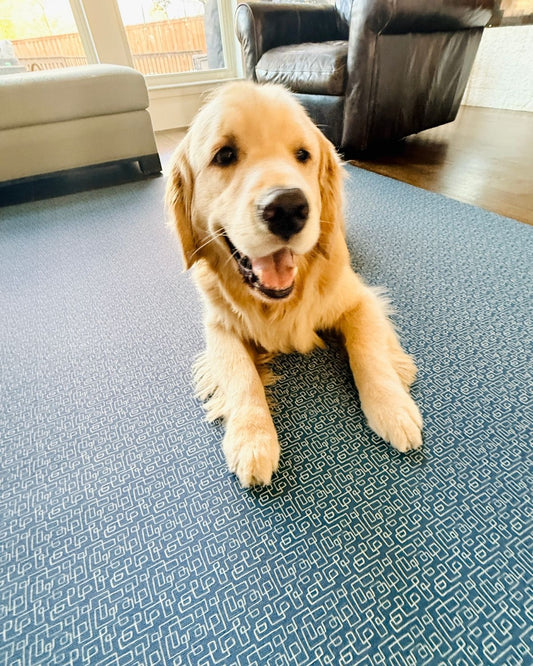
A surface that actually cleans. This is where rugs lose and where the right mat wins. A single-piece, waterproof surface wipes clean with a damp cloth and mild soap. No seams for crumbs to hide in, no fibers to stain, no machine to wrangle. Spills become a five-second job.
A size that fits the way the room is used. A play mat that's too small turns into an island the kid rolls off of. Large enough to cover the active corner of a living room, or to double as the rug under the coffee table, is what makes it usable day to day instead of a thing you move around.
Get those four right and you stop choosing between a safe floor and a good-looking one.
Can a play mat really replace a living room rug?
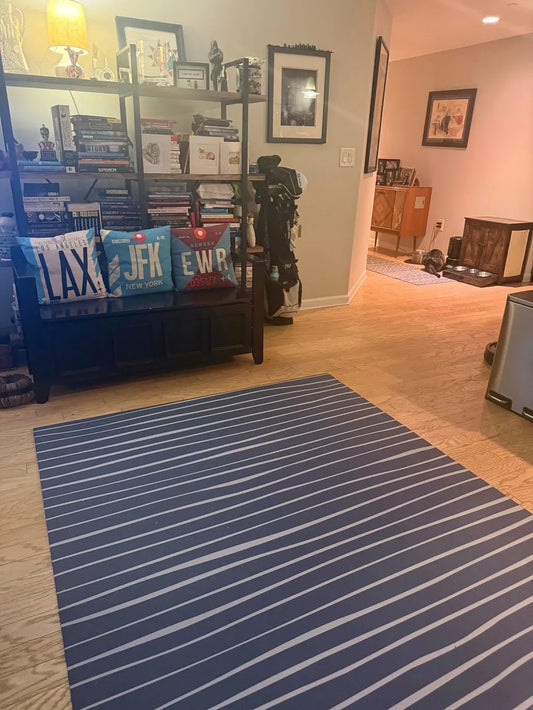
For a lot of homes, yes, and that's the point. A kid-proof living room rug needs to do three jobs a traditional rug can't: cushion a fall, take a spill without staining, and stay put on hard floors. A purpose-built mat does all three, and if the design is right, it anchors the room the way a rug would.
The honest trade-off: a flat-woven wool rug will always feel more like a "rug" underfoot, and a mat won't have pile. What you gain is everything a rug struggles with around small kids: cushion, cleanability, and not caring when juice goes everywhere. For the years when the floor is where life happens, that trade is usually worth making.
The mat designed for exactly this
This is the problem Swankymat was built to solve. It's one beautifully designed mat that works as a play mat, a rug, and a soft surface for a workout: non-toxic, high-density foam under a single-piece, waterproof, wipe-clean top.
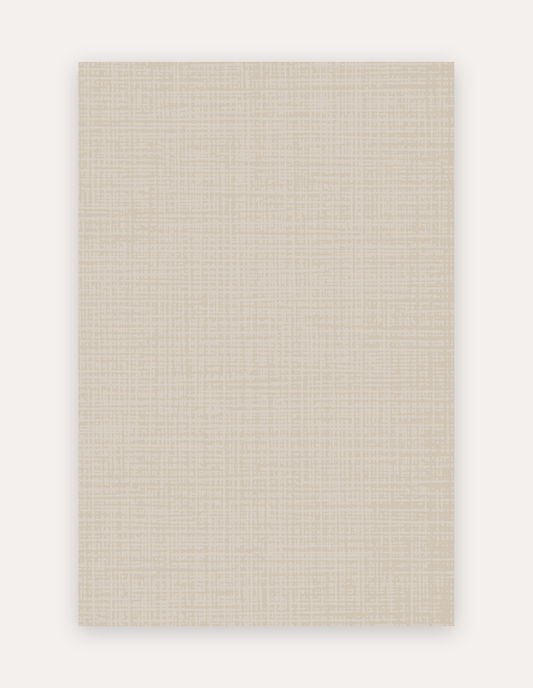
The designs are the reason it stays out. The Sloane Dust is a hand-drawn crosshatch in a soft neutral, closer to woven linen than to a nursery. If you want color, the Sand Art brings it without going cartoonish. Both come large enough to cover the part of the room that actually gets used, both wipe clean with a damp cloth, and both look like something you'd leave out on purpose.
If you're deciding between colorways and want to see how a pattern reads in your own light before you commit, the swatch pack lets you feel the texture and check the color against your room first.
A mat that protects the floor, handles the spills, and still looks like it belongs in the house. That's the whole idea.