

Postpartum Movement at Home: Why Your Exercise Surface Matters More Than You Think
Postpartum Movement at Home: Why Your Exercise Surface Matters More Than You Think
Bringing movement back after pregnancy is deeply personal.
Some women are cleared at six weeks and feel ready. Others take months. Many are navigating sleep deprivation, healing tissue, shifting hormones, and a baby who rarely wants to be put down.
What is often overlooked in postpartum recovery is something surprisingly simple:
The surface you’re exercising on.
And it matters more than most women realize.
What Actually Changes in the Postpartum Body
Pregnancy and delivery affect more than the visible core.
The pelvic floor stretches.
The abdominal wall separates.
Joint stability shifts.
Hormones like relaxin can linger for months.
Early postpartum movement should prioritize:
• Low impact stability
• Breath-coordinated core work
• Pelvic floor engagement
• Gradual load progression
Hard floors can increase discomfort in knees, hips, and tailbone. Thin mats can compress under pressure, offering little support. And unstable puzzle mats can shift during movement, creating subtle instability that isn’t ideal during healing.
Surface stability directly impacts alignment, pressure distribution, and confidence.
Why Most Yoga Mats Fall Short for Postpartum Rehab
Standard yoga mats are typically:
• 24 inches wide
• 68 to 72 inches long
• 4–5mm thick
That works for a controlled yoga flow.
It does not work well for:
• Glute bridges with a baby nearby
• Side-lying leg work
• Modified planks
• Supine core work
• Floor-based pelvic rehab exercises
New mothers are rarely exercising alone in a studio environment. They are often moving while a baby plays beside them or even on the mat itself.
A narrow mat forces constant repositioning.
A short mat limits full-body movement.
A thin mat can create pressure points during healing.
For many women, that discomfort becomes a reason to stop.
Exercising With a Baby in the Room Changes Everything
Postpartum fitness at home is not aesthetic.
It is functional.
The reality is:
You may be doing pelvic tilts while your baby rolls next to you.
You may pause mid-set for a feeding.
You may need a surface large enough for both of you.
The traditional “fitness mat” model does not account for that reality.
A larger, single-piece surface allows:
• Baby to safely lie nearby
• Seamless transitions between exercises
• No gaps or interlocking pieces
• More stable footing during split stance work
• Room for mobility drills without repositioning
This is especially relevant for mothers rebuilding confidence in their body.
What to Look For in a Postpartum Exercise Surface
If you’re returning to movement after birth, consider:
Support: Enough density to cushion joints without sinking.
Size: Large enough to move freely without constant adjustment.
Stability: A single-piece design without shifting seams.
Safety: Non-toxic materials, especially if baby is on the surface too.
Ease of cleaning: Postpartum life is messy. Spit up, milk, sweat. The surface should wipe clean easily.
These practical factors often determine whether home movement becomes sustainable.
Why Surface Choice Impacts Long-Term Consistency
Early postpartum movement is not about intensity. It is about rebuilding trust in your body. If a surface feels unstable, too small, or uncomfortable, small friction points add up. Those friction points become excuses. And those excuses often become long gaps in movement. Consistency in the early months postpartum predicts long-term return to strength. That consistency starts with the environment.
A Note on Larger, Seamless Mats
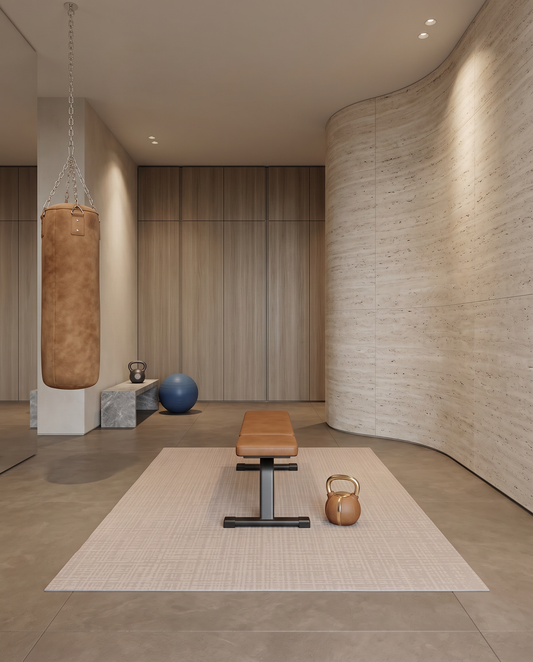
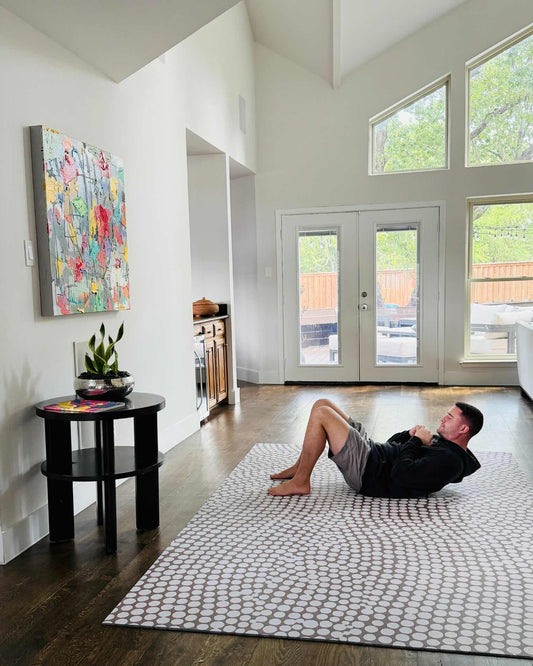
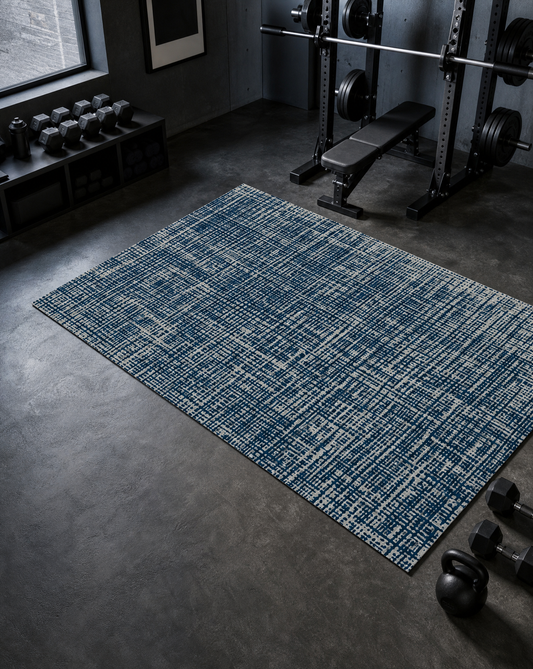
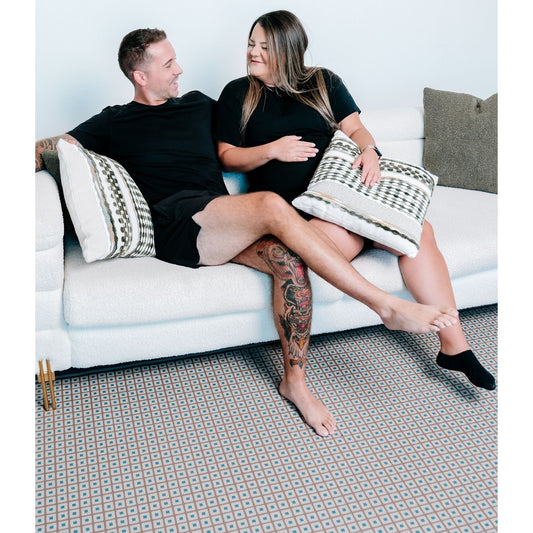
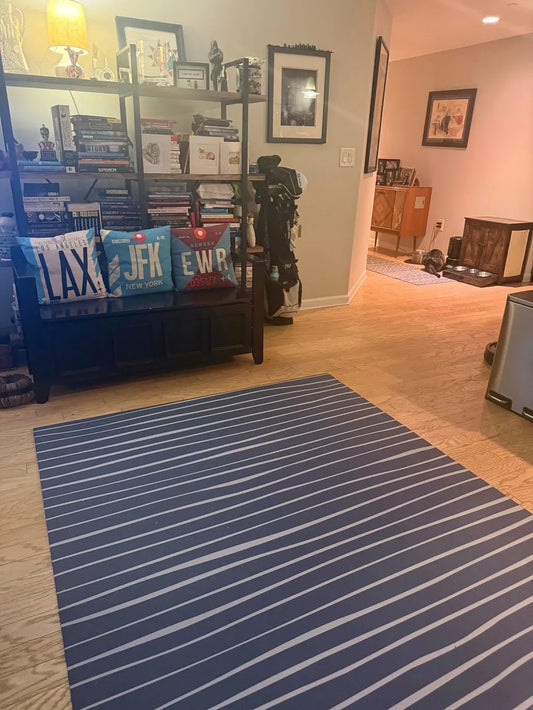
Some women choose larger single-piece exercise mats that function as both a workout surface and a cleanable floor layer in living spaces.
This type of surface allows:
• Full-body movement
• Space for baby nearby
• No puzzle seams
• Wipe-clean durability
• Design that blends into the home
For women building postpartum strength at home, practicality often matters more than aesthetics. But when both exist together, consistency becomes easier.