


Protecting Hardwood Floors from Home Exercise Equipment
Hardwood floors and home exercise equipment do not coexist well without intervention. Dumbbells dent. Yoga poses transfer sweat. Bike trainers vibrate finish loose. Foam rollers slide and scuff. And the modern trend toward home fitness has produced a corresponding rise in hardwood floor damage that homeowners often discover only when they consider selling the house.
This post covers the specific damage patterns exercise equipment causes to hardwood, what floor protection actually needs to do, and how to solve the problem without turning the room into a visible gym.
How Exercise Equipment Damages Hardwood
Five specific damage patterns account for most of the hardwood floor issues associated with home fitness.
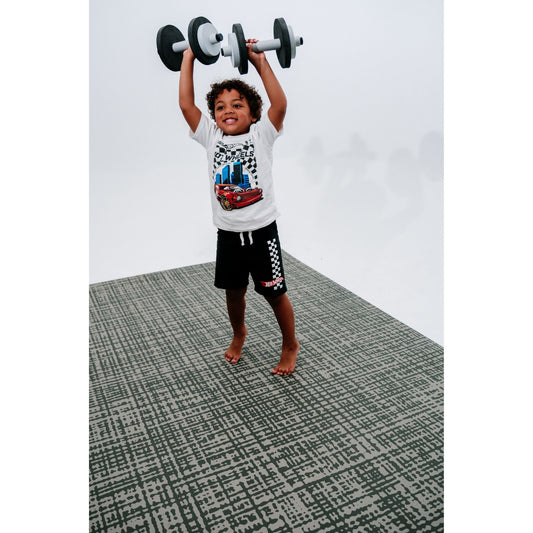
Impact denting. Dumbbells set down heavily, kettlebells dropped even from a low height, and weight plates leaned against furniture all produce point-load dents. Once the wood fiber compresses, it does not return. Refinishing can sand out surface scratches but not deep dents.
Sliding scratches. Foam rollers, resistance bands with metal clips, weight benches on wheels, and equipment being repositioned all drag across the finish. The result is directional scratching visible under any indoor lighting.
Moisture damage. Sweat, spilled water, and humidity from cardiovascular sessions all reach the hardwood if there is no barrier. Moisture at the joints causes swelling, cupping, and eventual finish failure.
Vibration wear. Bike trainers, spin bikes, and any equipment with rotating components produce continuous low-amplitude vibration that loosens the finish and wears the surface at the contact points.
Chemical damage. Rubber mat backings, some equipment feet, and certain workout wipes can react with hardwood finishes over time. The reaction is not usually visible immediately; it shows up as discoloration or finish softening months later.
What Floor Protection Actually Needs to Do
The floor protection has to solve all five damage patterns without introducing new problems. That translates to specific requirements.
Impact absorption without sliding. The mat needs enough thickness to distribute point loads (6mm handles most home equipment) and enough grip on the underside to stay in place during movement.
Waterproof top surface. Sweat and spills stay on top of the mat rather than reaching the hardwood underneath. Single-piece waterproof construction is the reliable configuration.
Non-reactive backing. The mat backing has to be hardwood-safe over years of contact. Some rubber backings react with polyurethane finishes and leave permanent discoloration. Non-reactive backings avoid the chemical damage pattern entirely.
Large enough to contain the practice. A protection mat that only covers the equipment misses the sweat drops, dropped small items, and the natural spread of a workout across the floor. Oversized mats that contain the full practice zone protect all the vulnerable hardwood.
The Aesthetic Problem With Standard Gym Mats
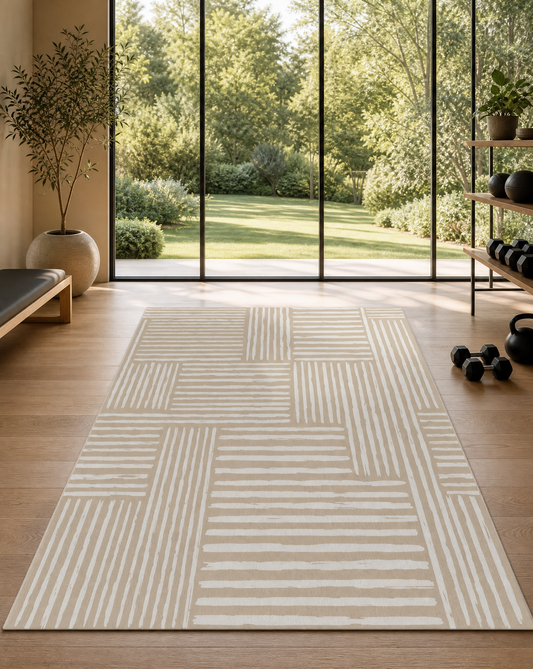
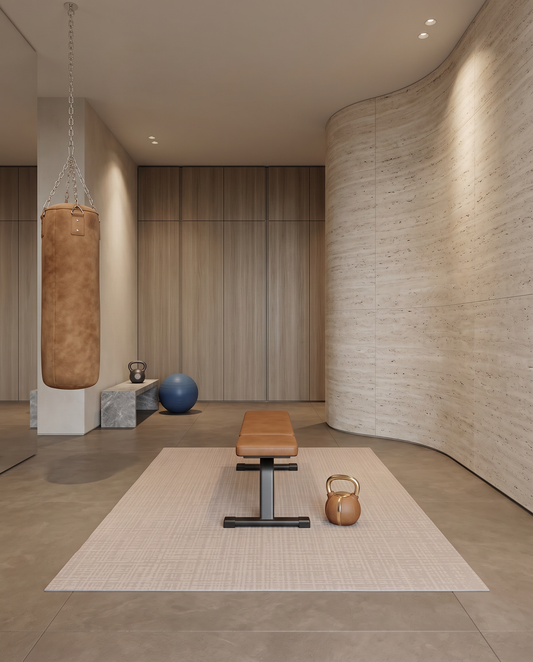
Most floor-protection mats on the market solve the functional problem and introduce a new one: they look like gym gear in a room that was not designed as a gym. Black rubber mats, interlocking foam tiles, and industrial-textured surfaces all signal workout space visually. That signal is often unwanted in living rooms, bedrooms, and multi-purpose spaces.
Homeowners who want hardwood protection without gym aesthetic tend to look for mats that read as area rugs or as considered decor. The specific patterns and color palettes matter more here than in a dedicated gym setup.
The Swankymat Approach to Hardwood Protection
Swankymat solves the functional and aesthetic problems simultaneously. Single-piece non-toxic high-density foam with 6mm of supportive cushion absorbs point loads and distributes weight; the waterproof surface protects hardwood from sweat and spills; the non-reactive backing avoids chemical damage.
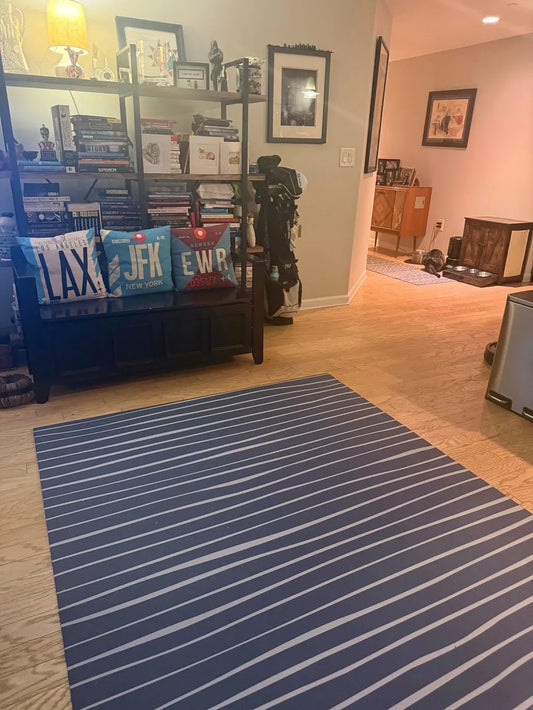
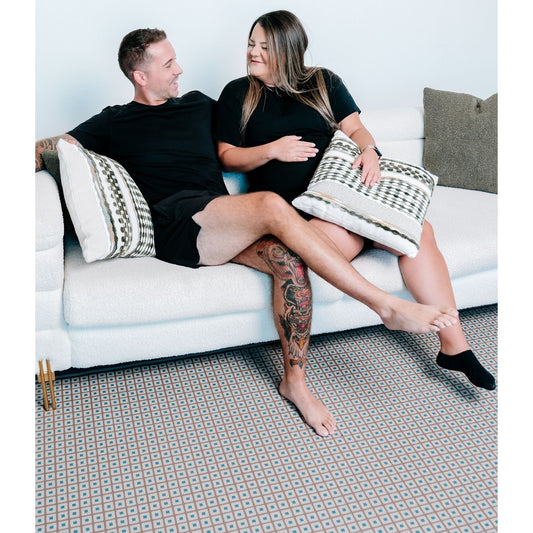
The hand-drawn patterned designs make the mat read as a considered area rug rather than as gym gear. In a living room, bedroom, or multi-purpose space, the mat integrates rather than announcing itself as workout equipment. Available in three sizes: Oversized 5x7 for solo-practice zones, Oversized 6x9 for larger equipment setups or shared practice space, and the rollable Studio Mat for practitioners who want a smaller protective surface that stows away.
For the broader design integration question, the post on carving out a home wellness space covers layout and placement in detail.
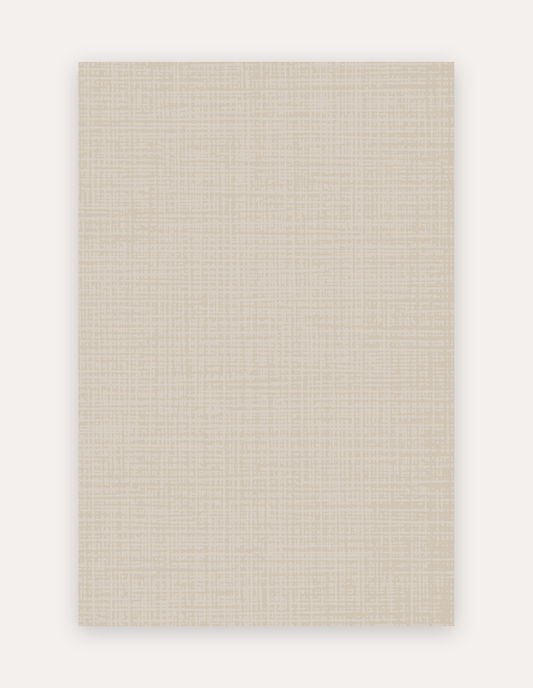
To evaluate the material feel and see how the pattern looks in the room lighting before ordering, the swatch pack ships three real material samples with $15 off the first Oversized mat.