Stiff hips at 45 and the floor work that helps

Your hips have been feeling tight. Not every day, and often enough that the first ten minutes out of bed take longer than they used to. Standing from a low couch is a small event. Sitting cross-legged on the floor feels like a project. You've been looking for the kind of simple home floor work that gives the hips some room again, without turning it into a whole program.
The default move is to stretch standing up, from the couch, for about forty seconds. That gets most people nowhere. The hips open on the floor, with time and a surface that supports the knees and the base of the spine for more than one minute at a stretch. The surface is often the thing that is missing.


Why hips get stiffer around 45
The hips are a complex joint that depends on time spent in a lot of positions. Sitting takes up most of the modern day, and sitting is a single position. Over a few decades, the tissue around the hips adapts to the shape of a chair, which is the shape that feels tight on the mornings when you try to move out of it.
The remedy is more time spent in low, supported positions on the floor, where the hips can let go slowly. The body opens in minutes, not seconds. A supportive mat is what makes a long minute on the floor feel comfortable enough to actually hold.
What floor work helps the hips
Four shapes do most of the work. A low lunge with the back knee down, held long enough to feel the front of the hip soften. A pigeon-style shape or a figure-four on the back, with the top ankle resting across the opposite thigh. A butterfly, with both knees falling out to the sides and the forearms resting on the thighs. And a seated forward fold with the knees comfortably bent, long enough for the lower back and hips to breathe.
Hold each shape for two to three slow minutes. The first minute is the body saying no. The second minute is the body saying maybe. The third minute is where things begin to shift. Short, hurried stretches miss the window entirely.
The role of the surface
Hard floors are the first reason people cut hip work short. The back knee in a low lunge presses against the floor for the entire hold. A bare hardwood or tile floor pulls attention to the knee, and the brain abandons the stretch to protect it. On a supportive mat, the knee rests on cushion, and the mind is free to pay attention to the hip instead.
The pelvis is the second place a surface earns its keep. A seated fold or a butterfly sits all the weight on the base of the spine. Non-toxic high-density foam gives supportive cushion for that bony landing, so the shape is holdable long enough to count. A thin mat sends you back to the couch within a minute.
How often is often enough
Three times a week is the point where most adults feel the floor work show up in daily life. Sitting on the floor with friends feels easier. Climbing stairs feels looser. Walking the first few blocks of the morning feels less like warming up a cold engine. Fifteen minutes, three times a week, is a workable floor that holds up through busy stretches.
Daily is better if the mat is already out and the setup is zero steps. The mat does the recruiting. If the floor is set up when you walk by it, the chance of a five-minute drop-in triples.
Pairing floor work with the rest of the week
Hip mobility pairs well with walking and strength work. A short strength session for the glutes and the inner thighs supports the joint from the outside, and the floor work gives the joint more room to express that strength from the inside. Walking is the daily rinse that keeps everything moving between sessions.
Avoid piling long cardio on days that already carry a longer floor session. The body adapts to recovery and training in roughly equal amounts, and the hips open faster when the surrounding week respects that math.
Signs a routine is working
Mobility work doesn't show up as a dramatic change on day three. It shows up in small ways over weeks. The low lunge drops a little deeper. The butterfly knees fall closer to the floor. Standing from a chair takes less input from the quads. Sitting cross-legged on the floor is a position the body can hold, instead of a position that has to be rotated out of every two minutes.
Those small signs stack. By the second month, the hips are no longer the thing that frames the morning, and the floor becomes the quiet reward for choosing it a few times a week.
When to see someone, not a blog post
If hip discomfort is sharp, worsening, or paired with any numbness, see a physical therapist or physician. A supportive mat is for comfort and mobility work, not for diagnosis. The home floor work in this guide is the gentle, non-aggressive kind that most adults can add safely alongside the rest of their routine, with professional guidance for anything beyond ordinary stiffness.
How to warm up before a long hip hold
Starting cold is one of the easiest ways to shorten a stretch window. Two or three minutes of gentle walking around the room, or a slow sun series on the mat, raises the temperature of the tissue around the hip and makes the long holds significantly more productive. Warm tissue lets go faster. Cold tissue defends itself.
A note on breath during long holds
The quickest way to shorten a stretch is to hold your breath. The quickest way to extend one is to lengthen the exhale. On every long hip hold, make the exhale a few counts longer than the inhale. The nervous system takes that as a signal that the floor is safe, and the hips tend to settle into the shape instead of pushing back against it.
Where Swankymat fits in home floor work for the hips
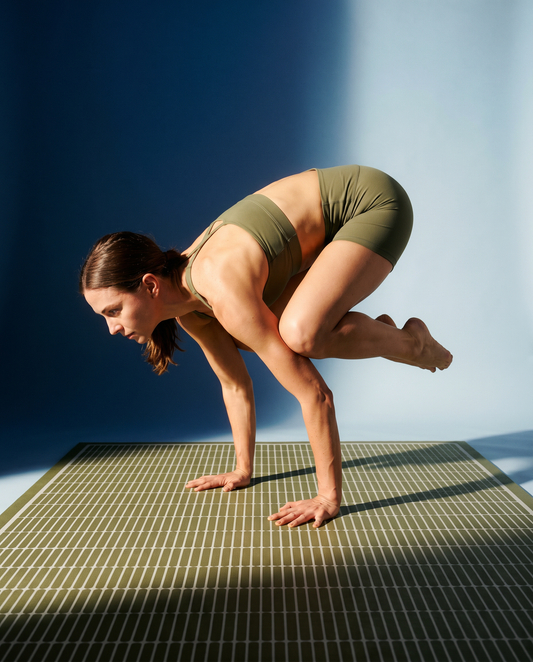
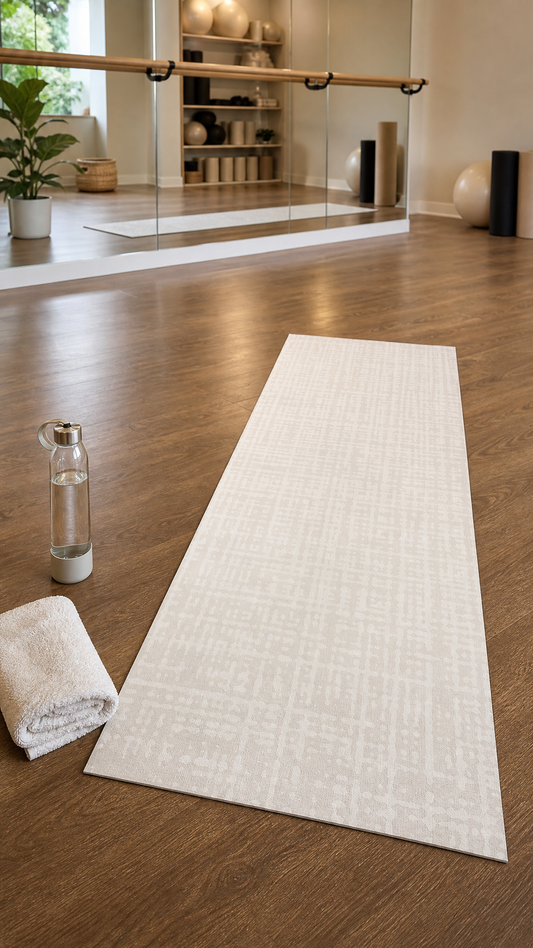
Sloane Forest Oversized is a quiet green mat built for the kind of unhurried floor work the hips respond to. The surface is non-toxic high-density foam with supportive cushion for the knees in a low lunge, the ankles in a figure-four, and the base of the spine in a long seated hold.
The Oversized 5x7 is sized for a solo floor session with room on either side. The Oversized 6x9 adds length for a longer sequence, or room for a block, bolster, and a folded throw to stay on the mat between shapes.
The Confidence Path to the Right Mat
Choosing a mat you'll live with for years is easier when you can see it in your room first. There are three steps that make the decision feel settled before you commit.
Start with the Swatch Pack for $15, credited back toward your mat. The samples arrive quickly, and you can lay them on the floor where the mat will live, next to your rug, your couch, and the light that hits that corner in the morning. Color on a screen is a guess. Color in your room is an answer.
Take the Perfect Match Quiz if you're torn between a few patterns or sizes. It asks a short set of questions about your room, your floor, and how you plan to use the mat, then points you toward the shortlist that fits. It's a few minutes of clarity that saves you a long scroll.
Once your swatches land and you've sat with them for a day, order the mat you kept coming back to. That slower sequence is how most of our favorite reviews start.
The Swankymat Promise
Four things we commit to on every mat that leaves the studio.
- Non-toxic high-density foam with supportive cushion that holds up to daily use on a hard floor.
- Three sizes for real rooms: Oversized 5x7, Oversized 6x9, and a rollable Studio Mat.
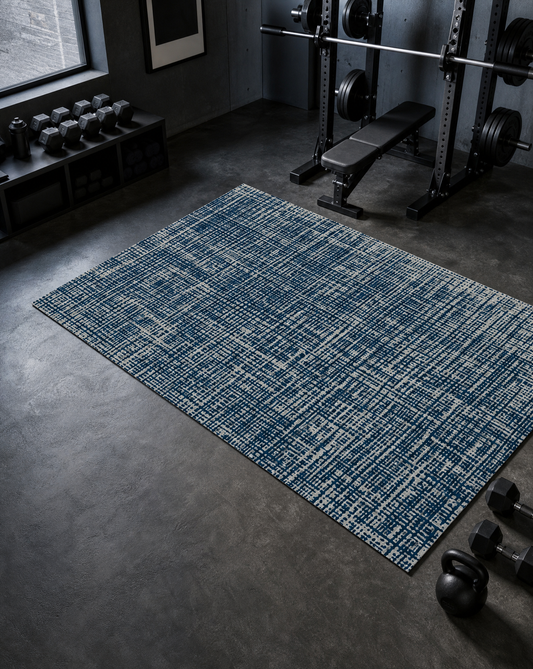
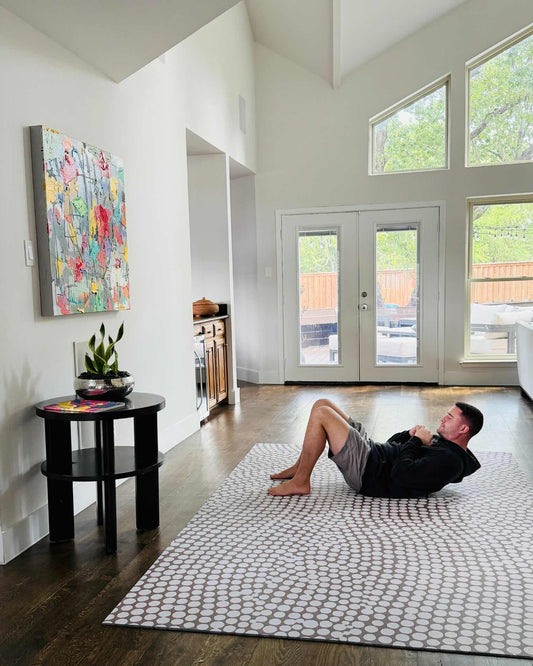
- Patterns designed to live in your room instead of fighting it, so the mat can stay out between sessions.
- No Sweat Guarantee, for anyone who orders a swatch pack first. Swap it or send it back for a full refund within 7 days, no sweat.