

Memorial Day Movement: 30 Minutes a Day That Actually Sticks This Summer

Memorial Day weekend tends to mark the start of a new schedule. School winds down, travel ramps up, and a lot of people use the long weekend as a moment to recommit to a movement routine they have been thinking about for weeks. A 30-minute floor-based practice is one of the more durable formats for a season like this, because it does not require equipment, a class schedule, or a clear hour on the calendar.
Below is a structure that holds up across the summer. It is meant as a starting point rather than a prescription, and most of it can be adjusted to fit different bodies, ages, and recovery needs.
Why Floor-Based Routines Travel Well
Summer schedules are unpredictable. Heat changes the calculation on outdoor exercise faster than most people expect. Travel and house guests interrupt routines. Kids home from school compress the usable hours of a day. The social calendar fills in.
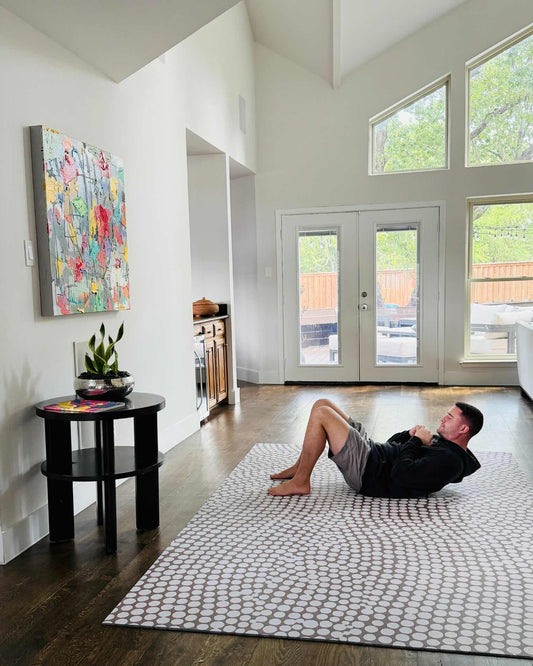
A floor-based practice is portable in the sense that the format works in any room with clear space. Your living room, a hotel floor, the patio of a rental house, the corner of a bedroom. The requirements stay the same, which means there is no setup cost on a busy day.
A 30-Minute Format
The structure below is one option among many. It is built around three blocks that cover warm-up, strength and mobility, and stretch.
5 Minutes: Warm-Up
A short low-intensity sequence to raise the heart rate and bring blood flow to the joints. Cat-cow, hip circles, thoracic rotation, and a slow squat with reach work well without any equipment.
15 Minutes: Strength and Mobility
A short circuit that covers lower body, upper body, and core using bodyweight. A reliable rotation might include glute bridges, plank holds, lateral lunges, push-up variations, dead bugs, and bird-dogs. Two rounds of five movements at 45 seconds each with 15 seconds of transition gives a fairly complete session.
The post on exercise mat exercises covers more rotation ideas by muscle group.
10 Minutes: Stretch and Cool-Down
A longer closing block. Pigeon pose, supine spinal twist, 90-90 hip stretch, child pose, supine figure-four. Holds of 60 to 90 seconds tend to feel better for recovery than shorter holds.
A Sample Week
Some shape to consider, with rest days built in.
Monday: lower body focus, with glute bridges, lateral lunges, single-leg deadlifts, clamshells, and a squat hold.
Tuesday: core and stability, with dead bugs, bird-dogs, plank variations, side plank, and hollow holds.
Wednesday: rest or a twenty-minute walk.
Thursday: upper body and core, with push-up variations, tricep dips off a chair, downward dog into plank, forearm plank, and shoulder taps.
Friday: full-body flow. Pick three or four movements that feel good, extend the warm-up, extend the cool-down.
Saturday: light yoga or walk, optional.
Sunday: a longer mobility session, 30 to 45 minutes of slow movement and breathwork.
What Tends to Break a Summer Routine
The most common way a summer routine breaks is by treating it as a binary. Five sessions a week becomes a win-or-fail measure by mid-June, and a single missed week tends to mark the end of the streak. A more useful question over the summer is whether movement happened most weeks, whether the format was simple enough to keep returning to, and whether the body feels different in September than it did in May.
Friction is the other common breaking point. Routines that require setup, like rolling out a mat, assembling foam tiles, or clearing a workspace, tend to lose to the morning that runs long. A floor-based practice fares better when the surface is already there when the alarm goes off.
The Floor That Stays Out All Summer
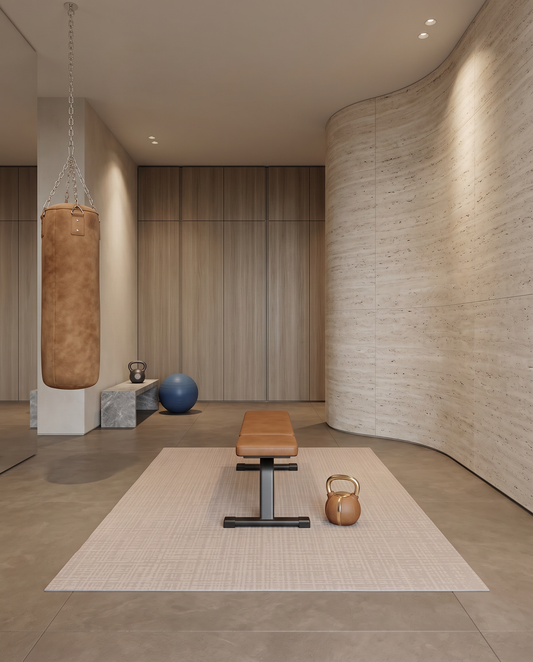
The pieces of a summer routine that tend to survive the season are the ones that do not require setup. A pair of running shoes by the door. A water bottle filled the night before. A mat that lives on the floor.
For more on building daily movement into a real schedule, the post on setting realistic movement goals walks through the logistics. The post on getting in shape at home covers what a functional home fitness setup requires beyond the mat itself. And the post on a home workout space in the living room covers placement when the practice shares space with the rest of family life.