The Under-Desk Exercise Mat for the Work-From-Home Stretch Break

By three in the afternoon, the shoulders have climbed up to the ears. The hips feel welded to the chair. The lower back has that specific tightness that only comes from six hours of looking at a screen. A walk helps. Stepping away from the desk helps more. But the piece that moves the day from stiff to loose is five minutes on the floor, right next to where you work.
The quick answer is a cheap yoga mat tucked behind the file cabinet. In theory, you pull it out when you need it, and roll it up when you do not. In practice, the mat lives rolled up because unrolling it feels like a chore, and the stretch break never happens. The piece of gear that solves this is a rollable studio mat that lives under the desk, ready in five seconds, out of the way again in five more.

The real cost of skipping the stretch break
Working from home has quietly made the body stiffer than any office job did. In an office, you walked to a meeting, stood at a counter in the kitchen, went down a hall to find a colleague. At home, the whole day happens inside a two-foot radius of a chair. Shoulders round. Hip flexors shorten. The thoracic spine stops rotating. Nothing dramatic happens on any given day, but a year of this is a different body than the one that started.
The stretch break is the correction. Five minutes between calls, on the floor, is the piece that keeps the day from compounding into stiffness. The reason it does not happen is not willpower. It is friction. If the mat is a project, the mat does not come out. If the mat is a reach, it does.
The three qualities an under-desk mat has to have
An under-desk mat has a different job than a bedroom foundation. It needs to be portable, so it lives under the desk and comes out in a motion. It needs to be sized for a quick stretch, not a full flow. And it needs to be beautiful enough that it does not read as gym clutter in a room that doubles as an office.
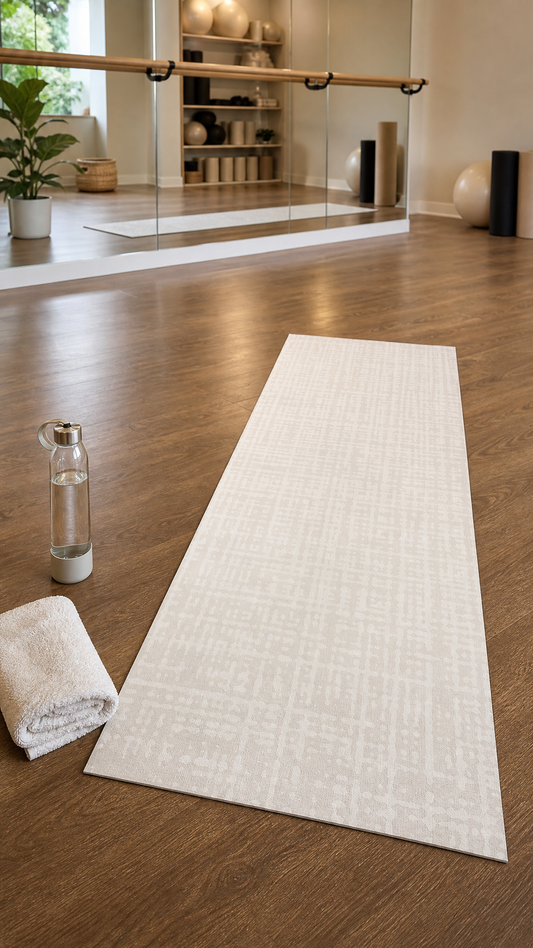
The rollable studio format fits all three. A tight roll stores vertically beside a bookshelf or horizontally against a baseboard. The unrolled footprint is enough for a hip flexor stretch, a thoracic opener, and a quick figure-four without rolling off the side. The surface, done right, reads as textile instead of as fitness equipment.
A five-minute stretch sequence that resets the day
The sequence that works for a work-from-home stretch break is short and specific. Start with a one-minute hip flexor stretch on each side, which undoes the eighty percent of the problem a seated day creates. Follow with a kneeling thoracic opener, elbows on the mat, hands behind the head, letting the chest sink. Finish with a seated figure-four, one minute per side, for the glutes that have forgotten they exist.
Total time is around five minutes. The payoff is that you stand back up at the desk with your head over your shoulders, your shoulders over your hips, and your hips free. The next hour of work is better because of it. The whole thing collapses if the floor is not kind enough to sit on, which is why the mat is the piece that makes or breaks the habit.
Why rollable beats stacked when the mat lives in the office
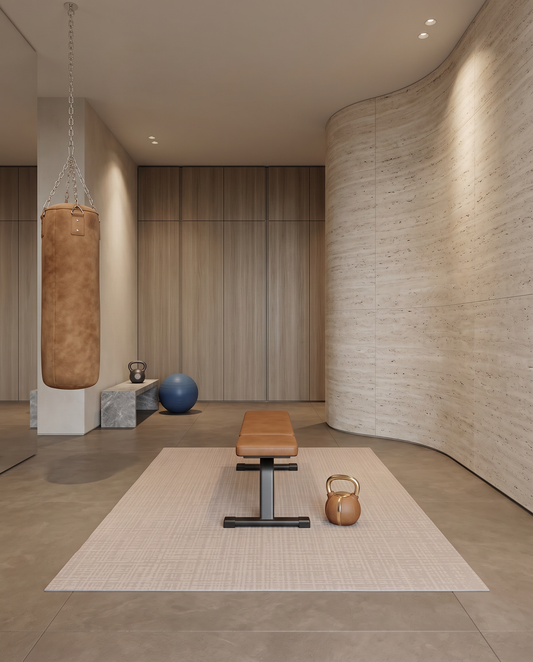
A thick oversized foundation is the right mat for a dedicated workout corner. For an office, the oversized footprint is too much to live out between calls. The rollable studio mat is the format that fits the room. It stores in a quiet corner, rolls out in one motion, and does not announce itself to anyone who walks into the office for a shared screen.
Done in the right dense foam, a rollable studio mat still gives you real cushion. Not as much as a half-inch foundation, but more than enough for the kind of ground work a five-minute stretch break actually uses. Hips can settle. Knees are comfortable. The elbow in a thoracic opener is on a surface that supports it instead of a hardwood that bruises it.
The look question for a shared home office
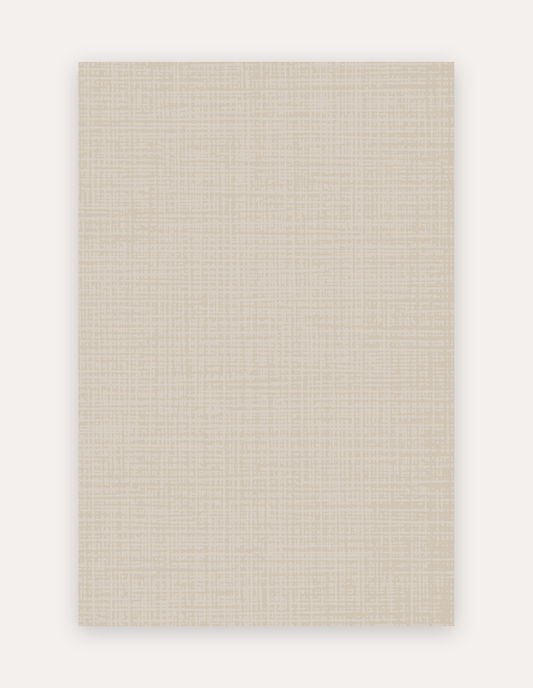
If the office doubles as a guest room, a sunroom, or a shared space, the mat has to earn its place visually. A black yoga mat propped against the file cabinet reads as gym equipment that migrated into the wrong room. A sage or forest green rollable with a quiet crosshatch reads as a textile. Big difference in whether the mat stays out or gets stuffed into a closet.
The quietest colors win here. Forest green, dusty neutral, warm camel. Any of these can live next to a desk and a bookshelf without a visual argument.
How to set up the office so the mat is ready
The mat has to live somewhere obvious. Behind a file cabinet is where mats go to be forgotten. Standing vertically beside a bookshelf, against a baseboard behind the desk, or hooked into a small wall mount next to the door are the three spots that keep the mat in sight and in motion. If you can see it from the chair, you will use it.
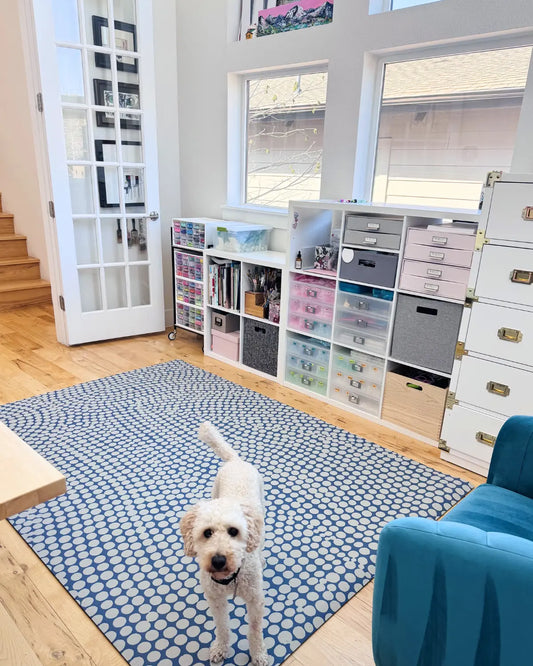
Clear a two-by-six-foot patch of floor near the desk and keep it clear. That is the stretch zone. No cords, no boxes, no rug corner curling up to catch your toe. The stretch happens on that same patch every time, which is what makes it a habit instead of a scavenger hunt for space.
Why five minutes beats skipping it altogether
The reasonable argument against the stretch break is that five minutes is not enough to do anything. The counter-argument is simple. Five minutes a day is twenty-five minutes a work week and roughly two hours a month on the floor. That is a meaningful amount of time for the hips, the thoracic spine, and the glutes. More to the point, those five minutes break the pattern that creates the stiffness, which is as important as the stretch itself.
The right frame for a stretch break is maintenance, not training. You are keeping the body moving freely through a workday. That is a different goal than a workout, and it needs a different piece of gear.
Where Swankymat fits for the work-from-home stretch break
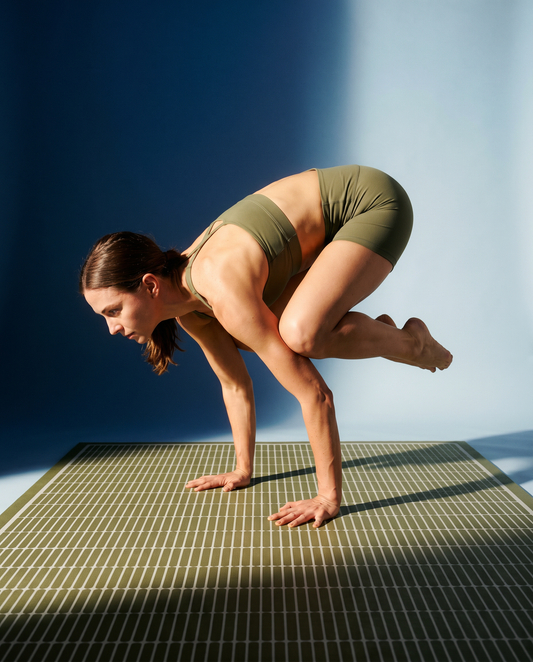
The Sloane Forest Studio Mat is the rollable that lives next to the desk. A deep forest green crosshatch that reads as textile against a wood floor or a jute rug. Non-toxic high-density foam gives real cushion under knees, hips, and elbows for the long holds that make a stretch break worth the five minutes. The mat rolls up in seconds, stores vertically beside a bookshelf, and comes out in a motion between calls.
At 279 dollars, it is the gentler entry point into Swankymat for a space that only needs a studio size, and it travels well if you also want to use it on top of a larger foundation in another room.
The Confidence Path to the Right Mat
Three steps keep this simple.
Start with the Perfect Match Quiz. Three questions about your room, your floor, and your routine. It points you toward the color and size that fits your office instead of asking you to guess.
Then order a swatch pack. Fifteen dollars, credited back to your mat. You see the color under your actual office light before you commit.
And once your swatches arrive, you are covered by the No Sweat Guarantee. If the mat shows up and you do not love it, swap it or send it back for a full refund within 7 days.
The Swankymat Promise
Four commitments on every mat.
- Non-toxic high-density foam with Greenguard Gold certified inks, so the mat is safe to live with every day.
- Supportive cushion that holds up under knees, elbows, and long holds without going flat.
- A waterproof wipe-clean surface that handles water, dust, and the occasional spilled coffee.
- No Sweat Guarantee, for anyone who orders a swatch pack first. Swap it or send it back for a full refund within 7 days, no sweat.