


The Walking Pad Companion Mat: Standing Desk and Under-Desk Setups
The walking pad and standing desk category has become one of the fastest-growing home wellness segments, driven by remote work and the mounting evidence that prolonged sitting is genuinely harmful to long-term health. The setup works well for daily use once it is properly configured. But most homeowners install the walking pad and standing desk without thinking about the floor underneath, which introduces problems that become obvious within weeks.
This post covers what a walking pad companion mat actually solves, why the floor consideration matters more than most setups account for, and what to look for in the mat itself.
What the Floor Actually Has to Handle
Walking pads and standing desks put specific loads on the floor that standard home use does not.
Continuous point load from the pad. The walking pad itself weighs 50 to 100 pounds and concentrates that weight on four small feet. Over months, the point loads dent softer hardwoods and mark up finish even on harder ones.
Vibration transmission. The walking pad motor and the walker's footfalls transmit vibration into the subfloor and out to adjacent rooms or apartments below. In apartments this often triggers neighbor complaints within the first week.
Sweat and moisture. Walking for hours per day produces meaningful sweat and body heat, both of which can reach the hardwood or carpet underneath.
Prolonged standing during breaks. When the walking pad is off, the user often stands at the desk without walking. Standing directly on hardwood for hours produces joint fatigue that eliminates one of the primary benefits of the standing desk.
Why the Walking Pad Companion Mat Category Exists
A properly designed companion mat solves all four problems in one purchase. The mat provides impact and vibration dampening for the pad, moisture protection for the floor, and cushioned standing surface for pad-off breaks.
The category is underserved. Most walking pad companion mats on the market are basic black rubber gym mats that solve the functional problem while introducing an aesthetic problem: they announce the setup as gym equipment in what is often a home office or living room.
What to Prioritize in the Mat
Five criteria for a walking pad companion mat.
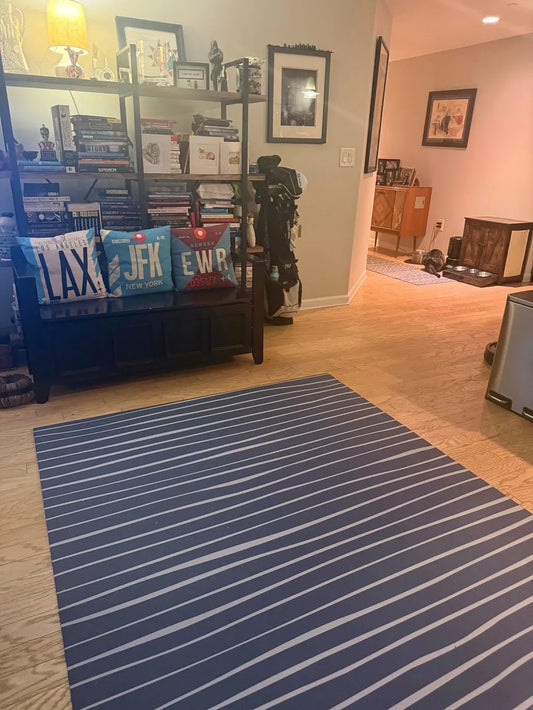
Adequate footprint. The mat needs to extend beyond the walking pad in all directions to catch sweat drops and to provide standing surface when the pad is off. A 5-by-7 foot mat under a typical walking pad and standing desk provides margin on all sides.
6mm cushion. Enough to absorb pad vibration and provide standing comfort during pad-off periods. Thinner mats do not attenuate vibration meaningfully; thicker mats introduce instability under the walking pad feet.
Waterproof surface. Sweat and any spills from a nearby water bottle stay on the mat rather than reaching the floor.
Non-slip underside. Both the pad and the user need the mat to stay in place. Slipping under either produces problems that range from awkward to dangerous.
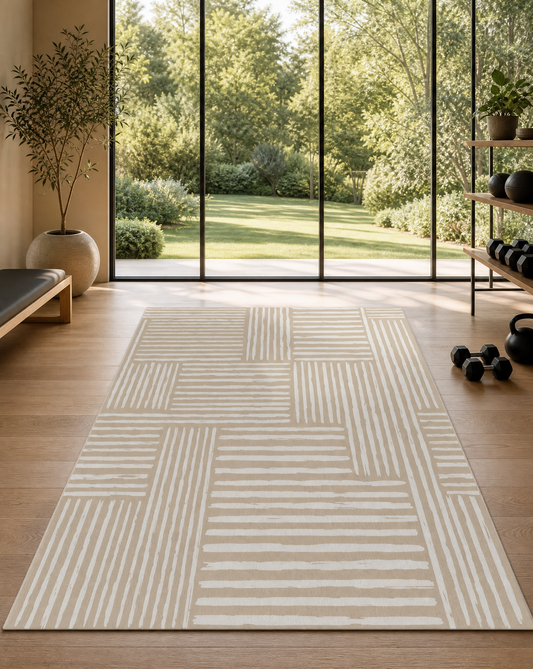
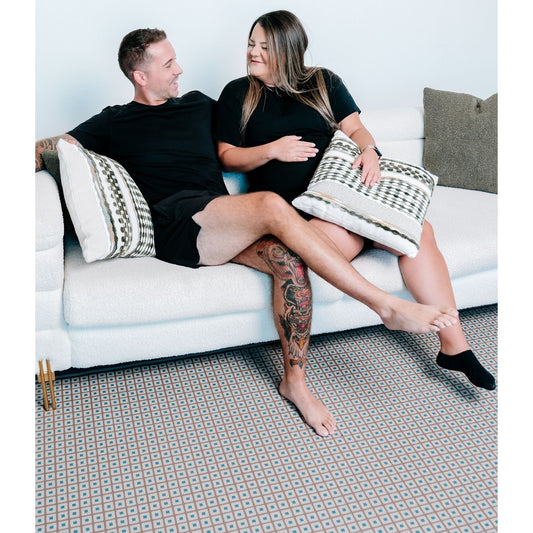
Aesthetic that fits a home office. Most walking pad setups are in home offices, living rooms, or bedroom corners. A mat that reads as considered decor rather than as gym gear keeps the setup from dominating the room visually.
The Apartment Consideration
For apartment dwellers, the vibration transmission question is often the primary reason to use a companion mat at all. Walking pad noise to the neighbors below is one of the most common complaints in urban buildings and one of the most common reasons walking pads get returned.
A 6mm high-density foam mat under the walking pad meaningfully reduces the transmitted vibration to floors below. It does not eliminate it, but it usually brings it below the complaint threshold for most buildings and most neighbors.
The Swankymat Fit for This Setup
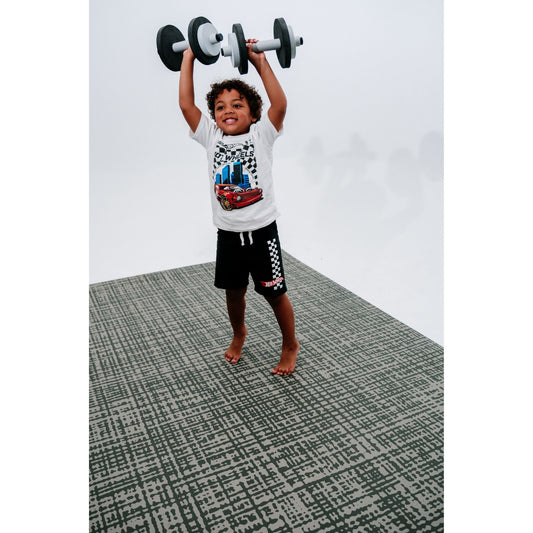
Swankymat serves the walking pad companion use case specifically well. Single-piece non-toxic high-density foam with 6mm of supportive cushion absorbs walking pad vibration and provides standing surface during pad-off periods. Waterproof wipe-clean surface handles sweat and moisture. Hand-drawn patterned designs let the mat integrate with home office or living room decor rather than announce itself as gym gear.
The Oversized 5x7 is the size that fits under most walking pad and standing desk setups with enough margin for standing use. For larger workspace configurations, the Oversized 6x9 accommodates the pad plus a desk chair for periods when the user wants to switch to sitting. The rollable Studio Mat can serve as a supplement for standing-only work in a different room.
For the broader home office wellness integration, the post on carving out a home wellness space covers layout and design considerations. Try before you buy with a swatch pack.