


What Home Stagers Choose for the Wellness Room
Working home stagers develop opinions the way working chefs develop opinions. Through repetition, across dozens of listings, with the piece either earning its spot in the next kit or getting quietly dropped. What emerges over a few years of active staging is a short list that holds up across houses, price tiers, and market conditions.
For the wellness room specifically, that list is narrower than most homeowners assume. Stagers who repeat their kit reach for the same handful of pieces. This is what tends to be in that kit, why the list looks the way it does, and how to build a wellness room worth photographing without over-buying.
Why the stager kit stays small
Two constraints shape what earns a spot in a working stager's repeat kit.
First, moving cost. Every piece in the kit gets moved from listing to listing, sometimes across multiple houses in a month. Anything fragile, anything with a lot of components, and anything that requires assembly costs more than it earns.
Second, palette flexibility. A piece that works in a warm-toned house may not work in a cool-toned house. Stagers who repeat their pieces choose ones that work across residential palettes rather than pieces that only fit one style. Neutral tones, restrained patterns, and considered materials all travel well.
The kit that survives both constraints tends to be short. Five to eight core pieces for the wellness room, with variations depending on the room's specific brief.
The pieces that consistently earn their spot
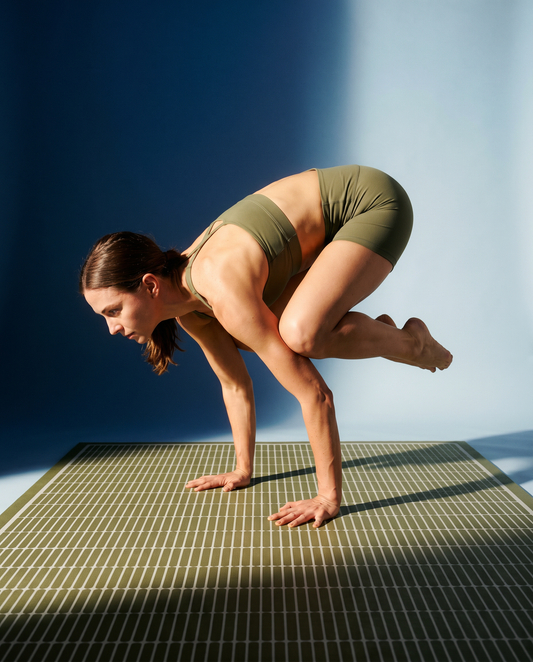
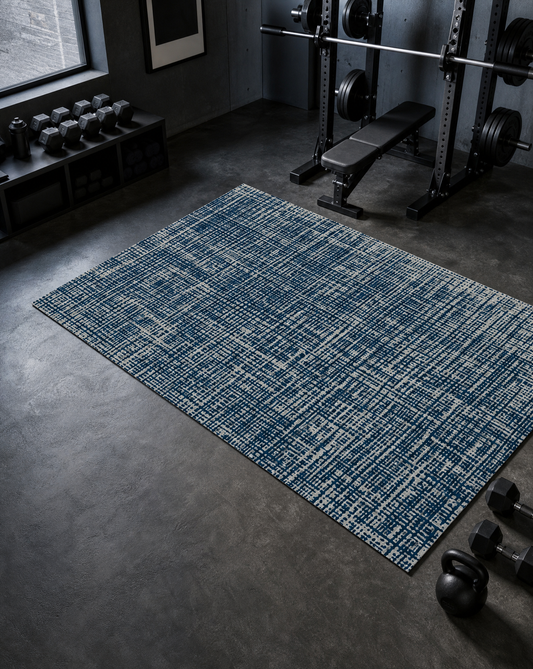
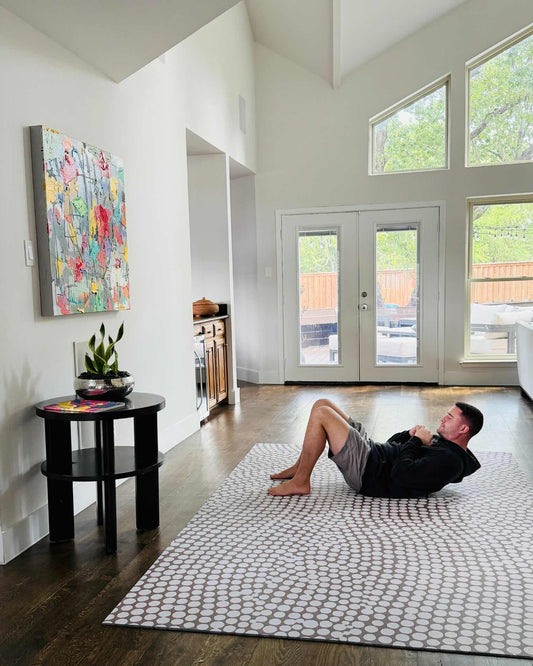
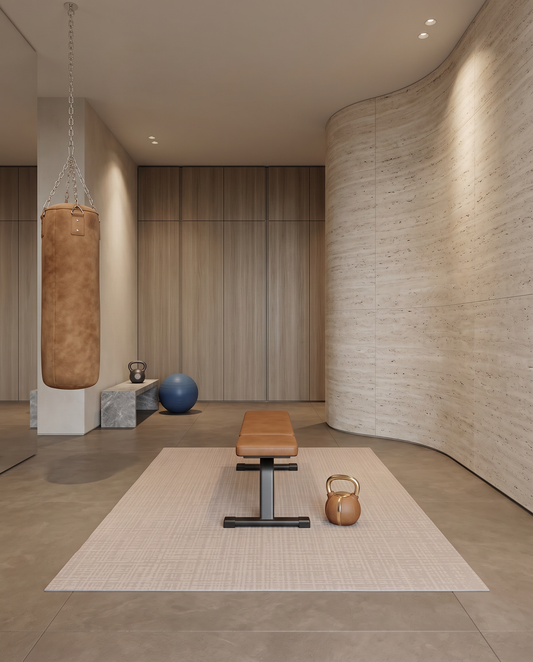
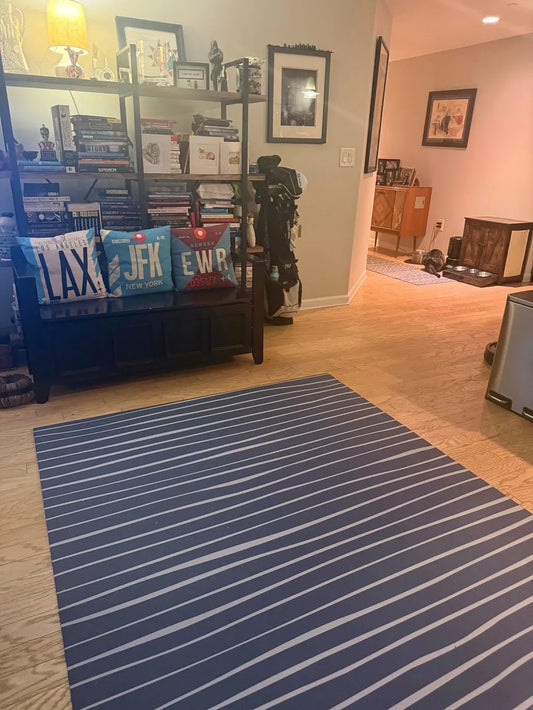
The floor mat. The single-most-visible piece in the room and the piece that does the most aesthetic work. Stagers who repeat their kit favor single-piece mats in restrained residential palettes because they photograph well and travel well. A hand-drawn patterned mat in a neutral colorway works across most listings. Black rubber does not repeat well because it only fits one aesthetic direction.
A pair of wood-handled dumbbells. Small, portable, and unusual enough to signal considered curation. A wood-handled 5 or 8 pound pair reads as intentional in a way that a chrome pair does not. Stagers often source these from small brands rather than mass fitness retailers.
A cork or wood yoga block, plus one strap. The prop layer that signals movement without dominating the room. Cork blocks in particular travel well because they photograph as natural material rather than as gym equipment.
A neutral-toned foam roller. Cream, oatmeal, or a muted color. The default black foam roller reads as commercial gym gear and gets replaced in most professional stager kits.
One small basket in natural fiber. Rattan, seagrass, or woven cotton. Holds the strap and blocks, adds a material variation to the room, and travels between houses without visible wear.
One plant or one small candle. The finishing layer that turns a functional staged room into one buyers can imagine living in. Stagers vary on which they use, and often the choice depends on the listing agent's preference.
A floor lamp or a table lamp with a warm-white bulb. The single most impactful lighting addition to a room that would otherwise be lit only by an overhead fixture. Stagers often bring the same lamp across multiple listings.
What stagers do not bring
Three categories that get left off the repeat kit.
Large cardio equipment. A treadmill or a bike belongs to the seller, if it belongs anywhere in the listing. Bringing one across houses is impractical and photographs as clutter more often than as amenity.
Full weight racks. Too heavy to move, too specific to one aesthetic direction, and often reads as serious lifter rather than as approachable wellness.
Branded or logo-heavy gear. Anything with a visible brand mark or a team color reads as personal rather than as staged. Buyers respond to seeing themselves in the room, not seeing the current owner.
The palette question stagers work with most
Most staged wellness rooms need to work across warm-toned and cool-toned house palettes. Stagers who repeat their kit tend to solve this by picking pieces in truly neutral tones (cream, oat, sand, warm gray) rather than picking pieces that lean specifically warm or cool.
The mat is the piece where this decision matters most. A saturated mat commits the room to a specific palette. A neutral or warm-neutral mat leaves room for the rest of the staging to lead. Stagers who need one mat for repeat use tend to choose in the neutral range for this reason.
Where Swankymat fits in a stager's kit
Swankymat is built for the working stager's requirements. Single-piece construction that photographs cleanly and holds up across staging cycles. Six millimeters of dense supportive cushion. Hand-drawn patterned designs in restrained residential palettes, with the neutral colorways (Rhodes Camel, Ellis Sage, Circa Cove, Arlo Olive) working across most residential palette directions. The waterproof surface handles the cleaning between listings.
Available in Oversized 5x7 for a defined-zone wellness room, Oversized 6x9 for a full-room anchor sized like a standard area rug, and the rollable Studio Mat for the stager who needs a portable option that travels easily between houses.
Pro Access for home stagers
Swankymat runs Pro Access for interior designers, home stagers and realtors. The program is a value and enablement offer, not a discount program. Everyone pays full price. Pros get complimentary swatches for client projects, free personalized cards (printed four by six inches with your own artwork, shipped with the mat to your client at no cost), client-ready spec sheets (Sloane Dust and Arlo Olive available now, more colorways on request), the Styling Lookbook to share, and early access to new styles. The AR "view in your room" tool is live on every product page, so the stager can preview the mat at true size in the client's home before ordering.
Apply at swankymat.com/pages/pro-access. Reach out at pro@swankymat.com.
The Confidence Path to the Right Mat
Two low-risk starting points work well for anyone weighing the decision.
The Perfect Match Quiz takes sixty seconds and recommends a colorway and size based on how the room will be used. Free.
The swatch pack ships three real material samples for $15, credited to your mat. Ordering swatches first unlocks the Perfect Match Guarantee. If you don't love your mat when it arrives, switch it within seven days, completely free. Swankymat pays return shipping. Swatch it, switch it free.
The Swankymat Promise
Every Swankymat is backed by four commitments. Built to Last, Backed for a Year, a one-year quality guarantee on manufacturing defects and premature wear. Easy 30-Day Returns, so you can live with your mat and send it back within thirty days if it is not right. Spills Happen, waterproof and wipe-clean, so real life wipes right off. Perfect Match Guarantee, for anyone who orders a swatch pack first. Free shipping on all orders in the Continental US, including HSA and FSA orders through TrueMed.