Yoga Mat vs Exercise Mat: Which One You Actually Need at Home

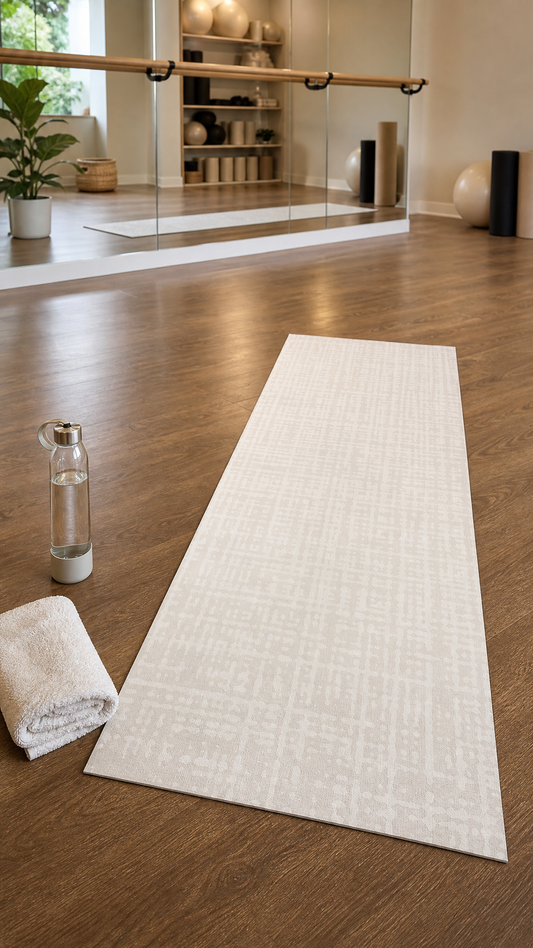
A yoga mat and an exercise mat differ in three places: size, thickness, and grip. Yoga mats run narrow and thin, built for held poses on a studio floor. Exercise mats run larger and thicker, built to cushion movement that travels. Neither is wrong — they're built for different things.
Yoga mat vs exercise mat: the quick comparison
| Yoga mat | Exercise mat | |
|---|---|---|
| Size | 68"×24" | 72"×36" up to 84"×72"+ |
| Thickness | 3–6mm | 6–15mm |
| Best for | Held poses, studio use | Dynamic movement, home use |
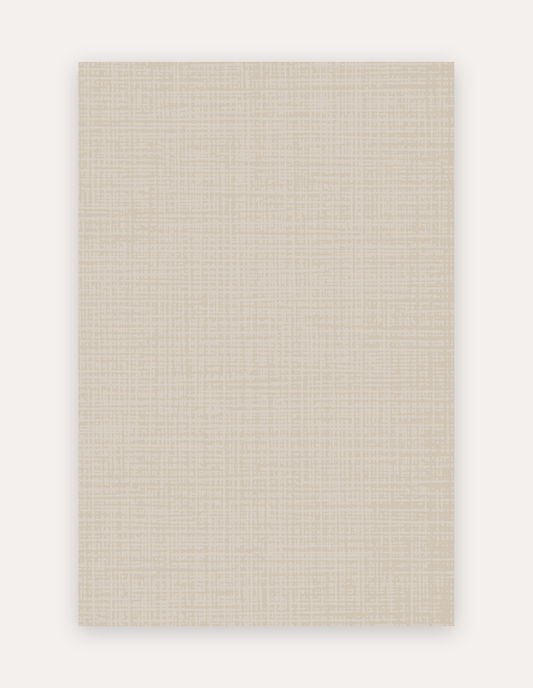
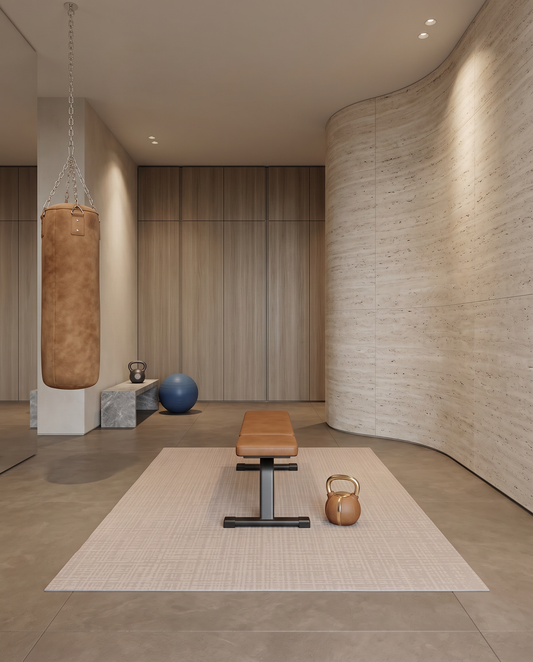
Most home workouts don't stay inside one category — a single session moves from a flow into strength work into the floor. That's where a single large mat, sized like an exercise mat with the grip of a yoga mat, does both jobs instead of asking you to choose. The Sloane Dust in 6×9 and Sloane Navy are both built on that size, with yoga-grade grip.
Can you use a yoga mat as an exercise mat?
A standard yoga mat works for low-impact, stationary bodyweight work — but the moment a movement travels sideways (lunges, lateral steps, jump landings), you're off the 24-inch-wide mat. A wider exercise mat, or one large mat built with yoga-grade grip, removes the constraint.
Why traditional yoga mats feel limiting at home
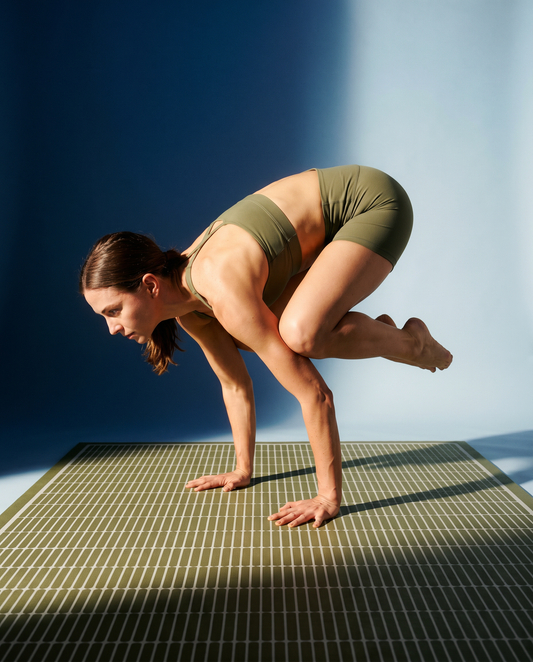
Yoga mats are designed for a specific purpose. They're narrow, lightweight, and optimized for grip during standing poses. That works well in a studio where space is shared and movement stays mostly vertical.
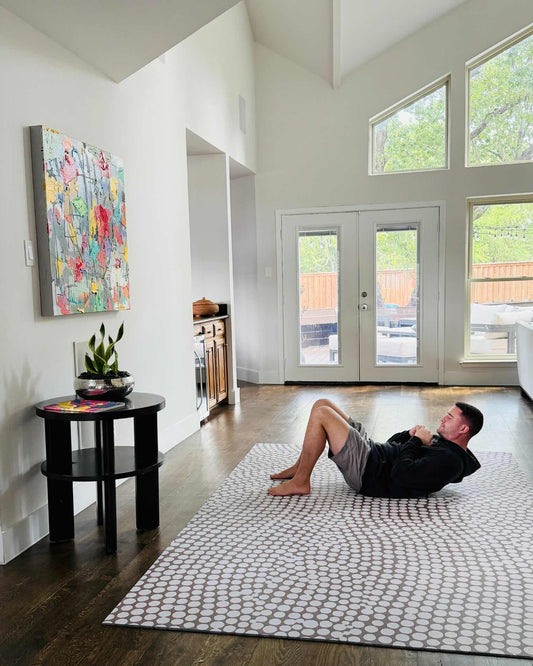
At home, workouts tend to be more dynamic. Lunges travel farther. Core work takes up more floor. You're moving side to side, not just forward and back. On a standard yoga mat, it's easy to step off the edge or constantly reposition.
Thickness can also be an issue. Many yoga mats prioritize portability over support, which becomes noticeable during kneeling work, planks, or strength-focused exercises. See what makes a great yoga mat.
What exercise mats do differently
Exercise mats are typically designed with more surface area and cushioning in mind. They're meant to support varied movement patterns and longer sessions on the floor.
A larger mat allows you to move naturally without adjusting your position every few seconds. It creates a defined workout zone, which matters more than people realize when training at home. You're less distracted, more focused, and more comfortable committing to the workout.
For people who mix yoga, strength training, Pilates, or stretching, an exercise mat often feels more intuitive than a traditional yoga mat. The trade-off most exercise mats make — thicker cushioning at the cost of grip and precision — isn't necessary if the mat is engineered for both.
The rise of hybrid home workouts
Most home workouts don't fit neatly into one category anymore. A single session might include mobility work, yoga-inspired movement, and strength exercises back to back.
This is where the distinction between yoga mats and exercise mats starts to break down. What people actually need is a mat that can handle multiple styles without forcing compromises. Size, stability, and comfort become more important than labels. A mat that supports yoga should also feel good for squats, planks, and floor work. See our guide to the best extra large yoga mats for home workouts.
What to look for in a mat for home workouts
Instead of focusing on whether a mat is marketed as a yoga mat or an exercise mat, it's more helpful to look at how it functions in your space.
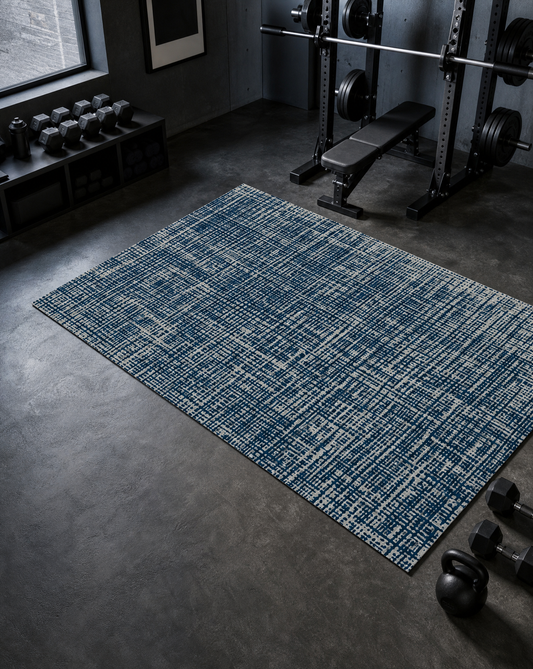
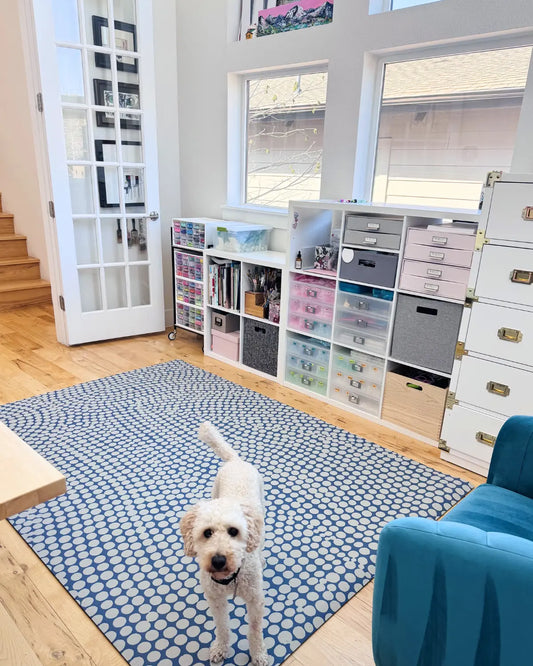
A mat designed for home workouts should offer enough room to move freely, provide supportive cushioning without feeling unstable, and be easy to live with day to day. Wipeable surfaces, durability for repeated use, and designs that don't clash with your home matter more when the mat stays out instead of getting rolled up. For deeper context on the home-fitness use case specifically, our guide to the best play mat for home fitness walks through what to look for.
FAQ: yoga mats vs exercise mats
Can a yoga mat be used as an exercise mat?
A standard yoga mat can be used for low-impact bodyweight exercise that stays inside its 24-inch-wide footprint, but it doesn't work well for dynamic movement. For HIIT, lateral steps, jump landings, or any workout that takes you off-center, a yoga mat puts most of your body off the mat the moment you move sideways. A wider exercise mat solves the constraint.
Is an exercise mat better than a yoga mat for home use?
For most home routines that mix disciplines — yoga, strength, mobility, family movement — an exercise mat is better than a yoga mat. A larger surface with yoga-grade grip handles every type of movement instead of just the ones the mat was sized for, and it doubles as a permanent floor zone instead of something to roll out and away each session.
How thick should a mat be for both yoga and exercise?
For both yoga and exercise, a mat around 6mm thick is the practical sweet spot. Thinner mats get uncomfortable for kneeling and impact work, while thicker mats become unstable for balance poses. Six millimeters of high-density material provides enough cushion for floor work and enough firmness for standing balance work. More on how thick a yoga mat should be here.
Do I really need separate mats for yoga and workouts?
You probably do not need separate mats for yoga and workouts. Most people end up using whichever mat is already out, so the practical answer is one large mat with yoga-grade grip that handles both disciplines. Switching between two mats mid-workout creates friction that quietly discourages the dual practice you bought them for. We break down the two-mat question here.
Where Swankymat fits in
Swankymat was created for people whose workouts don't stay neatly inside a single category. The extra large, single-piece design gives you room to move through yoga, strength training, and floor exercises without feeling confined.
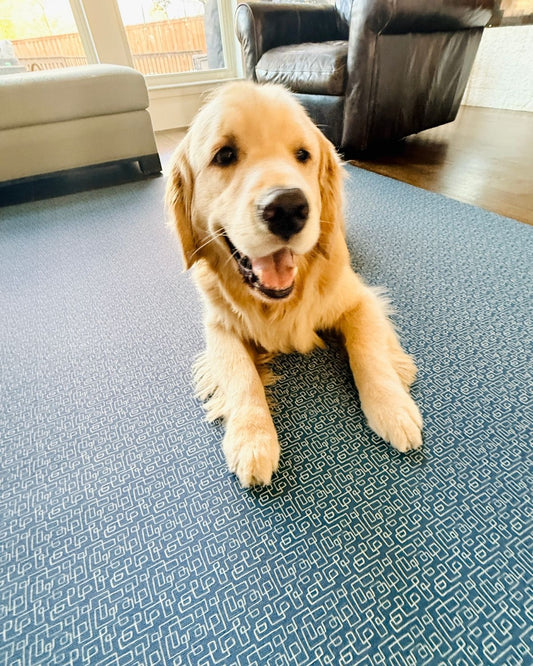
The supportive, high-density cushioning works for slow flows and more dynamic workouts alike, and the wipe-clean surface makes it practical for everyday use. Because it's designed to live in your home, it blends into shared spaces instead of needing to be tucked away after every session. Why Swankymat was designed for home movement.
If you want one mat that supports yoga, exercise, and real-life movement at home, explore the full collection here. For qualifying customers, Swankymat is also HSA/FSA eligible through our partnership with TrueMed.