


The Basement Studio: Converting Underused Space Into a Wellness Room
Basements are the most common candidate for a wellness room conversion. They are usually finished, usually underused, and usually the largest single block of square footage in the house that has no defined purpose. The pitch to convert one into a home gym or wellness room is easy to make.
The conversions that succeed and the ones that disappoint usually break along a specific line. The successful ones address the basement's actual constraints first. The disappointing ones start with the fun part (buying the mat and the equipment) and never come back to fix the constraints. This walks through what to address first, in what order, and why the mat is not the place to start even though it will be the most visible piece when the room is done.
What makes a basement disappointing as a wellness room
Three constraints show up in most basement conversions, and any one of them can undermine an otherwise well-planned space.
Ceiling height. Standard basement ceiling is often seven to eight feet, sometimes less if the mechanical systems run through the space. Ceiling height determines what movement can happen in the room. A jump squat with arms overhead requires meaningful clearance. A downward-facing dog needs less. A tall person in warrior three needs more. The ceiling height decides the workout range the room can support.
Lighting. Basements usually have minimal natural light, and the artificial lighting is often overhead fluorescent from the previous decade. Both are the wrong light for a wellness room. Fixing the lighting is a bigger part of most successful basement conversions than the mat or the equipment.
Air quality and temperature. Basements tend to run cooler than the rest of the house and often have less air circulation. Both matter for a wellness room that will see extended use. Cool temperature is not always a problem (cool is often preferable to warm for workouts) but stagnant air is.
Any successful basement conversion tends to address these three constraints before choosing the mat or the equipment.
The order that produces a room that actually gets used
First, evaluate the ceiling and address any headroom limitations. Move ductwork if the budget allows, choose a workout style that fits the actual clearance if it does not, and be honest about the constraint. A seven-foot basement is not going to support standing overhead work for a six-foot person, and pretending otherwise leads to a room that gets used for a month.
Second, fix the lighting. Replace fluorescent overheads with warm-white LED. Add multiple lighting layers, not just one overhead. Install dimmers on the primary fixture. Add a floor lamp or two to bring the light down to residential heights and warm the room visually.
Third, address air circulation and temperature. A ceiling fan or a considered air purifier changes the air quality in a basement meaningfully. A small space heater for cold months and cross-ventilation from any available windows or an HVAC vent adjustment can also help. Comfortable temperature range depends on the workout type, but stagnant air is the piece that always needs solving.
Fourth, evaluate the floor. Basement floors are usually concrete under a finished surface. Cold, hard, and often uneven. This is where the mat comes in, and it comes in specifically because of what the basement floor is not going to be able to do on its own.
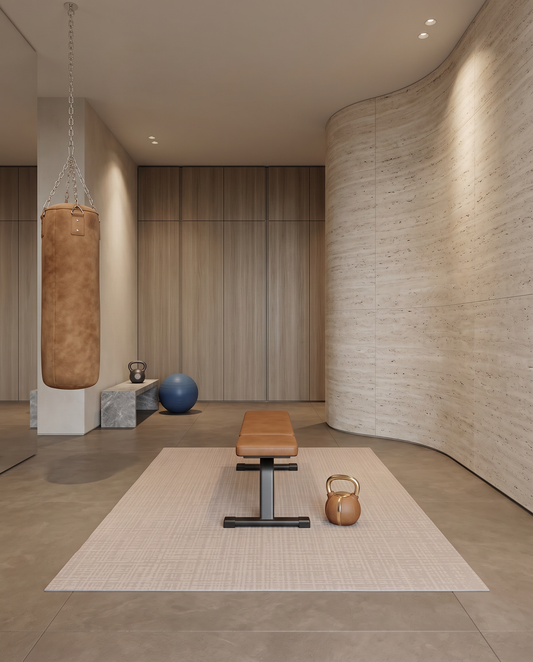
Fifth, choose the mat and layer the room around it. Now the design work starts. The mat becomes the room's palette anchor, the equipment gets curated to fit the space, storage gets specified, and the finishing pieces (plant, candle, considered small object) complete the room.
Why the basement floor matters more than a first-floor room floor
The concrete under a basement's finished flooring is harder and colder than the wood subfloor under a first-floor room. Basement wellness rooms need meaningful cushion under joints more than most first-floor setups do.
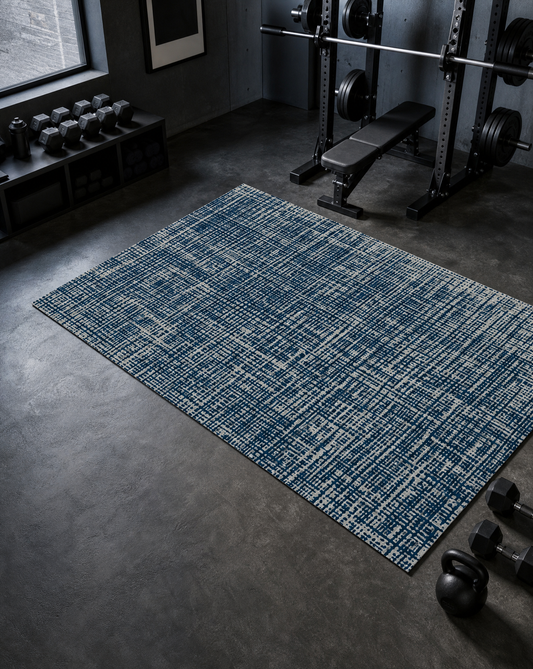
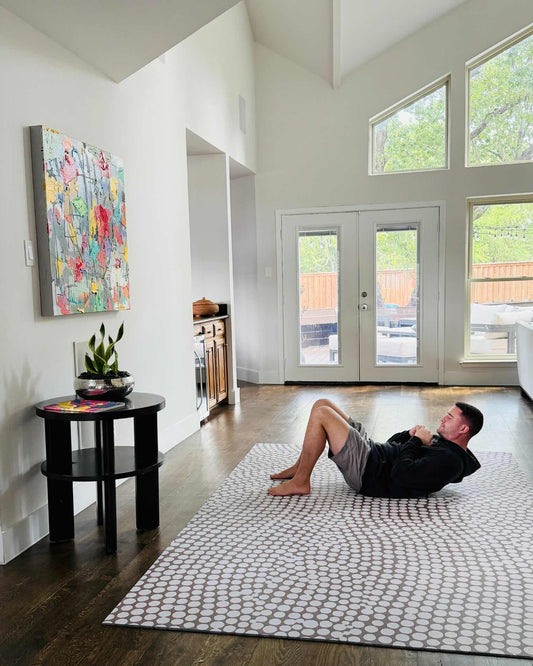
Six millimeters of dense supportive foam is the practical minimum for a basement setup that will hold up to real workouts. Thinner mats leave the concrete's coldness and hardness readable through the surface. Larger footprint (5x7 or 6x9) also matters, because the mat becomes the room's warm zone visually as well as physically.
The palette choice that works well in a basement
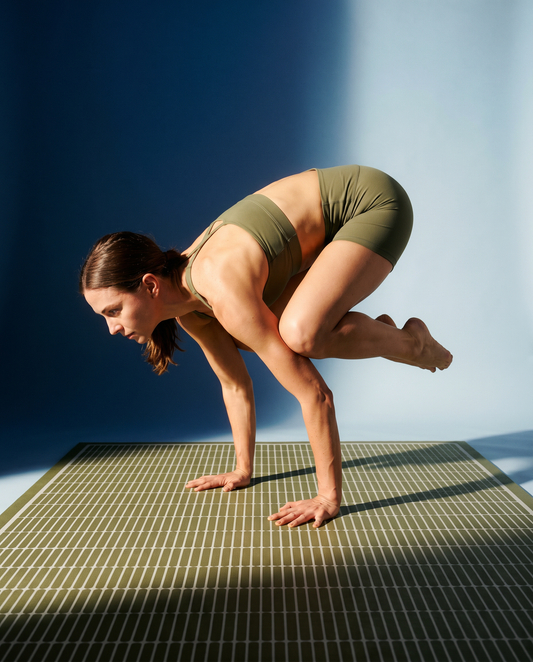
Basements tend to run visually cool because of the concrete, the minimal natural light, and the often-neutral wall paint. Warm-toned palettes counteract this tendency. Warm camel, sage green, warm olive, or a warm-toned midnight blue all bring warmth to a basement room that cool tones (icy blue, cool gray, stark white) tend to accentuate the coolness of.
The mat is the largest surface where this palette choice shows up. A warm-toned mat can meaningfully change the visual temperature of a basement room.
Where Swankymat fits in a basement conversion
Swankymat is built for the specific requirements of a basement wellness room. Single-piece non-toxic construction with six millimeters of dense supportive cushion, addressing the coldness and hardness of concrete-under-finished-flooring. Hand-drawn patterned designs in warm-toned residential palettes (Rhodes Camel, Ellis Sage, Arlo Olive, warm-toned Sloane Midnight) that warm a basement's typically cool visual quality. The waterproof surface handles the basement's typical humidity range without material degradation. The inks on the printed surface are Greenguard Gold certified for indoor air quality, which matters more in a lower-ventilation space than in a first-floor room.
Available in Oversized 5x7 for a defined-zone basement wellness room, Oversized 6x9 for a full-room anchor, and the rollable Studio Mat for basement setups that need to serve multiple purposes across the space.
The Confidence Path to the Right Mat
Two low-risk starting points work well for anyone weighing the decision.
The Perfect Match Quiz takes sixty seconds and recommends a colorway and size based on your space and how the room will be used. Free.
The swatch pack ships three real material samples for $15, credited to your mat. Ordering swatches first unlocks the Perfect Match Guarantee. If you don't love your mat when it arrives, switch it within seven days, completely free. Swankymat pays return shipping. Swatch it, switch it free.
The Swankymat Promise
Every Swankymat is backed by four commitments. Built to Last, Backed for a Year, a one-year quality guarantee on manufacturing defects and premature wear. Easy 30-Day Returns, so you can live with your mat and send it back within thirty days if it is not right. Spills Happen, waterproof and wipe-clean, so real life wipes right off. Perfect Match Guarantee, for anyone who orders a swatch pack first. Free shipping on all orders in the Continental US, including HSA and FSA orders through TrueMed.