


The Bedroom Wellness Corner: A Small Zone That Anchors the Room
A wellness corner in the bedroom puts the morning practice twelve steps from where you wake up. That single fact tends to be the difference between a routine that lasts three weeks and one that lasts three years. Setup friction is what breaks morning practices, and a bedroom setup removes almost all of it.
The tradeoff is aesthetic. A workout zone that looks like a workout zone disrupts the calm the bedroom is supposed to hold. This post walks through what a wellness corner in a master bedroom actually looks like when it integrates rather than intrudes.
Why the Bedroom Works
The behavioral case for a bedroom wellness corner is simple. Habits stick when the environment cues them without conscious decision-making. Waking up next to your practice space is one of the strongest environmental cues a home can create for a morning routine.
The bedroom is also quieter than the rest of the house during the hours a morning practice happens. No family conversation, no kitchen sounds, no email notifications on a shared computer. The room supports focused stillness in a way most living rooms do not.
The Foot-of-Bed Placement
The most common and most functional placement is at the foot of the bed. Three reasons.
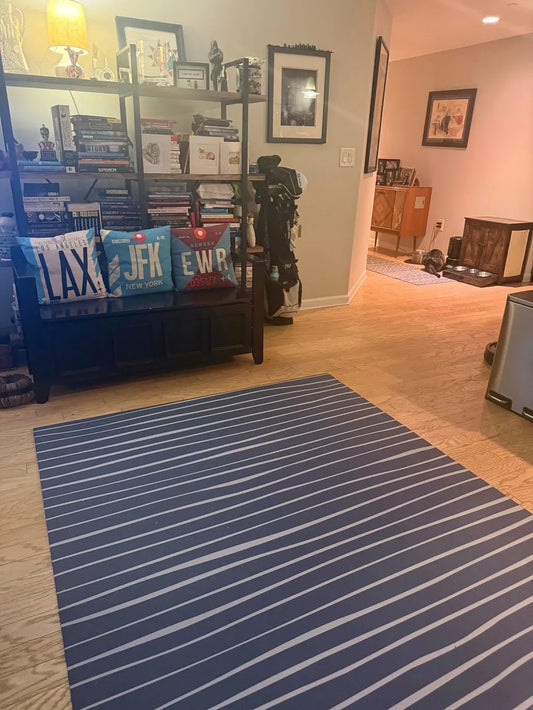
First, the floor at the foot of the bed is usually empty. A rug lives there in most bedrooms; a mat sized like a rug occupies the same space without adding new floor use.
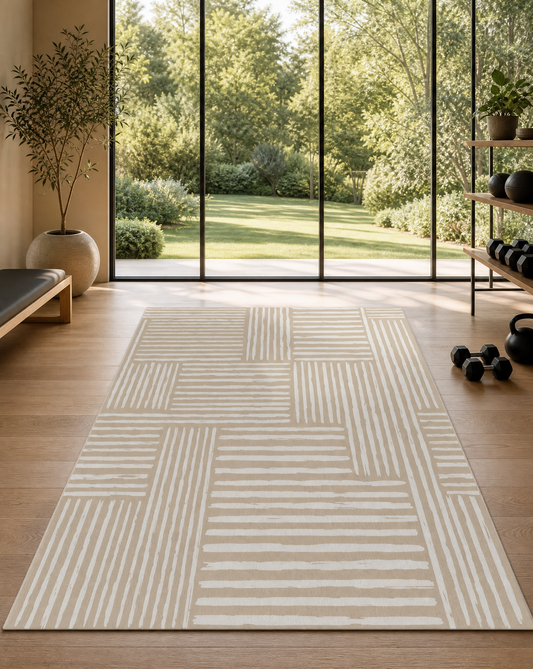
Second, the placement anchors the room visually. A patterned mat at the foot of the bed defines the sleeping area on one side and the movement zone on the other, without partitioning the room.
Third, the practice starts inches from where the day starts. Roll out of bed, four steps forward, kneel down to begin. The transition is short enough that resistance rarely wins.
The Five Elements
A bedroom wellness corner functions on the same five elements as any well-designed movement zone, adjusted for the room.
The surface. A patterned mat sized as an area rug, in a palette that reads as bedroom rather than as gym.
Lighting. A single bedside lamp on a dimmer, or a wall sconce that can hold a low warm setting. The lighting supports morning practice without waking a sleeping partner.
One quiet piece of art or a plant. A small trailing pothos on the nightstand, a piece of art hung above the mat, or a single ceramic vase on a low shelf. One element, not several.
A basket for props. Yoga blocks, a strap, a folded blanket. The basket sits beside the mat and reads as a design object.
A place for the day to start. A small object that marks the transition into the day: a journal on the nightstand, a candle by the mat, a cup of tea on a tray. The signal that this space is for beginning, not for finishing.
Palette Considerations
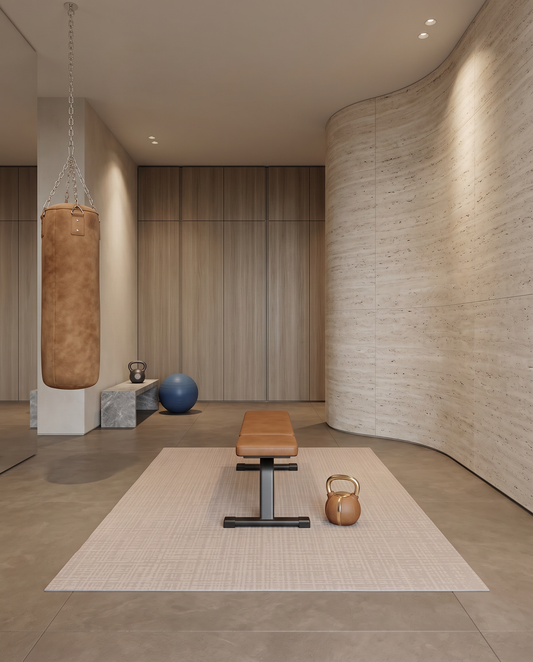
Bedroom design tends to favor quieter palettes than living rooms. Warm neutrals (cream, oat, camel, warm gray), soft blues, muted greens, and deep grounded darks (midnight, forest, deep charcoal) work best. High-contrast patterns and saturated colors can disrupt the calm the room is meant to hold.
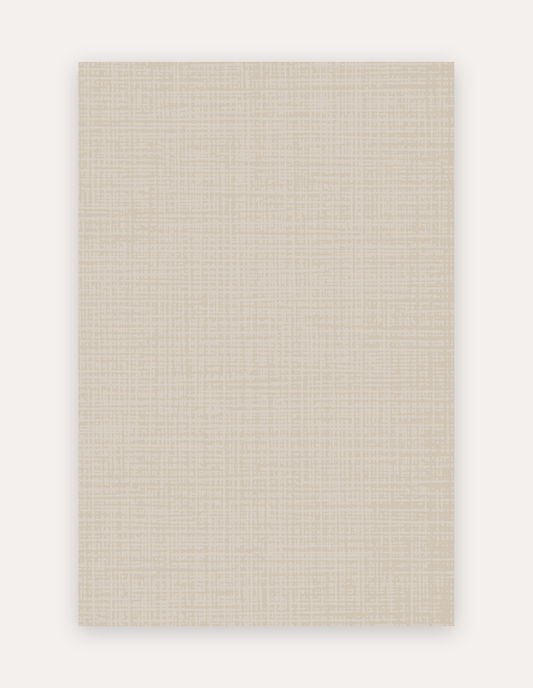
For a bedroom specifically, the quiet Swankymat palettes tend to work best. Sloane Dust (ivory crosshatch), Rhodes Camel (warm pink-beige watercolor), Sloane Forest (muted green crosshatch), and Sloane Midnight (deep saturated blue) all read as part of a bedroom aesthetic rather than as workout gear.
What to Skip
A few pieces that work in a living-room wellness corner do not translate to a bedroom setup.
Weights larger than five pounds tend to read as gym rather than as bedroom decor. If strength training is part of the practice, keep the weights in a basket or move them to a different room.
Large mirrors mounted for form-checking work in a living-room setup but sit awkwardly in most bedrooms. A small mirror leaning against a wall works if needed.
Loud floor surfaces (foam tiles, high-contrast patterns) disrupt the calm palette that bedrooms depend on.
Choosing the Mat That Reads as Bedroom Rather Than Gym
The floor surface is the single largest visual element in a bedroom wellness corner and the piece that decides whether the corner reads as gym or as bedroom. Swankymat is designed for this decision. The hand-drawn patterned mats function visually as area rugs, in palettes that fit alongside considered bedroom design. The mat is non-toxic high-density foam with a waterproof wipe-clean surface and Greenguard Gold certified inks, which matters more in a bedroom (where a partner may share the air) than in most other rooms.
The Oversized 5x7 sits well at the foot of most standard beds. Browse the neutral mats collection to see palettes that fit bedroom aesthetics. For a broader look at wellness corner design, the post on designing a calm movement space covers the five-element framework in more detail.