

The Extra Large Yoga Mat Guide: Sizing, Materials, and Use Cases

The extra large yoga mat category has grown into a real product segment over the last five years. The traditional 24-by-68-inch studio mat still dominates the retail category, but the oversized options (typically 5x7 feet and 6x9 feet) have moved from niche to mainstream, driven by the shift from studio practice to home practice during the pandemic and the parallel shift toward home yoga that also serves other floor formats.
This post covers what actually counts as extra large in the yoga mat category, who benefits most from the oversized options, and how the specific sizes compare in real use.
What Counts as Extra Large
Standard yoga mat dimensions: 24 by 68 inches. Adequate for solo standing practice in a studio setting. Barely adequate for anything else.
Long yoga mats: 24 by 72 inches or 24 by 84 inches. Adds length for taller practitioners. Width stays the same, so lateral movement remains constrained.
Extra large yoga mats: 5x7 feet (60 by 84 inches) or 6x9 feet (72 by 108 inches). Adds meaningful width for lateral movement, partner practice, or floor work that extends beyond the standard footprint.
The 5x7 is the entry point into the extra large category. The 6x9 is the size that reads visually as an area rug and serves as a permanent floor surface rather than a session-specific mat.
Who Actually Benefits From Extra Large
Four use cases where the oversized size makes a meaningful difference.
Home yoga practitioners who train mixed formats. A yoga practice that includes Pilates, mobility, floor stretching, or bodyweight strength benefits from lateral space that a traditional mat does not provide.
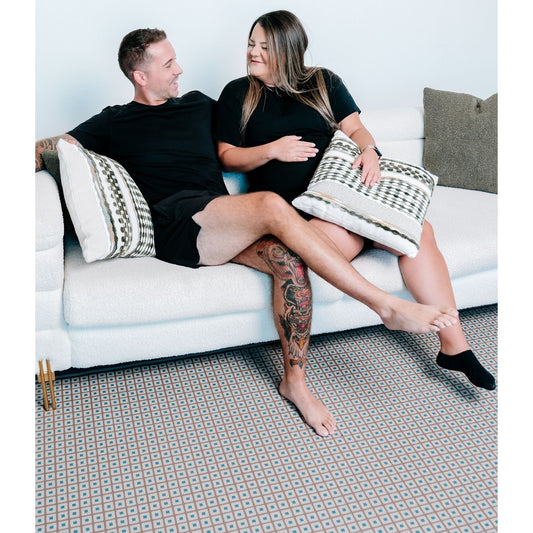
Households with shared practice. Two people practicing together on a single surface (partner yoga, morning practice with a spouse) requires at least a 5x7. A 6x9 accommodates full flow without either person adjusting position.
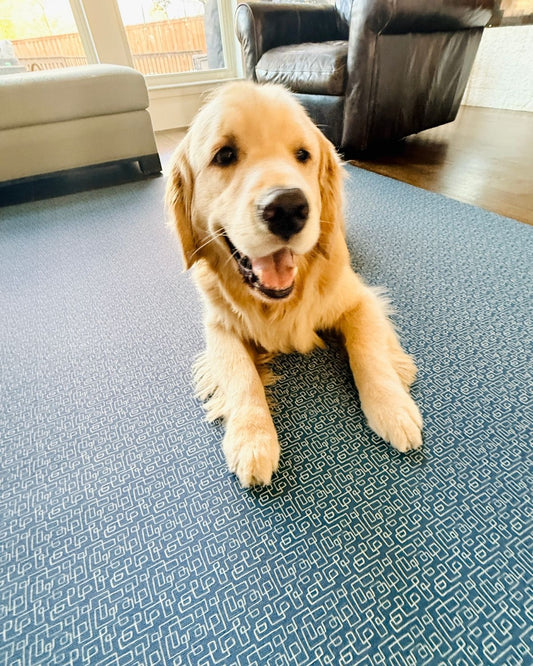
Practitioners who share the space with kids or pets. A larger mat means an adult can practice on one half while a toddler plays on the other, or a dog can rest on the edge without displacing the practice.
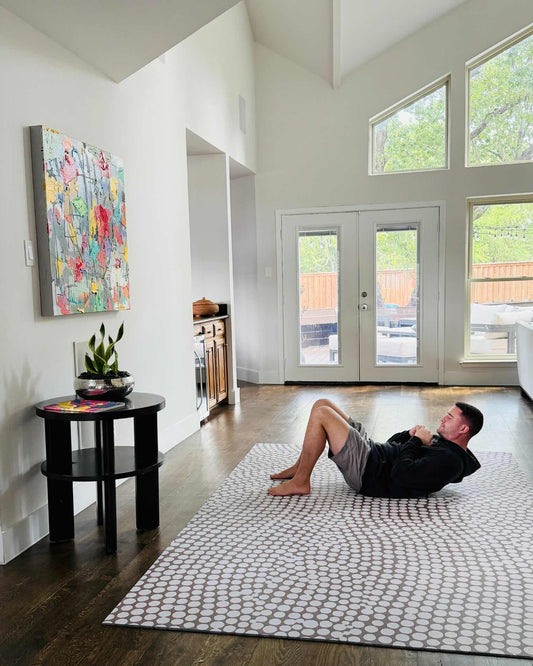
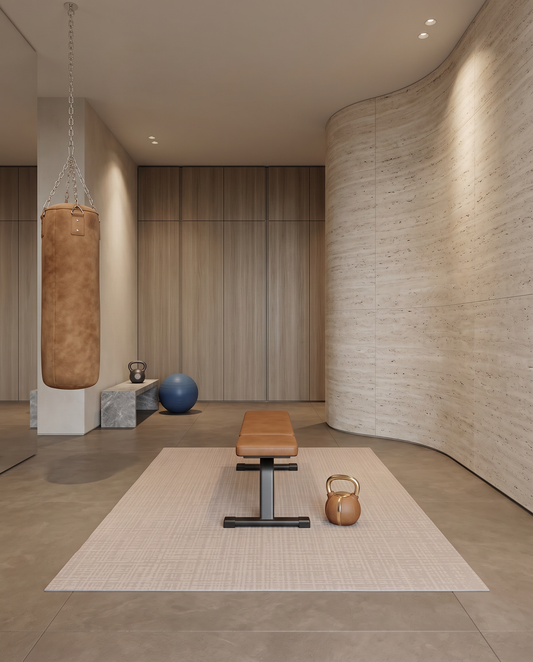
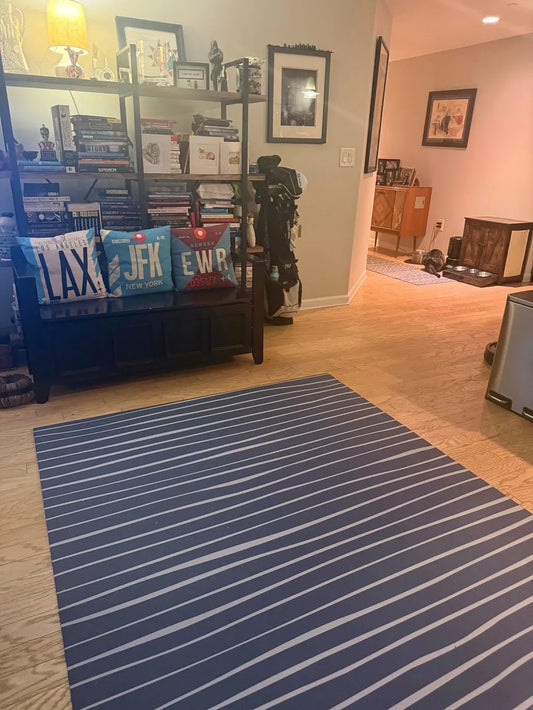
Anyone using the mat as an area rug. A 6x9 sits visually where a standard 5x8 living room rug would sit. In this use, the mat serves both as workout surface and as room decor, which is the strongest case for the extra large size.
How to Choose Between 5x7 and 6x9
Three questions surface the right size for most buyers.
Is the practice solo or shared? Solo practices tend to fit the 5x7. Shared practices need the 6x9.
Will the mat function as an area rug? A 5x8 rug placement corresponds to a 6x9 mat. A defined-zone placement (nursery corner, bedroom, guest room) corresponds to a 5x7.
What is the room size? A 6x9 mat in a 10-by-12-foot room reads as wall-to-wall. A 5x7 sits more lightly. Larger living rooms (12x14 and up) accommodate the 6x9 without dominating.
For a deeper look at the sizing decision specifically, the post on 5x7 vs 6x9 sizing walks through the tradeoffs in detail.
The Swankymat Oversized Line
The Swankymat Oversized 5x7 and 6x9 are built for the extra large category as a permanent floor surface rather than session-specific gear. Non-toxic high-density foam with 6mm of supportive cushion, a waterproof wipe-clean surface, and Greenguard Gold certified inks. Single-piece construction with hand-drawn patterned designs that read as area rugs.
For the shape category outside the oversized line, the Studio Mat at 26 by 71 inches covers the traditional studio-class need in the same construction spec. Browse the full mat collection to see the pattern options across sizes.