Home Gym Flooring by Room: What Actually Holds Up
Most home gym flooring advice starts with the workout. Heavy lifting means rubber. Yoga means a mat. HIIT means shock absorption. That framing captures part of the truth. It misses the part that actually decides what will still look right in the room three years from now.
The room matters more than the workout. A bedroom home gym has different demands than a garage shop. A living room double-duty setup fails on entirely different terms than a basement wellness room. Below is what actually holds up, by room.
Why the room matters more than the workout
Two questions decide almost every flooring choice a home gym owner will end up regretting. Who else uses this room, and what happens to the flooring when the workout is done. A bedroom that hosts a morning stretch also hosts feet padding to the closet at six a.m. A living room that hosts an evening yoga session also hosts the dog, the toddler, and the coffee table. Flooring that ignores those other lives ages fast, gets rolled up and shoved in a closet, or gets replaced within the year.
The workout adds one layer to the decision. The room adds all the others.
The bedroom home gym
What the room needs. Warmth underfoot, quiet, and something that reads as bedroom furniture rather than gym equipment when the workout is done. A bedroom with a wood or tile floor loses its softness fast under bare feet, and adding a treadmill-sized rubber square kills the room.
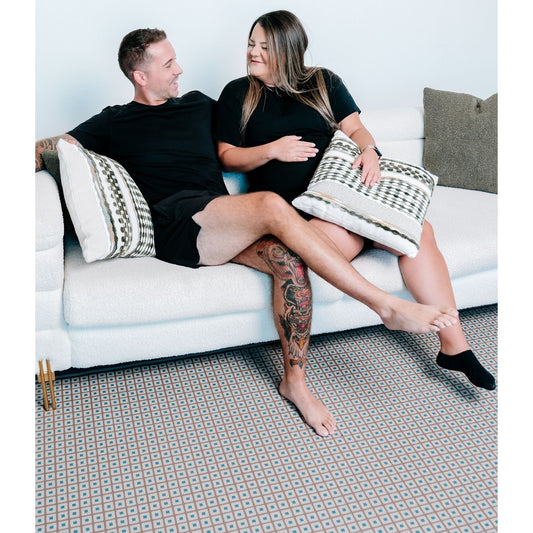
What works. A large patterned foam mat that stays out. Something with enough visual presence to read as an intentional floor covering, and enough cushion to make morning movement kinder on knees, wrists, and hip bones. A mat in a considered palette layers with existing bedroom textiles rather than fighting them.
What does not. Interlocking foam tiles read as daycare. Standard black yoga mats disappear into the corner and get stepped over. Thin travel mats do not hold up to daily use in a heated room.
The basement wellness room
What the room needs. Moisture tolerance, a barrier against a cold concrete slab, and enough visual warmth to keep the room from reading as a storage area with equipment in it. Basement air runs cool and often carries humidity even in finished spaces.
What works. A single-piece cushioned foam mat that is waterproof, wipe-clean, and large enough to define the workout zone visually. If the basement has painted concrete, layering the mat over an area rug pulls the palette together and softens the acoustic hardness of the room.
What does not. Wall-to-wall carpet holds moisture and gets flat under equipment. Puzzle tiles trap dust between the seams. Rolled rubber flooring is the traditional basement gym answer and reads as institutional in a room the family also uses for other things.
The garage or shop
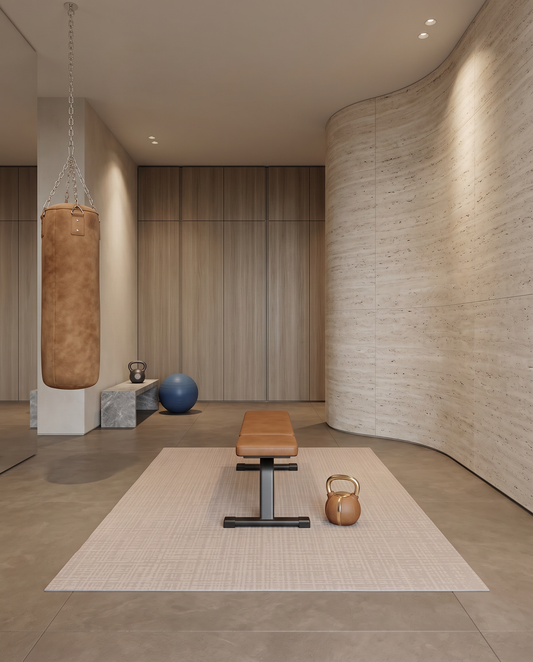
What the room needs. Tolerance for temperature swings, resistance to oil and dust from cars or tools, and enough structure to hold a squat rack without shifting. This is the one room where heavy rubber does belong.
What works. Horse stall mats or thick rubber rolls under the rack area. A separate foam mat, rolled out or laid down, in the section reserved for floor work, stretching, and mobility. Keeping the two zones distinct means the rubber does its job under load and the foam does its job under bare skin.
What does not. Foam alone under a rack will compress and fail. Rubber alone in the floor work zone is cold, unforgiving, and hard on hip bones.
The living room double-duty setup
What the room needs. Zero visual gym cues. The workout has to disappear when the workout is over, or the room stops working as a living room. Area rugs alone are usually not enough cushion under weight-bearing joints, and standard yoga mats read as visitor equipment when a friend walks in.
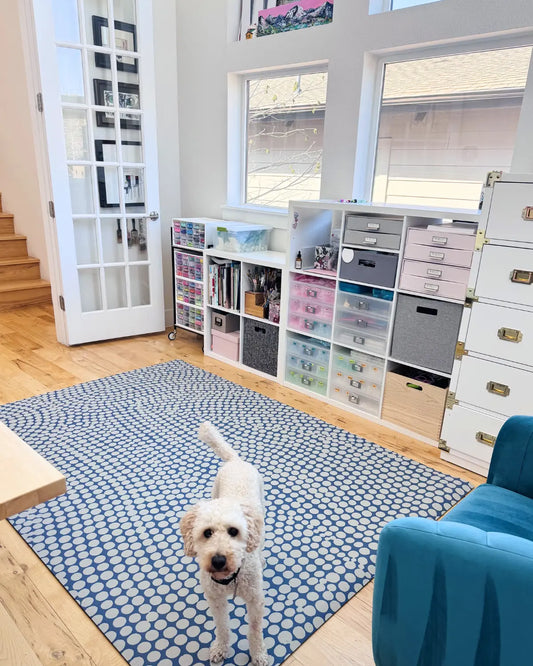
What works. A large foam mat that layers over the existing area rug, chosen in a palette that agrees with the room. When the workout ends, the mat continues to look like a floor covering. Kids play on it, the coffee table sits partially on it, guests do not ask about it.
What does not. Rolling out a yoga mat every session breaks the illusion. The mat becomes a to-do rather than a room fixture, and it ends up in a closet within a month.
The covered patio or outdoor room
What the room needs. UV tolerance, waterproofing against morning dew and wet flip-flops, and enough visual warmth to keep the space feeling like a room rather than a driveway extension. Full-sun exposure will fade any patterned surface over years.
What works. A waterproof cushioned foam mat, kept under a covered section rather than in direct sun, that wipes clean of pollen and rain. The palette usually leans warm to work with wood decking, stone, or terracotta.
What does not. Cotton or wool outdoor rugs mildew under humidity. Bare stone or wood is unkind to knees. Thin travel mats blow off the deck in a breeze.
The flooring choice most people get wrong
The most common home gym flooring regret is choosing for the workout first and the room second. That order produces a floor surface that does its athletic job well and looks wrong in the space for the ninety percent of the week it is not being used. Reversing the order, choosing what belongs in the room first and then confirming it also holds up under the workout, produces a room that stays a room.
Where Swankymat fits
Swankymat is built on non-toxic high-density foam with a supportive cushion under knees, wrists, and hip bones. Single-piece construction with no bonded top layer, so no seams to peel and no puzzle-tile gaps to collect dust. Waterproof and wipe-clean, so a spilled cup of coffee or a wet dog paw wipes off with a damp cloth and mild soap. Hand-drawn patterned designs in restrained residential palettes, so the mat reads as a considered floor covering in a bedroom, living room, basement, or covered patio rather than as gym gear that landed in the wrong room.
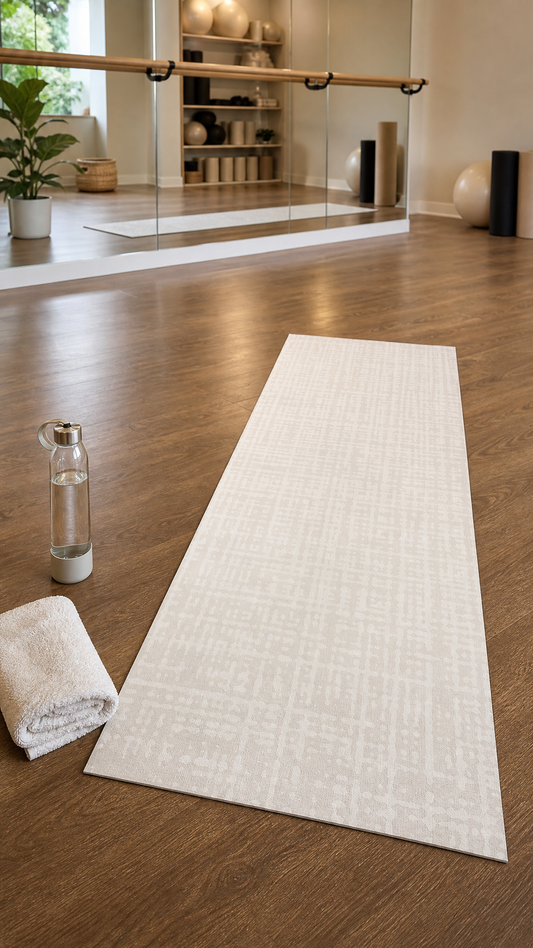
Available in Oversized 5x7 (60 by 84 inches) for a defined workout zone, Oversized 6x9 (72 by 108 inches) for a full-room anchor sized like a standard area rug, and the rollable Studio Mat (26 by 71 inches) for smaller footprints or a portable option that stows away between sessions.
The Confidence Path to the Right Mat
Two low-risk starting points work well for anyone weighing the decision.
The Perfect Match Quiz takes sixty seconds and recommends a colorway and size based on the room and how it will be used. Free.
The swatch pack ships three real material samples for $15, credited to your mat. Seeing the samples in the actual room light is the reliable way to confirm the palette against the rest of the space. Ordering swatches first unlocks the No-Sweat Guarantee. If you don't love your mat when it arrives, switch it within seven days, completely free. Swankymat pays return shipping. Swatch it, switch it free.
The Swankymat Promise
Every Swankymat is backed by four commitments. Built to Last, Backed for a Year, a one-year quality guarantee on manufacturing defects and premature wear. Easy 30-Day Returns, so you can live with your mat and send it back within thirty days if it is not right. Spills Happen, waterproof and wipe-clean, so real life wipes right off. No-Sweat Guarantee, for anyone who orders a swatch pack first. Free shipping on all orders in the Continental US, including HSA and FSA orders through TrueMed.