How Interior Designers Protect Hardwood Floors in a Home Gym
Hardwood is the most expensive floor most homeowners will ever install, and it is the one that suffers the most when a home workout moves onto it. Every trainer online has the same advice. Put down a mat. What they usually mean is a black yoga mat rolled out over a section of the floor. That answer protects the wood the day it happens and looks like a construction site every day after.
Interior designers who work on wellness rooms in high-end residential projects protect hardwood with the same care they bring to protecting a marble kitchen or a wool stair runner. The choices are different from what a fitness-first setup recommends, and they last longer.
What hardwood actually needs protection from
Not all workout wear is the same. Understanding what causes the damage decides which layer of protection makes sense.
Point loads from equipment. A kettlebell placed edge-down, a dumbbell dropped even six inches, a rack foot with all the weight on one small square of contact. These dent hardwood permanently and often crack the finish around the dent.
Sliding friction. A treadmill that walks half an inch every session, a rower that slides on the pull, a bench that shifts. Over months, these leave scuff arcs that no cleaner takes out.
Sweat and spilled water. Sealed hardwood tolerates a wipe. It does not tolerate a puddle that sits for four hours because the workout ended and the water bottle tipped over during a shower.
Sunscreen, chalk, and gym-shoe rubber. Chalk drifts and stains porous finishes. Sunscreen on bare skin transfers into the wood grain. Rubber outsoles on treadmill belts and gym shoes can leave dark scuffs on lighter-stained wood.
What designers choose instead of a rolled-up yoga mat
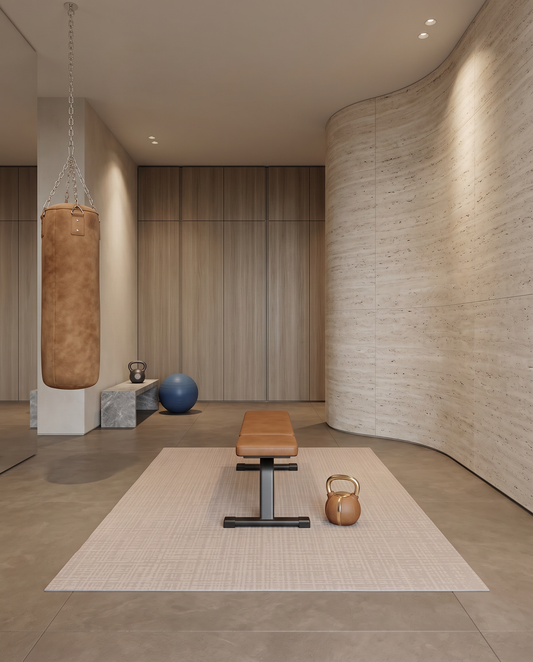
A large single-piece foam mat in a residential palette. This is the designer default for the yoga and mobility zone. Wider than a yoga mat, thicker underfoot, and patterned in a colorway that agrees with the rest of the room. When the workout ends, the mat continues to look like a floor covering, and the wood underneath stays untouched.
A dedicated rubber pad only under heavy equipment. A treadmill mat, a rack pad, a bench pad. These live under the equipment and stay hidden. The rest of the floor is not covered in rubber.
Cabinet-style storage against a wall. Free weights live in a closed cabinet or on a low bench with a padded top, not on the wood floor. This removes the constant risk of a dropped kettlebell and removes the visual clutter that makes a home gym read as a home gym.
A boot tray or dedicated shoe drop by the door. Gym shoes come off at the threshold. This is the smallest choice on the list and prevents most sunscreen transfer, sweat drips off the shoe, and the darker scuff marks that come from outdoor shoes brought indoors.
Why designers avoid interlocking foam tiles on hardwood
Interlocking puzzle tiles are the fitness-industry default for protecting hardwood, and designers almost never specify them. Three reasons.
The seams collect dust and fine hair, and cleaning them requires lifting every tile. On a hardwood floor, that also means fine grit lives between the tile and the wood, and grit under a moving tile scratches the finish.
The tiles trap moisture. Sweat that lands on the top surface can seep down through the seams, sit on the wood, and lift the finish over months.
The visual read is wrong for a residential room. Foam puzzle tiles are the default flooring in daycare rooms and commercial gyms. In a home wellness room styled with anything else, they look like leftover construction materials.
How large the mat actually needs to be
The most common sizing mistake on hardwood is choosing a mat that covers the workout footprint and nothing else. A yoga session moves. Arms extend past the mat. Feet reset off the mat. Every miss lands directly on the wood.
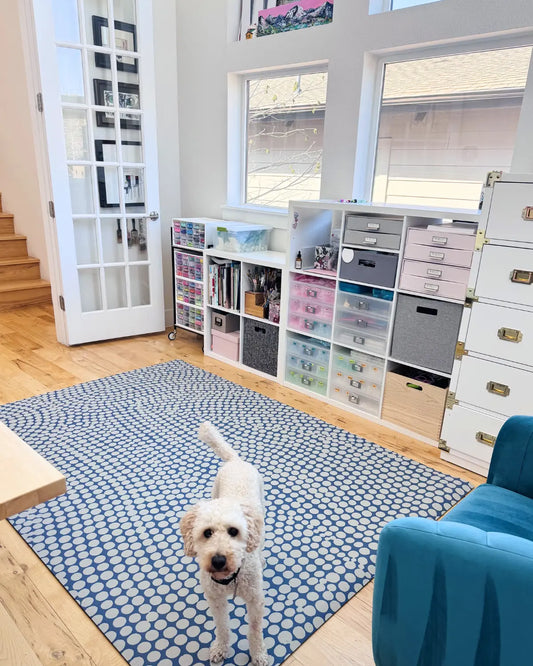
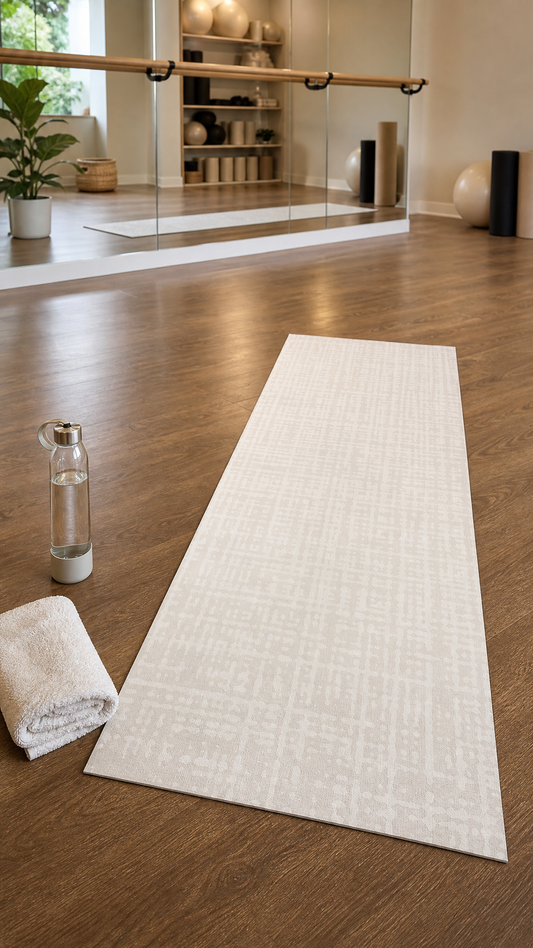
Designers size the mat to the movement zone plus at least one foot of margin on every side. For a yoga and mobility routine, that usually means a mat in the six-by-nine range. For a smaller studio-style routine or a rollable option that stows away between sessions, twenty-six inches by six feet works if the room allows it. What does not work is asking a twenty-four by seventy-two inch standard yoga mat to protect a hardwood floor from an hour of dynamic movement.
What to do if hardwood is already showing wear
If the wood already has dents from equipment or scuff arcs from a sliding treadmill, the mat cannot undo that. It can prevent the next round. Two next steps most designers recommend before adding new equipment or a new routine.
Confirm the wood is sealed. A polyurethane or hardwax oil finish tolerates sweat wipe-ups. A raw or bare oil finish absorbs everything. If the wood is unsealed, seal it before starting a floor-based routine.
Address the equipment first. Move the treadmill onto a dedicated pad. Move free weights into cabinetry. Then add the anchor mat for the mobility zone. Doing it in the reverse order means the mat protects the section it covers and the rest of the room keeps taking hits.
Where Swankymat fits in a hardwood wellness room
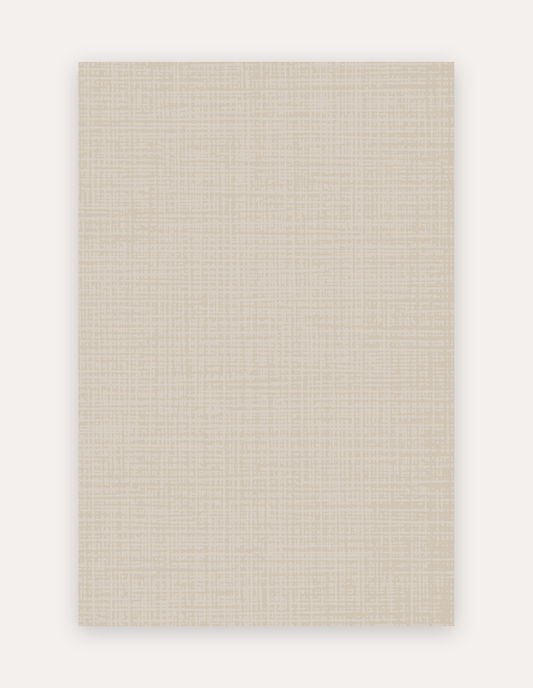
Swankymat is built on non-toxic high-density foam with a supportive cushion under knees, wrists, and hip bones. Single-piece construction with no bonded top layer, so no seams to trap grit against the hardwood underneath. Waterproof and wipe-clean, so a spilled water bottle wipes off with a damp cloth and mild soap before it reaches the wood. Hand-drawn patterned designs in restrained residential palettes, so the mat coordinates with a warm oak, a whitewashed floor, or a dark walnut instead of announcing itself as gym gear.
Available in Oversized 5x7 (60 by 84 inches) for a defined mobility zone, Oversized 6x9 (72 by 108 inches) for a full-room anchor sized like a standard area rug, and the rollable Studio Mat (26 by 71 inches) for smaller footprints or a portable option that stows away when the room needs to serve another use.
Pro Access for design professionals
Swankymat runs Pro Access for interior designers, home stagers, and realtors. The program is a value and enablement offer, not a discount program. Everyone pays full price. Pros get complimentary swatches for client projects, free personalized cards printed four by six inches with your own artwork and shipped with the mat at no cost, client-ready spec sheets, the Styling Lookbook to share, and early access to new styles. Apply at swankymat.com/pages/pro-access. Reach out at pro@swankymat.com.
The Confidence Path to the Right Mat
Two low-risk starting points work well for anyone weighing the decision.
The Perfect Match Quiz takes sixty seconds and recommends a colorway and size based on the room and how it will be used. Free.
The swatch pack ships three real material samples for $15, credited to your mat. Holding the samples against the actual hardwood is the reliable way to confirm the palette before ordering the mat. Ordering swatches first unlocks the No-Sweat Guarantee. If you don't love your mat when it arrives, switch it within seven days, completely free. Swankymat pays return shipping. Swatch it, switch it free.
The Swankymat Promise
Every Swankymat is backed by four commitments. Built to Last, Backed for a Year, a one-year quality guarantee on manufacturing defects and premature wear. Easy 30-Day Returns, so you can live with your mat and send it back within thirty days if it is not right. Spills Happen, waterproof and wipe-clean, so real life wipes right off. No-Sweat Guarantee, for anyone who orders a swatch pack first. Free shipping on all orders in the Continental US, including HSA and FSA orders through TrueMed.