

The Runner's Recovery Mat: Post-Run Stretching and Mobility at Home

The runner injury data is consistent across studies: roughly 50 to 60 percent of consistent runners deal with an overuse injury in any given year. The most common causes are training errors and inadequate recovery, and the recovery gap tends to be more addressable than the training-load gap. Fifteen to thirty minutes of daily post-run mobility work meaningfully reduces overuse injury rates and often produces performance improvements alongside the injury protection.
The gap between runners who do this work and runners who do not is usually not about knowledge. It is about setup. Most runners understand that mobility work matters. Fewer have a home floor setup that supports the daily practice. This post covers what runners actually need from a home mobility floor, and why the setup determines whether the practice happens.
What Runners Need From Post-Run Mobility Work
Effective post-run mobility work targets the specific tissue that running loads repetitively.
Calves and Achilles. The primary shock absorbers during running. Chronic tightness contributes to Achilles tendonitis, plantar fasciitis, and calf strain. Daily rolling and stretching prevents most of it.
Hip flexors. Prolonged sitting plus running creates chronic hip flexor tightness that pulls the pelvis into anterior tilt and contributes to low back pain and glute inhibition.
Glutes. Often underactive in runners, particularly the glute medius. Weakness or inhibition contributes to IT band syndrome, patellofemoral pain, and inefficient running form.
Thoracic spine. Runners develop rounded upper backs from prolonged forward posture. Thoracic mobility work counteracts the pattern and improves breathing capacity.
Ankles. Ankle mobility declines in runners without dedicated attention. Reduced ankle range contributes to compensations up the chain.
The 15-Minute Post-Run Session
The mobility session that produces meaningful benefit for runners tends to look similar across programs.
Five minutes of foam rolling. Calves, IT bands, glutes, quads, and thoracic spine. Sustained pressure on any tight areas.
Five minutes of dynamic mobility. Hip circles, ankle mobilizations, thoracic rotations, and hip flexor sequences.
Five minutes of static stretching. Held positions for the tissue that needs sustained attention. Calf stretch, hip flexor stretch, hamstring stretch, glute stretch.
Fifteen minutes daily is more effective than 30 minutes twice weekly. The consistency matters more than the duration.
Why Runners Skip the Work
Runners understand that mobility helps. The skip rate is high anyway. Two friction points account for most of it.
The floor is uncomfortable. Running produces meaningful fatigue. Sitting on a hard floor or a thin mat after a run to do 15 minutes of stretching is unappealing. The friction breaks the habit.
The setup takes time to prepare. Rolling out a mat, retrieving a foam roller from a closet, finding blocks or props. Every added step reduces the probability of the session happening.
A dedicated mobility space at home eliminates both friction points. The mat is already out. The foam roller and props are within reach. The daily practice becomes the path of least resistance rather than the path of most.
What the Runner's Mat Needs to Do
Five criteria for a floor that supports daily post-run mobility.
Comfortable enough for extended floor time. 6mm of supportive high-density cushion handles the extended static holds and foam rolling that dominate the session.
Firm enough for foam roller effectiveness. Overly soft mats compress under the roller and reduce the pressure application. The mat needs to be dense enough to provide a stable base.
Large enough for full-body mobility. Calf rolling covers the length of the body. Hip flexor stretching requires forward lunge space. Thoracic work often extends laterally. 5 feet by 7 feet fits most solo runner mobility practice.
Waterproof and easy to clean. Post-run sweat plus daily use. The surface has to handle a damp cloth without absorbing anything.
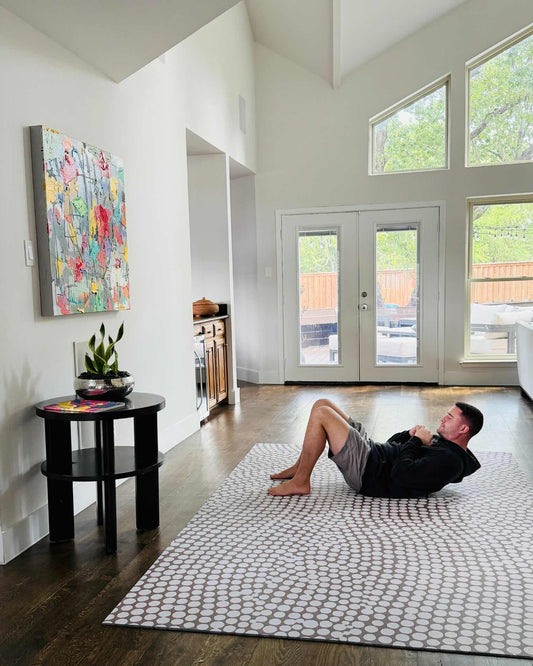
Placed permanently in a used space. A mat in the basement or garage often does not survive winter. A mat in the living room or bedroom gets used year-round because the space is warm and used daily anyway.
The Marathon Training Consideration
For anyone training for a marathon or half-marathon, the daily mobility practice becomes more important, not less. Training volume increases past 30 miles per week produce cumulative fatigue that daily recovery work meaningfully mitigates. Skipping the mobility work during heavy training weeks is exactly when injuries develop.
The runners who complete the training block without injury are almost always the runners who maintain daily post-run mobility across the buildup.
The Swankymat Fit for Runners
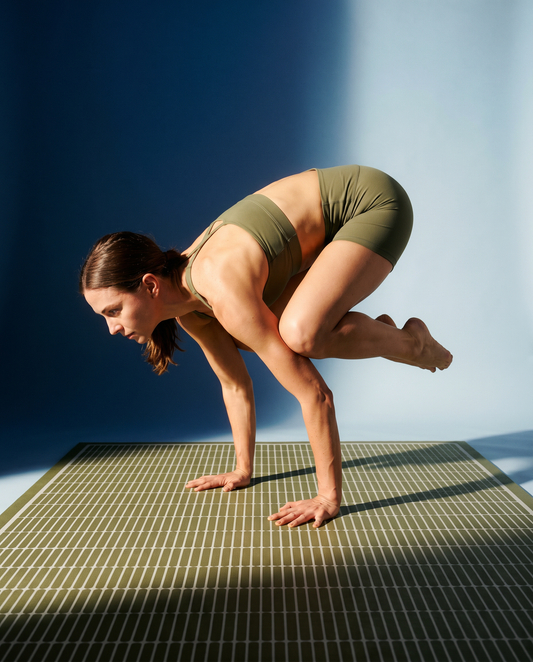
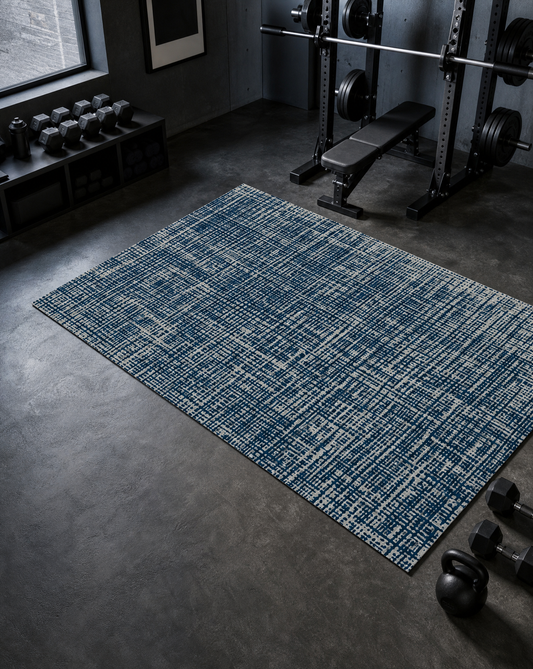
Swankymat serves the daily mobility practice that consistent running requires. Single-piece non-toxic high-density foam with 6mm of supportive cushion handles extended foam rolling, static stretching, and dynamic mobility without joint pain. The firm density provides a stable base for foam rollers and lacrosse balls. The waterproof surface handles post-run sweat and daily cleaning. The hand-drawn patterned designs let the mat stay permanently placed in the living room or bedroom rather than getting stored between sessions.
Available in Oversized 5x7 for solo runner mobility, Oversized 6x9 for larger practice zones with room for props, and the rollable Studio Mat for portable practice or travel during race weekends. For the broader recovery framework, the post on foam rolling and mobility work covers the recovery session structure in detail.
For material feel before ordering, the swatch pack ships three real samples with $15 off the first Oversized mat.