

Safe At-Home Exercise During Pregnancy

This is not medical advice, and every body - and pregnancy - is different. Please consult your medical team prior to trying any new physical activity during pregnancy.
Pregnancy changes your relationship with movement. For many people, staying gently active through it feels good and has real benefits, but it also comes with a lot of questions about what's safe, what to avoid, and how to adapt as the months go on. This is a general overview to help you have an informed conversation, not a prescription. The most important step in any prenatal exercise plan is the one that happens with your own healthcare provider, so let's start there.
Start with your provider, every time
This is essential, so it comes first. Before starting or continuing any exercise during pregnancy, talk with your doctor, midwife, or healthcare provider, and let their guidance lead. Every pregnancy is different, and what's appropriate depends on your health, your history, how your pregnancy is progressing, and factors only your provider can assess. Some conditions make certain activity unsafe. Nothing in this article is medical advice or a substitute for that personal guidance. Think of what follows as background to bring to that conversation, not a plan to start on your own.
Why many people stay active during pregnancy
For those whose providers give the go-ahead, gentle activity is often encouraged, and many people find it helps. Commonly cited benefits include better energy, improved mood and sleep, easier management of everyday aches, and helping the body stay strong for pregnancy and recovery. Health organizations generally support staying active in an uncomplicated pregnancy. That said, benefits vary from person to person, and the right amount and type of movement is individual. The goal in pregnancy is to maintain and feel good, not to chase intensity or push for gains.
Gentle activities people often ask about
If your provider has cleared you, these are the kinds of low-impact options frequently discussed for pregnancy. Always confirm what's right for you:
- Walking. Simple, low-impact, and easy to adjust. One of the most accessible ways to stay active throughout pregnancy.
- Prenatal yoga. Classes and routines designed specifically for pregnancy focus on gentle movement, breathing, and modifications. Look for prenatal-specific guidance rather than a general class.
- Gentle strength and bodyweight work. Light, controlled movements can help maintain strength, with modifications that change as your body does.
- Pelvic floor and breathing work. Often recommended during pregnancy, ideally guided by a provider or a pelvic floor specialist.
- Swimming or water-based movement. Many people find the support of water especially comfortable as pregnancy progresses.
Listening to your body
Whatever you do, the guiding principle is to keep it gentle and responsive. Stay well hydrated and avoid overheating, take rest whenever you need it, and use the simple talk test, if you're too breathless to hold a conversation, ease off. As pregnancy progresses, your center of gravity shifts and your balance changes, so being cautious with anything that challenges balance becomes more important. Comfort is a good compass. If something doesn't feel right, stop, and bring it up with your provider.
When to stop and call your provider
Certain signs mean you should stop exercising and contact your provider right away. These include vaginal bleeding or fluid leakage, regular or painful contractions, chest pain, dizziness or feeling faint, headache, calf pain or swelling, shortness of breath before exertion, or decreased fetal movement. This isn't a complete list, and it isn't meant to alarm you, only to underline that pregnancy is exactly the time to err on the side of caution and lean on professional guidance. Your provider would always rather hear from you.
Comfort makes gentle movement easier
One practical, non-medical piece of all this is simple comfort. A lot of gentle prenatal movement, prenatal yoga, stretching, pelvic floor and breathing work, and floor-based rest, happens down on the floor, and a pregnant body has every reason to want that floor to be soft and supportive. Hard surfaces are unkind to knees, hips, and a changing body, and a thin mat or a slippery rug isn't reassuring when your balance is shifting. A cushioned, stable, non-slip surface makes getting down to the floor and back up more comfortable and more secure, which makes the gentle movement your provider may recommend a little easier to actually do.
A soft, supportive surface for this season
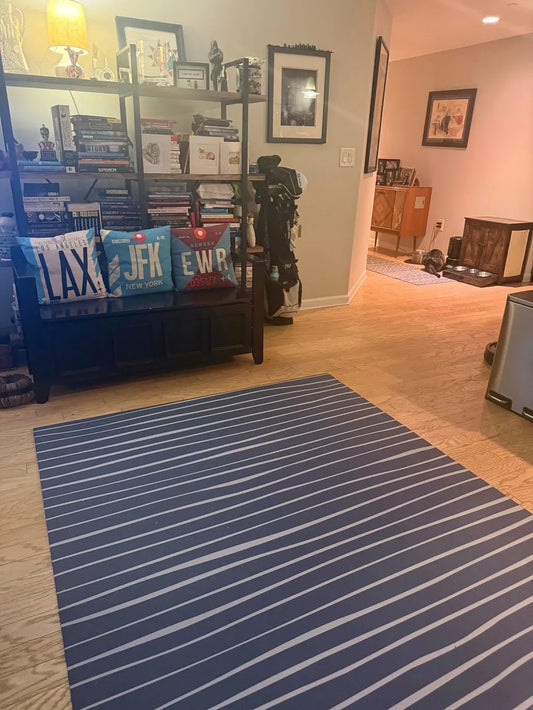
This is a simple way a Swankymat can help during pregnancy. Its 6mm cushion is comfortable and supportive for prenatal yoga, gentle stretching, and floor-based rest, easing pressure on the knees, hips, and back, while staying stable and grippy rather than sliding like a loose rug, which matters as your balance changes. It's large enough to move and rest comfortably with room to spare. It's made with non-toxic materials and Greenguard Gold certified inks, and it's waterproof and wipe-clean for easy upkeep. And because the same surface works beautifully for floor time with your baby later on, it carries naturally from pregnancy into those early postpartum months. Stay in close touch with your provider, keep it gentle, and let comfort guide you, and a supportive place to move can be one small part of feeling a little better through it all.