Strength Training at Home for Beginners: A Floor-Based Starter Plan

Most beginner strength advice starts with a gym membership and a list of barbell exercises. The actual on-ramp for most adults is much simpler. Seven foundational movement patterns, practiced consistently on the floor with bodyweight, build the strength and motor control that everything else in strength training is built on. Equipment can come later.
The plan below covers the first four weeks. It assumes no previous training, no equipment, and about 20 to 30 minutes per session, three to four times per week.
The Seven Foundational Movements
Every strength program, no matter how advanced, is built on the same handful of movement patterns. Mastering them with bodyweight first means everything that follows (adding weight, learning a barbell, training a specific sport) is built on a stable foundation.
Squat. Lowering and rising through the hips and knees. Bodyweight version: air squat to a sofa or chair height. Cue: knees track over toes, chest stays up.
Hinge. Bending forward from the hips while keeping the back flat. Bodyweight version: Romanian deadlift motion with no weight, focusing on the hip movement.
Push. Pressing weight away from the body. Bodyweight version: incline push-up against a wall or counter, progressing to floor push-up on knees, progressing to full push-up.
Pull. Pulling weight toward the body. Bodyweight versions are harder without equipment. Door-frame rows (with a towel) or supine pull-ups under a sturdy table work.
Brace. Stabilizing the trunk against motion. Bodyweight version: plank holds, dead bug.
Lunge. Single-leg loading. Bodyweight version: reverse lunge stepping back from a stable stance.
Rotate. Controlled rotation through the spine. Bodyweight version: bird-dog, standing cable-style rotation with no resistance.
The Four-Week Starter Plan
Three sessions per week, 20 to 30 minutes each, with at least one day of rest between sessions.
Week 1: Movement Familiarization
Two rounds of each movement, 8 to 10 reps. Focus on form, not load. Sessions: 20 minutes including a 5-minute warm-up.
Day A: Squat, Push (incline), Brace (plank 20 seconds), Hinge
Day B: Lunge, Pull (door-frame row), Rotate (bird-dog), Brace
Day C: Squat, Push, Lunge, Brace
Week 2: Building Volume
Three rounds, 10 reps each. Holds extend to 30 seconds. Same exercises as Week 1, slightly more total work.
Week 3: Adding Tempo
Three rounds, slower lowering phase (3 seconds down on every rep). Slow tempo doubles the time under tension without adding load, which builds strength faster than fast reps.
Week 4: Adding Light Load
Most movements can hold light dumbbells (5 to 10 pounds) starting in week four. Push-ups stay bodyweight; planks and bird-dogs stay bodyweight. Squats, lunges, and hinges become weighted variations.
By the end of week four, you have practiced each foundational movement roughly 24 to 36 times. That is the volume that produces real motor learning and the baseline strength that more advanced training is built on.
What You Actually Need
Bodyweight for weeks one through three. A pair of light dumbbells or adjustable weights for week four. A floor surface that supports daily floor work comfortably. That is the entire equipment list.
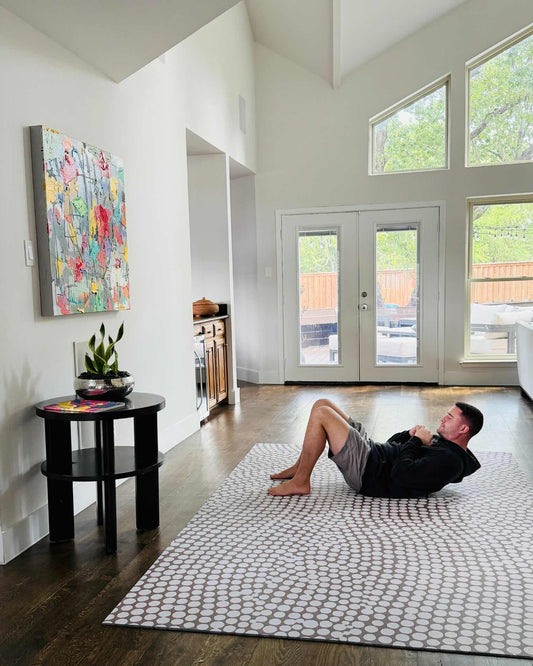
The most important variable is the floor. A hardwood floor is hard on knees during planks, lunges, and any kneeling exercise. Foam tiles work but shift underfoot during push-ups. A thin yoga mat does not provide enough cushion for floor work.
What Tends to Go Wrong
Two patterns derail most beginner programs.
The first is starting too hard. Six-day-a-week programs designed for experienced lifters are not appropriate for week one. Three sessions a week for four weeks produces meaningfully more progress than five sessions a week for one week followed by burnout.
The second is skipping the foundational patterns to chase exercises that look more impressive. Bicep curls and tricep kickbacks are visible online. Squats, push-ups, and dead bugs are less visible and produce dramatically more strength and capability in the same training time.
A Mat for the First Year of Training
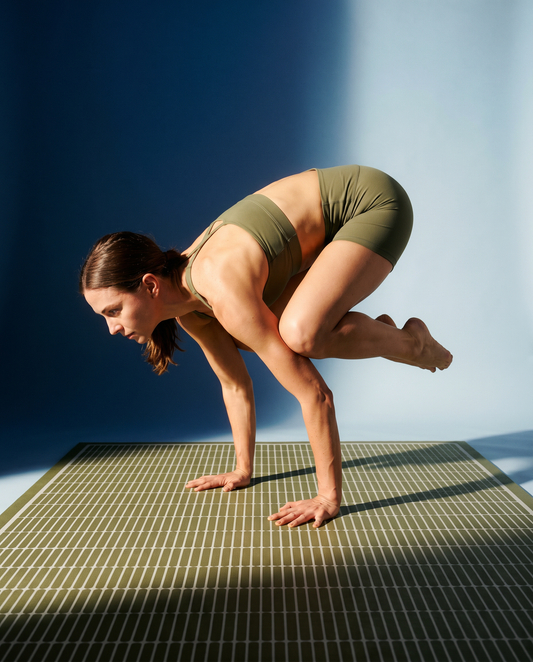
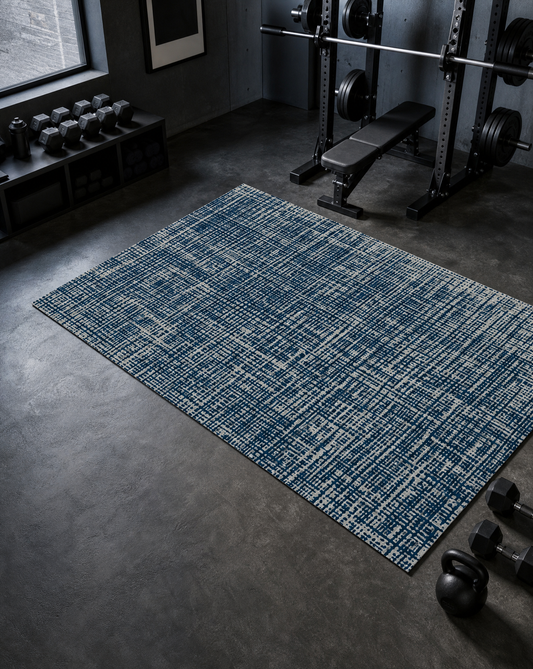
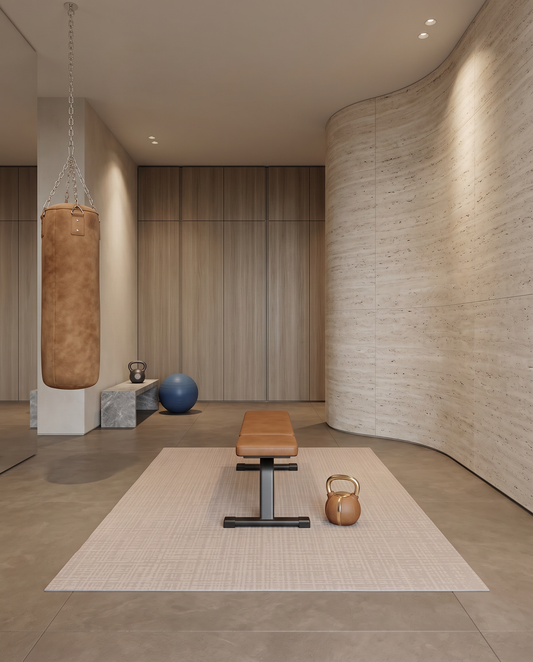
The mat a beginner trains on for four weeks tends to be the mat they train on for years. The cost-per-use math on a well-built single-piece surface shifts dramatically when the same mat covers strength, yoga, mobility, and floor play across the same household. Swankymat is calibrated for daily mixed-use floor work, with cushion firm enough for stable push-ups and plank holds and soft enough to protect knees during lunges and bird-dogs.
For a deeper breakdown of exercises beyond the seven foundational patterns covered above, the exercise mat exercises post covers structured options by muscle group. For the broader case for a quality home workout mat, the post on how to choose the best home workout mat covers what to look for. Or browse the full collection to see what fits the room your practice lives in.