

Stretches for Lower Back Pain You Can Do at Home

Lower back tightness is one of the most common complaints there is, and for good reason. We sit more than our bodies were built for, we lift things the wrong way, and we carry stress in our hips and spine without noticing. A gentle, consistent stretching routine won't fix everything, but for the everyday stiffness most of us deal with, it's one of the simplest and most effective things you can do at home. Here are the stretches worth knowing, how to do them so they actually help, and an important note on when to get professional help instead.
First, an important caveat
Stretching is for the ordinary tightness most of us carry, not for sharp, sudden, or severe pain. If your back pain came on suddenly and intensely, travels down your leg, or comes with numbness, tingling, weakness, or any loss of bladder or bowel control, that's a signal to stop and see a professional rather than stretch through it. The same goes for pain that follows a fall or injury, or that wakes you at night. When in doubt, check with your doctor or a physical therapist first. They can rule out anything serious and tailor a plan to you. Everything below is for the garden-variety stiffness that builds up from regular life, not for diagnosing or treating a specific condition.
Why your lower back gets tight in the first place
Understanding the cause helps the stretches make sense. Long hours of sitting shorten the hip flexors and let the glutes go quiet, which tilts the pelvis and loads the lower back. Weak or under-used core muscles leave the spine doing work it isn't meant to do alone. Stress tightens the whole posterior chain without you noticing. And a surprising amount of what feels like back pain actually originates in the hips and glutes. That's why a good routine doesn't only target the back itself, it addresses the hips and the surrounding muscles too.
Gentle stretches for everyday tightness
- Knee-to-chest. Lying on your back, draw one knee gently toward your chest and hold. It releases the lower back without strain. Switch sides, then try both knees together.
- Cat-cow. On all fours, slowly alternate arching and rounding your spine. Pair it with your breath, inhaling as you arch and exhaling as you round, to loosen the whole back.
- Child's pose. A resting stretch that lengthens the lower back and feels good after a long day. Widen your knees and reach your arms forward for a deeper release.
- Supine spinal twist. On your back, drop both knees gently to one side while keeping your shoulders down. It eases tension through the spine and hips and feels like a reset.
- Figure-four. Lying on your back, cross one ankle over the opposite knee and draw the legs toward you. This targets the glutes and hips, where a lot of lower-back tightness actually originates.
- Gentle bridge. Feet flat, lift the hips a few inches and lower slowly. More activation than stretch, but it wakes up the glutes that take pressure off your back.
How to do them so they help
Technique matters more than effort here. Go slow. Breathe into each stretch and hold it for 20 to 30 seconds rather than bouncing, which can do more harm than good. Never push into pain, only into the gentle edge of a stretch where you feel tension release. If something sharpens or radiates, back off immediately. Most people see the most benefit from a few minutes daily rather than one long session a week, because tissue responds to consistent, gentle input over time. Think of it as maintenance, not a fix you do once.
Building the habit into your day
The routine that helps is the one you repeat, so attach it to something you already do. A few minutes after you wake up loosens the stiffness that builds overnight. A few minutes before bed unwinds a day of sitting. Some people keep a short routine going during a TV episode in the evening. The specific time doesn't matter. What matters is that it's frequent and low-friction enough that you don't talk yourself out of it. Pairing it with strengthening over the longer term, especially the core and glutes, tends to help more than stretching alone, but stretching is the easiest place to start today.
The detail that makes or breaks the habit
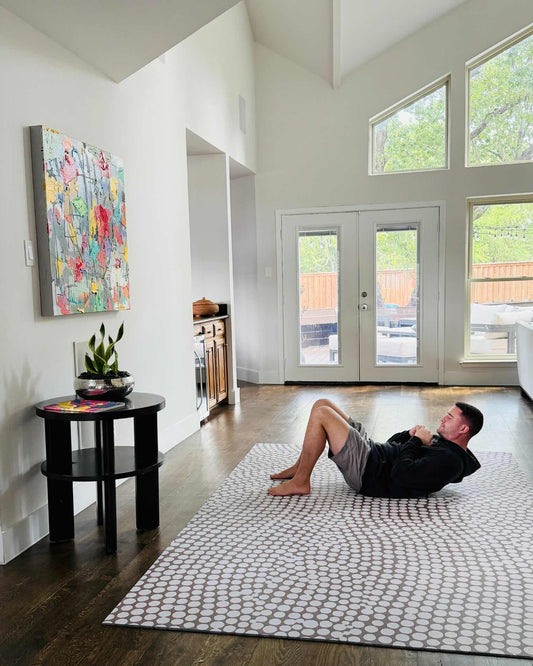
Nearly all of these happen lying or kneeling on the floor, which is exactly why so many people skip them. Pressing your spine, knees, and the backs of your hands into a hard floor is uncomfortable enough to cut the routine short, and the routine only works if you keep it up. A thin mat doesn't help much, it's built for grip, not cushion. A rug bunches up under a twist and isn't something you want your face near. If the surface itself makes the stretch unpleasant, you simply won't keep doing it, and the daily part is the entire point.
A surface that supports the routine
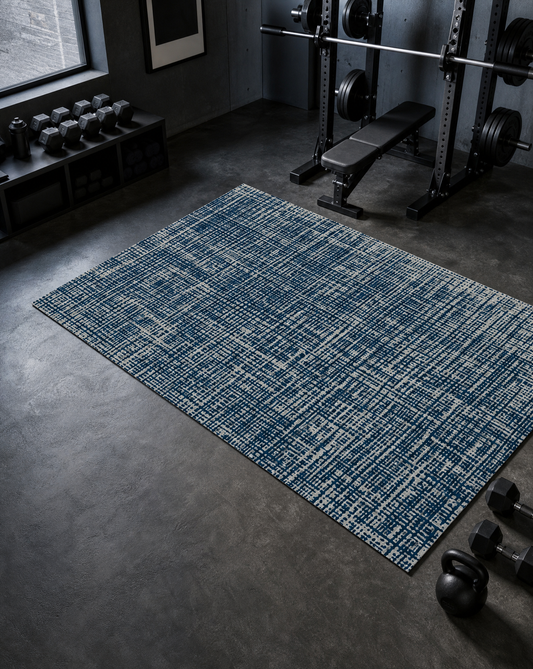
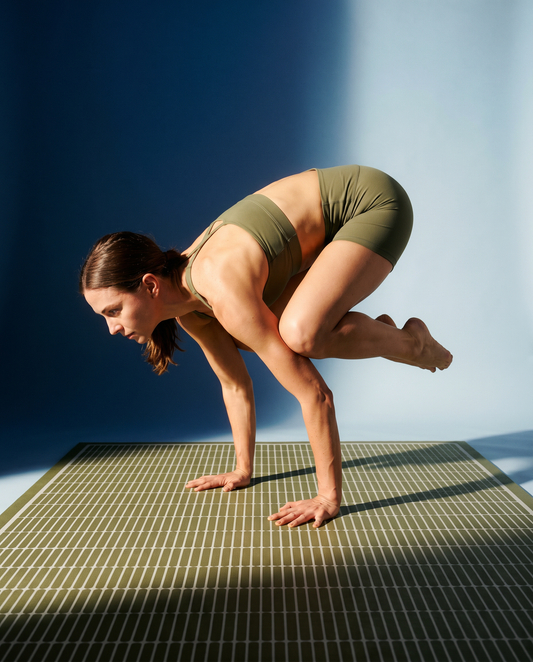
A Swankymat is built for exactly this kind of floor work. The 6mm cushion supports your spine, hips, and joints through every stretch, so child's pose and a supine twist feel like relief instead of a second ache. It's large enough to move freely without running off the edge, made with non-toxic materials and Greenguard Gold certified inks, and waterproof and wipe-clean for the inevitable spilled water during a long stretch. Because it looks good enough to leave out in the living room, it stays where you can see it, which is the gentlest nudge there is toward the daily few minutes your back is asking for. As a practical bonus, it's HSA/FSA eligible, so a surface that supports your wellbeing may qualify for tax-advantaged dollars. Your back does a lot for you, and a few quiet minutes on a comfortable floor is a small way to return the favor.