

What to Pack for a Wellness Retreat: A Refined Checklist

A wellness retreat is a real investment, in money, in time away, in the version of yourself you come home as. So it's worth packing for it with the same intention you brought to booking it. The aim isn't to bring everything. It's to bring the right things, the pieces that let you arrive, settle in, and actually be present rather than fussing over what you forgot. Here's a refined checklist for a yoga or wellness retreat, organized around what genuinely earns a place in your bag.
The packing mindset
The women who travel well pack light and pack deliberately. A retreat rewards this more than most trips, because the whole point is to simplify and slow down. Choose versatile pieces in a coordinated palette so everything works together, bring what elevates the experience, and leave the rest. A heavy, overstuffed bag is its own low-grade stress, and the opposite of the ease you're traveling toward.
Movement essentials
- Layers for practice. A few well-cut pieces you can mix, plus a warm layer for cool mornings and savasana. Natural, breathable fabrics travel best.
- A supportive bra and comfortable basics. The unglamorous foundations that make every session better.
- Your own mat. The one piece most people assume the retreat will cover, and the one most worth bringing yourself. More on this below.
- A light wrap or shawl. Doubles as a layer, a blanket, and a cover for meditation. The most versatile thing in the bag.
Self-care and recovery
This is where a retreat bag earns its keep. Bring a streamlined skincare routine in travel sizes, anything that helps you sleep well in an unfamiliar bed, and a journal if reflection is part of why you're going. A small recovery tool or a pair of bands packs flat and supports the body between sessions. The theme is restoration, so pack the things that help you rest, not a second carry-on of just-in-case.
Practical pieces that make it effortless
A reusable water bottle, layers appropriate to the climate, comfortable shoes for walks or hikes, and a small bag for day excursions cover most of the logistics. Check the retreat's guidance on what's provided so you're not duplicating, and pack a few zip pouches to keep the bag organized. The goal is to spend your mental energy on the experience, not on hunting through luggage.
What to leave at home
Just as important as what you bring. Leave the excess outfits you won't wear, valuable jewelry you'd worry about, and, as much as you can, work. A retreat only delivers what it promises if you let yourself actually unplug. The lighter your bag and the lighter your obligations, the more the trip can do for you.
The case for bringing your own mat
Here's the piece worth thinking about. Most retreats provide mats, but communal mats are often thin, well-worn, and shared by countless guests before you, which is neither the most comfortable nor the most hygienic foundation for a week of daily practice. Bringing your own means a surface you trust, at a thickness that protects your joints, that you know is clean. The only reason people don't is that a full-size mat is bulky to travel with, which is exactly the problem a genuinely packable mat solves.
The travel mat that makes it easy
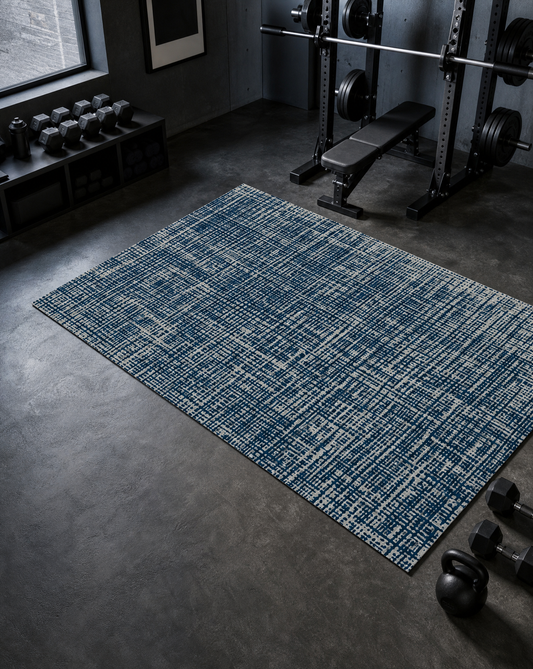
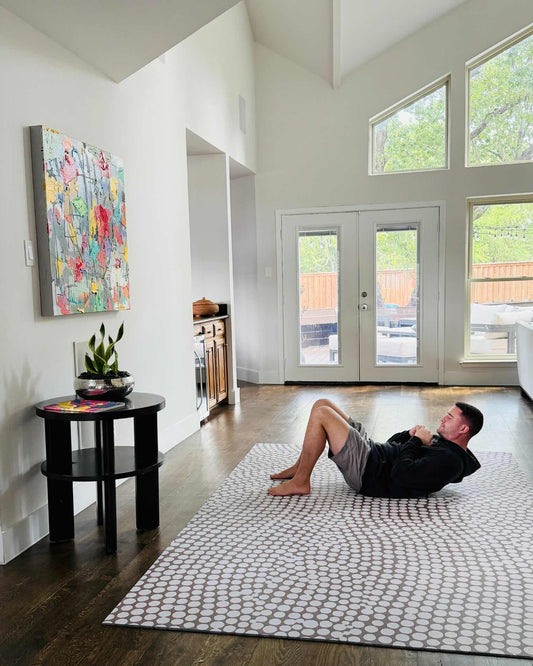
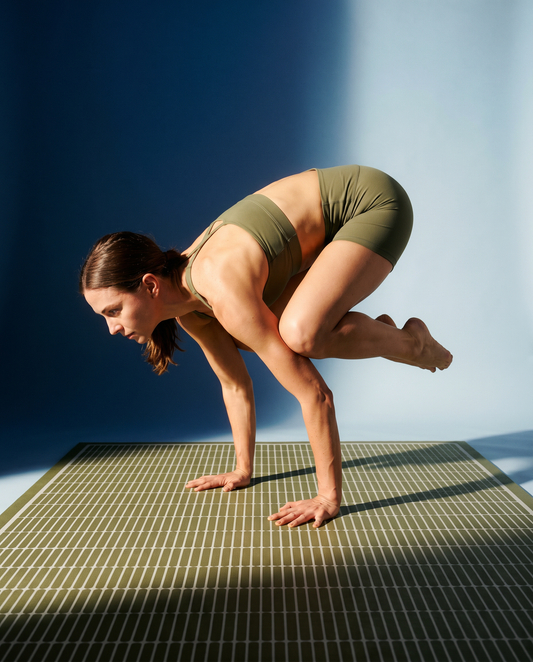
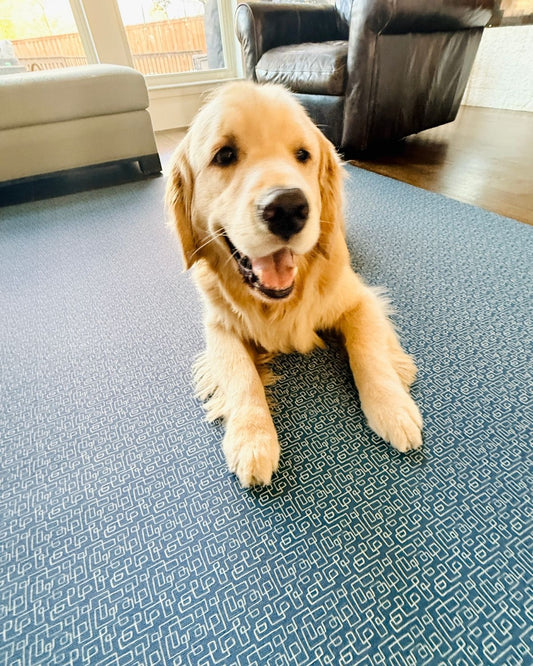
This is what the Swankymat Studio Mat is built for. It's the lighter, more packable member of the family, easy to bring along while keeping the cushion and grip that make a week of daily practice comfortable, and it measures a roomy 26 by 71 inches so you're not cramped on an unfamiliar floor. It's made with non-toxic materials and Greenguard Gold certified inks, and because it's waterproof and wipe-clean, it's simple to freshen up between sessions, wherever you are. For a quiet in-room practice, a short mobility routine on your own mat is a lovely way to start a retreat morning. And when you're home, the full-size 5x7 and 6x9 mats give you room to spread out. Pack with intention, bring the few things that matter, and let the retreat be the rest it's meant to be.