

What to Actually Do on a Rest Day (Active Recovery That Helps)

You trained hard all week. Now it's the rest day, and you're staring at the calendar wondering whether rest means lying on the couch or whether you're supposed to be doing something. The short answer: a true rest day is not the same as doing nothing, but it's also not a secret second workout. The best recovery sits in the middle, gentle, intentional movement that helps your body repair without piling on more stress. Here's how to actually use a rest day, why it matters more than most people give it credit for, and how to set up a routine you'll keep.
Why rest days matter more than you think
Strength isn't built during your workout. It's built in the hours and days after, when your muscles repair the small tears that training creates and come back slightly more capable than before. That process has a name, and it's the entire reason structured training works: you stress the body, then you let it adapt. Skip the adapting part and you blunt the gains you worked for, raise your injury risk, and eventually hit the wall that feels a lot like burnout.
Recovery isn't only about muscles, either. Hard training taxes your nervous system, your connective tissue, and your hormones. Sleep is where a lot of the real repair happens, which is why a rest day paired with a bad night of sleep doesn't feel very restful. When you give your body the room to catch up, you usually find your next few sessions are stronger, not weaker. Rest isn't the reward for training. It's part of the training.
Passive rest versus active recovery
There are two honest ways to take a rest day, and both are valid depending on how you feel.
Passive rest is true downtime. No structured movement, just ordinary life. This is the right call when you're genuinely run down, fighting off illness, sleep-deprived, or sore in a way that feels like more than normal stiffness. Listen to that. There's no prize for grinding through a day your body is asking you to skip.
Active recovery is light, low-intensity movement that leaves you looser, not more tired. For most people on most rest days, this is the more useful option. Gentle movement keeps blood flowing, and blood flow is what carries nutrients to tired muscles while clearing out the byproducts of a hard session. It also keeps you in the rhythm of moving daily, which makes it easier to stay consistent overall.
What active recovery actually looks like
The test for active recovery is simple: you should be able to hold a conversation the entire time, and you should feel better when you finish than when you started. If a session leaves you drained, it was a workout in disguise. A few options that work for most people:
- Gentle mobility flow. Five to ten minutes of slow, controlled movement through your hips, shoulders, and spine. A simple morning mobility routine of cat-cow, hip circles, thoracic rotations, and shoulder openers undoes the positions you hold the rest of the day.
- Stretching and breath work. Hold each stretch long enough to feel it release, usually 20 to 30 seconds, and pair it with slow breathing. The breathing isn't a throwaway detail. It nudges your nervous system out of go-mode and into the state where recovery happens.
- Foam rolling. A few minutes on the calves, quads, glutes, and upper back eases the tightness that lingers after leg or pull days. Go slow, and spend extra time on whatever feels most knotted from the week.
- An easy walk. The most underrated recovery tool there is. Twenty easy minutes outdoors does more for circulation, mood, and sleep than most people expect, and it asks almost nothing of you.
- Light yoga. A slow, restorative flow rather than a sweaty power class. It combines mobility, stretching, and breath in one session, which is why so many people default to it on off days.
A simple 15-minute rest-day routine
If you want a structure to follow instead of improvising, this covers the bases without overcomplicating things:
- Minutes 0 to 3: Slow cat-cow and gentle spinal rotations to wake everything up and check in with how your body feels today.
- Minutes 3 to 7: Hip openers, including a low lunge and a figure-four stretch on each side. Hips take a beating from sitting and from training, so they're worth the time.
- Minutes 7 to 11: Foam roll the areas that feel tightest from the week. Don't chase pain, just work the tissue until it loosens.
- Minutes 11 to 15: A few long-held stretches with slow breathing to close it out. Finish lying down for a minute and simply breathe.
Do it in the morning to loosen up the week's stiffness, or in the evening to unwind before bed. Either works. Consistency matters far more than timing or intensity here.
How to tell if you need more rest, not less
Sometimes the right move is more recovery than your plan calls for. A few signals worth respecting: your resting heart rate is elevated, your sleep is poor, your motivation has cratered, your usual weights feel heavy, or you're carrying soreness that doesn't fade after a day or two. Persistent irritability and getting sick more often than usual can also be signs you're under-recovered. None of these mean you're weak. They mean your body is asking for the thing that actually makes you stronger.
Common rest-day mistakes
The first mistake is turning recovery into a workout. If you can't resist adding intensity, you're not recovering, you're just training again with extra steps. The second is skipping recovery entirely because it feels unproductive. It is productive, it's just quiet. The third is ignoring sleep and nutrition on rest days, as if recovery only counts when you're moving. What you eat and how you sleep on an off day do a lot of the work. Hydrate, eat enough protein, and protect your sleep, and your rest day earns its keep.
The thing most people get wrong about the setup
Recovery work happens on the floor, and the floor is exactly where most home setups fall short. A bare hardwood floor is hard on your knees, wrists, and tailbone, so child's pose and foam rolling become something you rush through. A thin travel mat slides around and offers almost no cushion. A plush rug looks comfortable but bunches under you and traps everything your bare feet and the foam roller leave behind. None of those make you want to get down there in the first place, which is the real problem. The best recovery routine is the one you'll actually do, and the surface under you quietly decides whether you do it.
Make the floor somewhere you want to be
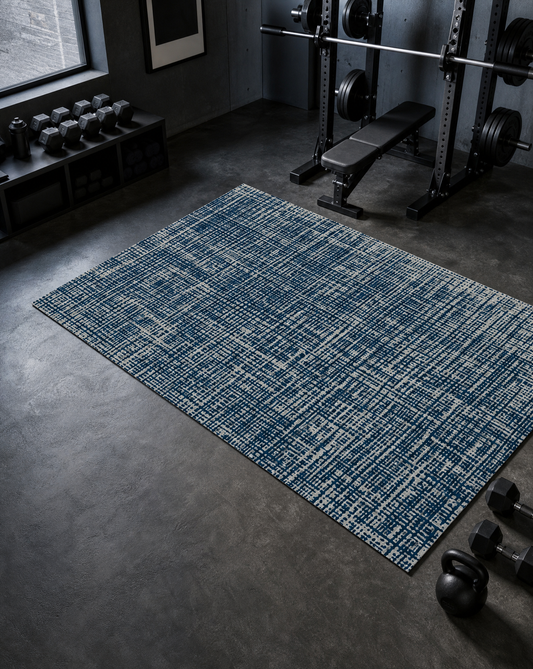
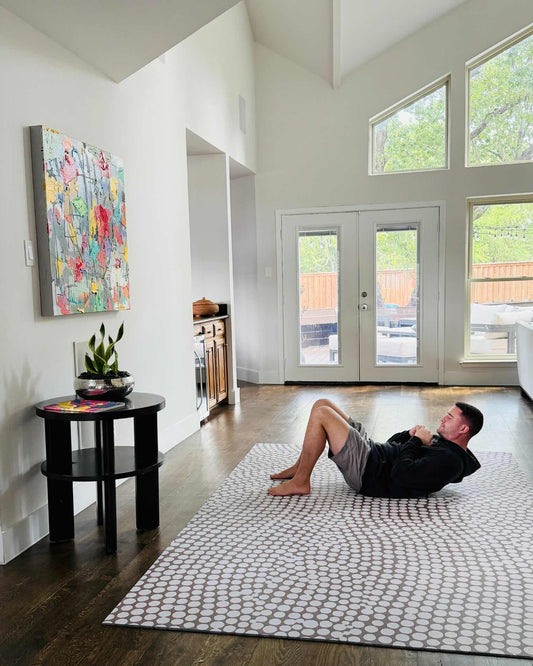
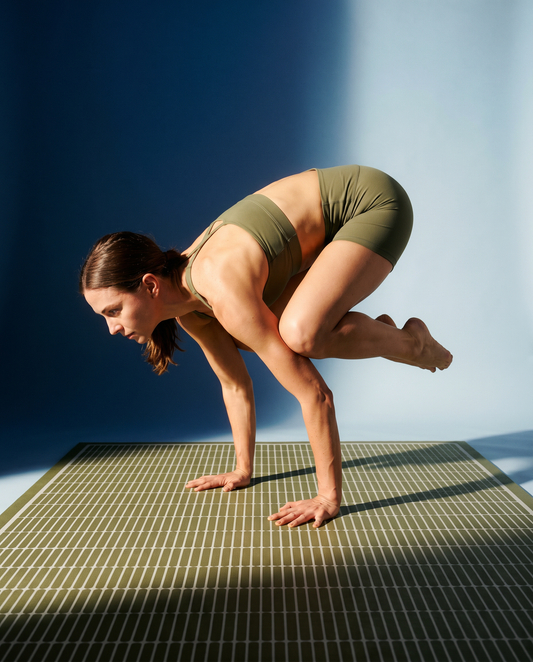
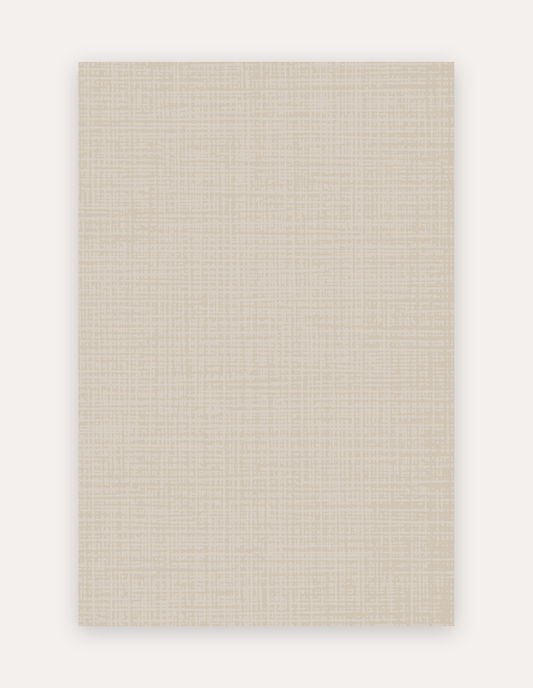
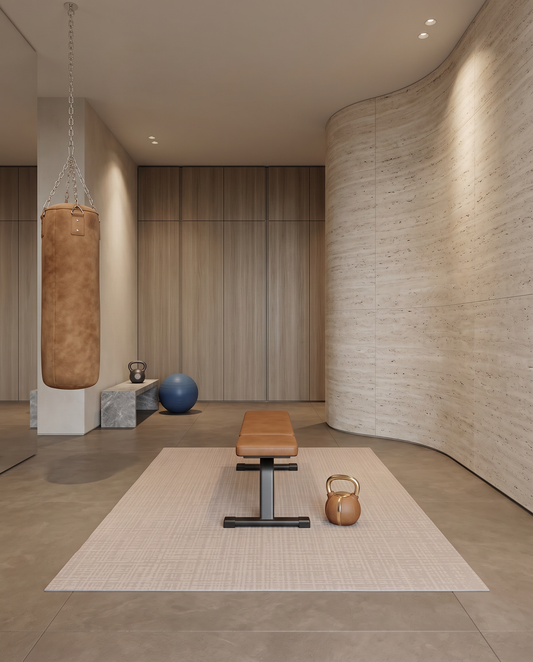
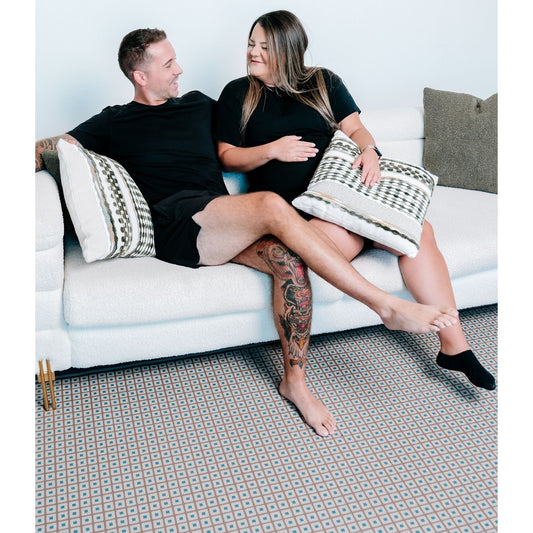
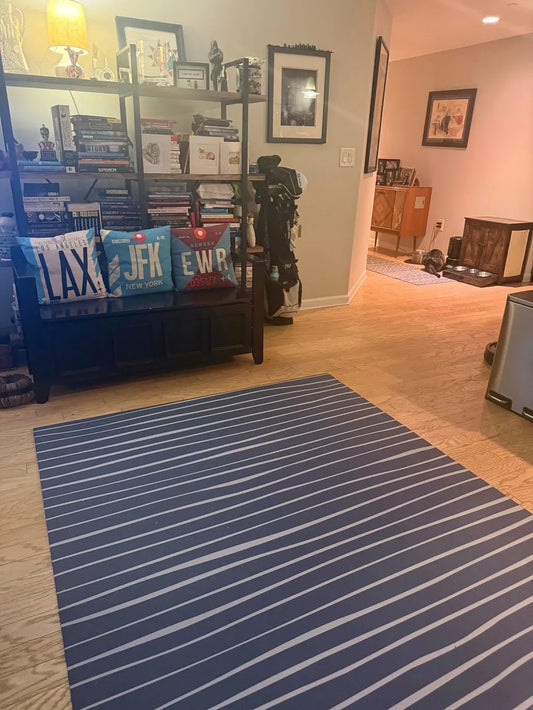
This is where a dedicated surface changes the habit. A Swankymat gives you a large, 6mm-cushioned space that's kind to your joints during stretching and foam rolling, and it stays put while you move. It's made with non-toxic materials and Greenguard Gold certified inks, and it wipes clean when your water bottle inevitably tips over. Because it's stylish enough to leave out in the living room, the mat stays visible, and a recovery surface you can see is one you're far more likely to use. If your rest days lean toward gentle yoga and mobility, our yoga mats give you the room and cushion to stretch out without running off the edge. Rest days only work if you take them, and the easiest way to take them is to make the space inviting enough that getting on the floor feels like a treat rather than a chore.