The Best Pilates Mat for Home Practice
Pilates is mostly floor work. The mat is not an accessory the way a strap or a magic circle is. It is the main piece of equipment in any home practice. The wrong mat makes every session worse: thin cushioning, sliding edges, a surface that grabs your skin or refuses to grip, dimensions that fight your full range of motion. The right mat disappears under you and lets the practice do its work.
Most Pilates mats sold online are not built for home practice. They are yoga mats with a Pilates label, or they are studio-style mats designed for a different floor surface. Knowing the difference saves a lot of trial and error.
What Pilates Demands From a Mat
Pilates puts more sustained pressure on knees, wrists, hips, and the spine than yoga does. The exercises spend more time stationary on bones close to the floor. The mat needs to absorb that without going soft or losing structure.
Five things separate a great Pilates mat from a mediocre one:
- Cushion thickness. 6mm is the practical minimum for home Pilates. Thinner mats expose joints during teasers, leg circles, single-leg stretch, and any exercise that puts weight on the spine.
- Density that holds shape. Soft foam compresses and stays compressed. High-density material rebounds and provides consistent support throughout a long session.
- Stable surface that does not slide. Pilates uses lateral movement, dynamic shifts of weight, and partial inversions. A mat that bunches or slides interrupts every transition.
- Size that allows full range of motion. A standard 2x6 mat works for some yoga shapes but limits Pilates significantly. Open arms, full leg extensions, and partner work all need more floor than that.
- Materials that do not off-gas. You are inhaling whatever the mat releases, especially during nasal breathing patterns. Independent lab testing with named substances and detection limits is more credible than a generic trust badge.
Why Most Pilates Mats Fall Short on at Least One of These
The Pilates mat market splits roughly in three.
Standard yoga mats sold as Pilates mats
2x6 feet, 4-6mm thick, made for sun salutations and similar choreography. They work for personal yoga but are too narrow for Pilates leg circles, too thin for kneeling work, and not large enough for a full mat-based class at home. The mat slides off the floor during dynamic movement.
Studio-style Pilates mats
Thicker (10-15mm), often without a grippy bottom, designed to lie on top of a hard studio floor. Excellent for cushioning. Less ideal for home use because they slide on hardwood, do not stay out as part of the room, and lack the design considerations a mat that lives in your space needs.
Foam puzzle mats
Cheap and cushioned, but the seams shift during dynamic movement and the aesthetic is wrong for almost any home that is not a basement gym.
The middle ground, large enough for real Pilates, cushioned enough for sustained floor work, stable on hardwood, designed to live in the room year-round, is rare. More on how to evaluate any specific Pilates mat here.
What Best for Home Actually Means
A studio mat optimizes for studio conditions. A home mat has to work harder because home conditions are unpredictable. A great home Pilates mat:
- Stays out as part of the room. Rolling and unrolling adds friction to a daily practice and makes consistency less likely.
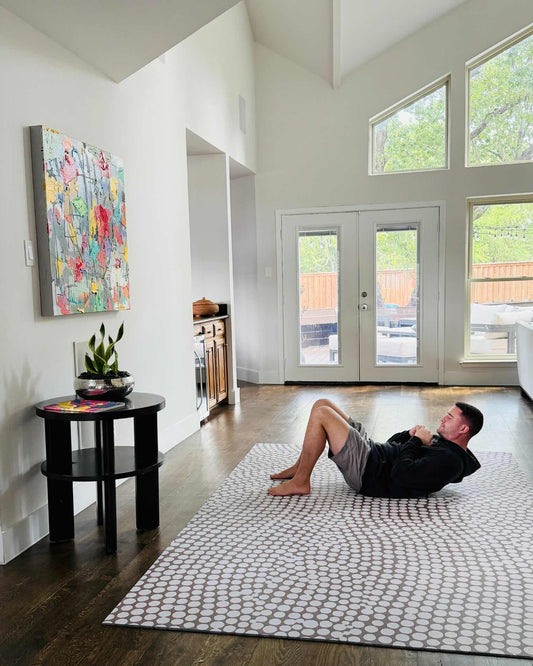
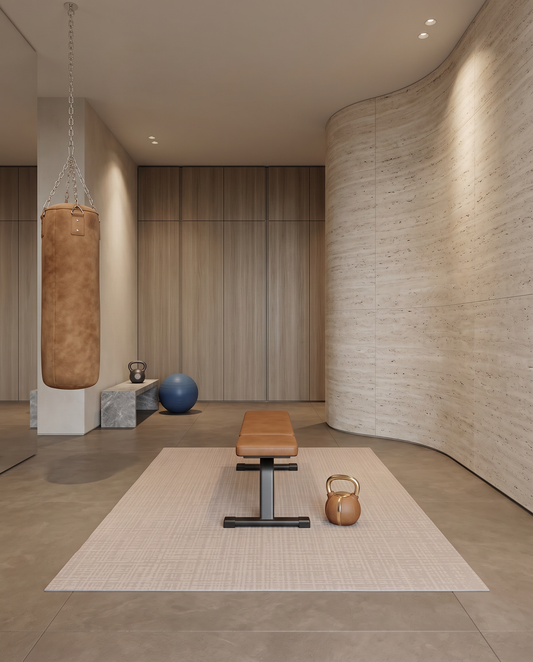
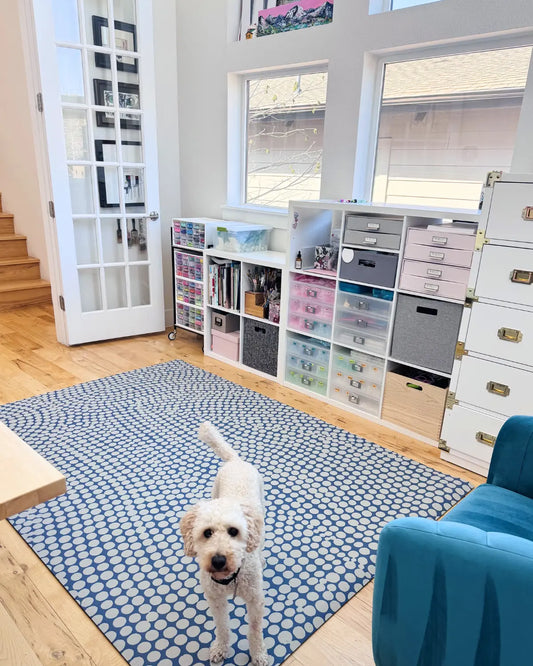
- Fits in the room visually. A mat in a primary color or branded fitness graphic disrupts the space; a neutral or designed pattern lives there comfortably.
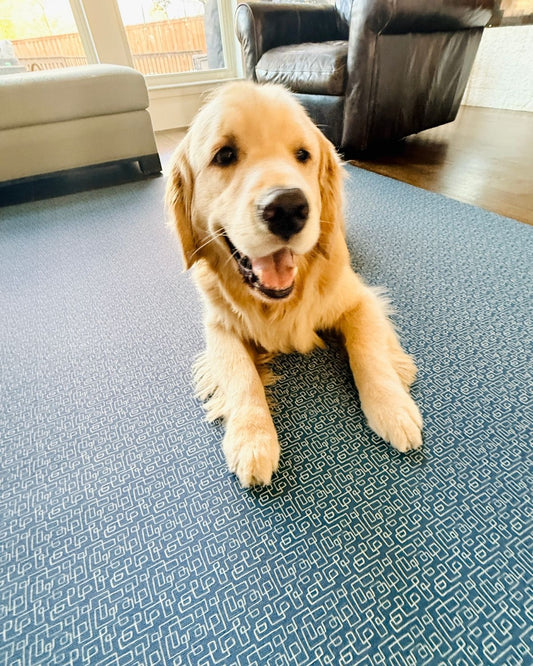
- Handles double duty. Floor work and play, kids and adults, a Sunday afternoon and a Tuesday night class.
- Cleans easily. Sweat, water, the occasional spilled coffee. A wipe-clean surface is a meaningful upgrade over fabric or porous foam.
- Holds up over years. A Pilates mat that needs replacing every 18 months ends up costing more than a higher-end mat that lasts five.
The Specific Specs That Matter
Specs over adjectives. The numbers that separate a great home Pilates mat from a marketed one:
- 6mm minimum cushion thickness in high-density closed-cell foam.
- 5x7 feet or 6x9 feet for a single-person practice with full range, or to accommodate partner work.
- Single piece, no seams. No interlocking sections.
- Waterproof top surface. Wipes clean with a damp cloth.
- Tested materials. Independent lab testing (SGS, Intertek, or Bureau Veritas) with named substances and detection limits.
Where Swankymat Fits
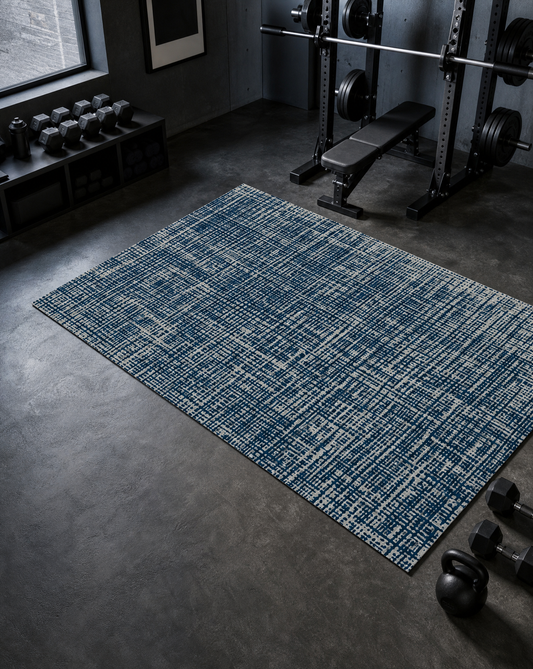
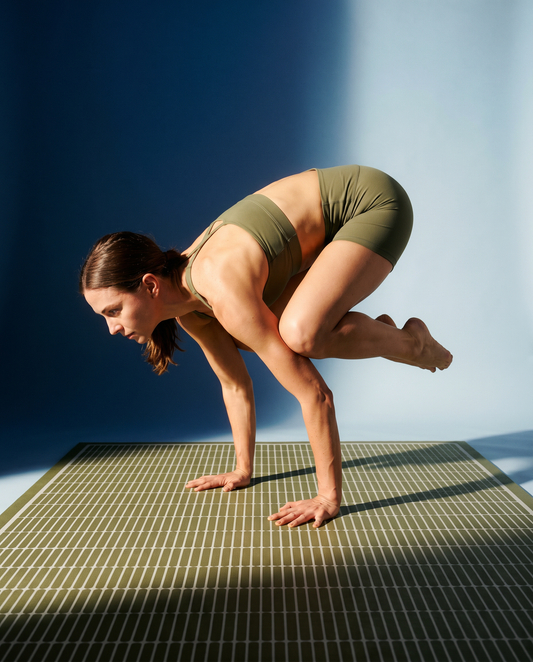
Swankymat was built specifically for this category: large enough for real Pilates, cushioned for sustained floor work, designed to stay in the room. Six millimeters of high-density closed-cell PVC foam. Five-by-seven or six-by-nine feet. Tested by SGS with no detectable BPA, phthalates, or brominated flame retardants, and screened against the EU REACH SVHC list and EU POPs regulation. The printed designs use Greenguard Gold certified inks. The surface is fully waterproof and wipes clean. It does not slide on hard floors.
Qualified customers can use pre-tax HSA or FSA funds toward Swankymat through our partnership with TrueMed. Pilates qualifies as therapeutic movement under most plans. Details on HSA/FSA eligibility here.
Choosing the Mat for Your Practice
Think about how often you practice and how the mat will live in your space. If Pilates is daily and the mat needs to handle a full range of mat work plus some yoga or strength, a 6x9 makes more sense. If your practice is more compact and the mat needs to fit a smaller room, the 5x7 is right.
Browse the full Swankymat collection to see what works in a designed home, or shop by color and style to find the pattern for your practice.