


Designer Home Gym Flooring: A Guide to Every Option
Home gym flooring is the piece of the setup most often chosen for function alone and later regretted for design. The four main categories (rolled rubber, interlocking foam tiles, cork planks, and single-piece mats) each solve the cushion problem in different ways. Only some of them integrate visually with the rest of a designed home.
This post walks through each option with the honest aesthetic tradeoffs.
Rolled Rubber
The commercial gym standard. Rolled rubber sheets bonded to the floor across a full room. Excellent for heavy weight training, olympic lifting, and any activity where dropped weights are part of the practice.
The aesthetic problem is unavoidable. Rolled rubber is designed for commercial gym use and reads as commercial gym use in a home setting. Even the more refined rubber finishes have a distinct industrial register that competes with residential design. Rubber flooring in a dedicated gym room works. Rubber flooring in a shared room does not.
Rolled rubber also has a real off-gassing period. Depending on the manufacturer, the room can carry a distinct rubber smell for weeks or months after installation.
Interlocking Foam Tiles
The default option for renters and for parents setting up a play or workout zone. Foam tiles interlock in a puzzle pattern, cover the floor without adhesive, and cost significantly less than the other categories.
The problems are cushion, aesthetics, and durability. Foam tiles compress and lose their shape within a year of consistent use. The interlocking edges collect dust, hair, and dirt in the seams. And the aesthetic reads as either daycare or hotel-gym depending on the color, but rarely as considered home design.
For a broader case against foam tiles as a permanent flooring solution, the post on the problem with puzzle mats covers the specific failure modes.
Cork Planks
The design-forward option in the past decade. Cork planks provide moderate cushion, look warm and natural, and pair well with residential aesthetics. Best used in dedicated wellness rooms or bedroom conversions rather than in shared living spaces.
The tradeoffs are cost and maintenance. Cork is more expensive than most rubber options and requires periodic sealing. It also dents under heavy point loads (a dropped kettlebell leaves a mark that does not lift out), which limits the training formats appropriate for the surface.
The Single-Piece Mat
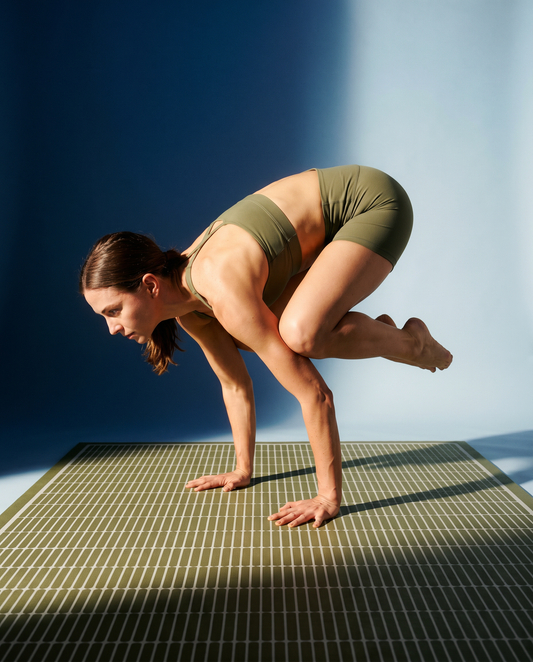
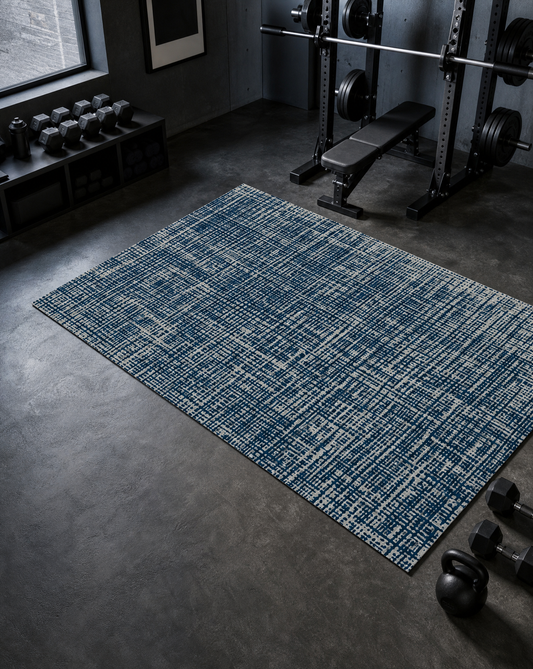
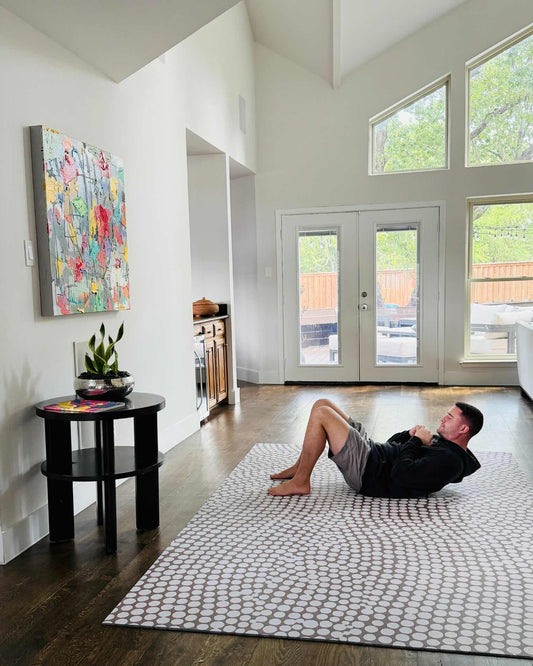
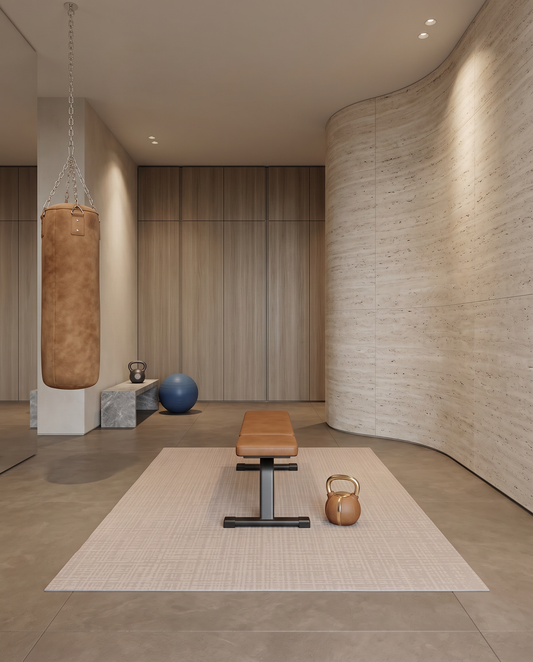
The category that has grown quickly in the last few years. A single-piece mat sized as an area rug provides cushion, integrates aesthetically, and can be moved between rooms without installation.
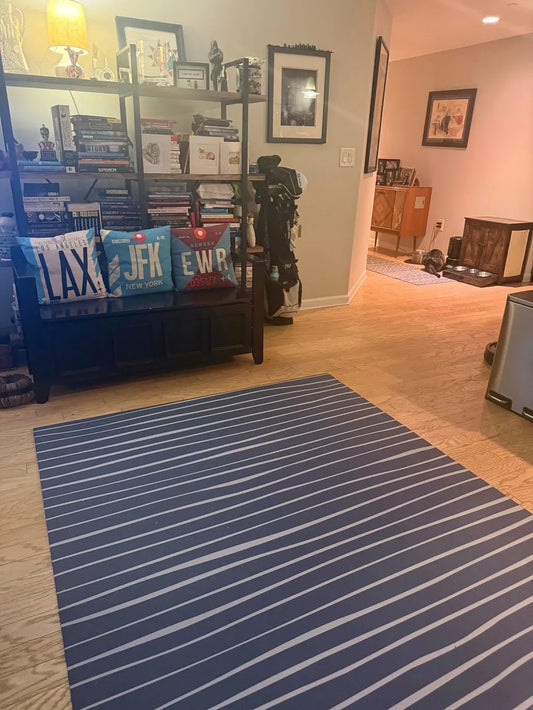
The advantages: no installation, no adhesive, no off-gassing period, no interlocking seams to collect dust. The mat reads as an area rug rather than as flooring, which changes what the room feels like to spend time in. The construction of a quality single-piece mat holds shape across years of use rather than compressing like foam tiles.
The limitation is size. A single mat covers 35 to 60 square feet. For a home gym that requires wall-to-wall flooring, this category is not the answer. For a home gym zone within a living room, bedroom, or dedicated wellness corner, it is often the best fit.
How to Decide
The decision comes down to what the room is used for and how much of the floor needs to be gym-appropriate.
Dedicated gym room with heavy lifting: Rolled rubber.
Garage or basement multi-use space: Rolled rubber or heavy foam tiles.
Kids play area shared with adult movement: Single-piece mat.
Living room, bedroom, or wellness corner: Single-piece mat.
Dedicated wellness room used for yoga, Pilates, and mobility: Cork or single-piece mat.
Renter with no permanent modifications allowed: Single-piece mat.
Where Swankymat Fits in the Category
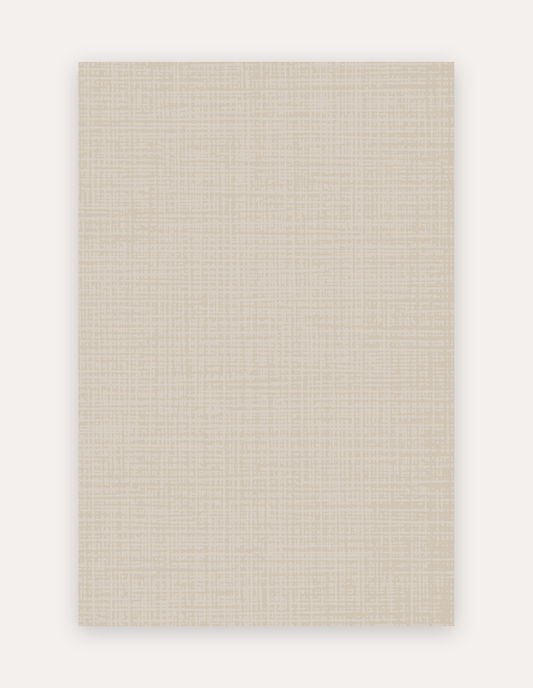
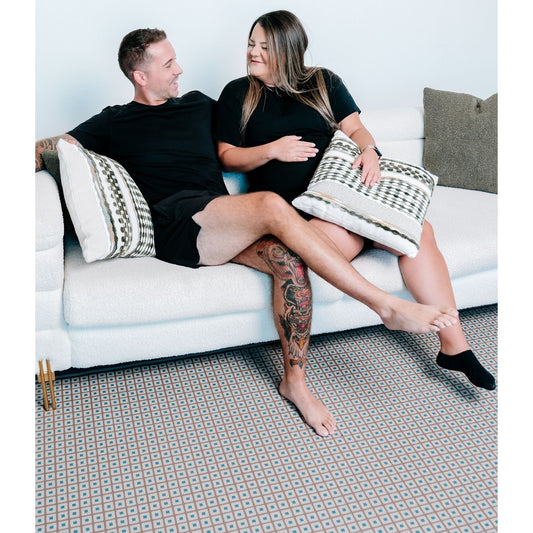
Swankymat sits in the single-piece mat category, built for the residential and small-apartment applications where rolled rubber and foam tiles do not integrate visually. Non-toxic high-density foam with 6mm of supportive cushion, a waterproof wipe-clean surface, and Greenguard Gold certified inks. The hand-drawn patterned designs (Sloane, Rhodes, Circa, Avalon, and others) read as area rugs rather than as gym flooring.
For the living-room home gym specifically, the post on designing a stylish home gym covers the aesthetic considerations. For the room-by-room decision that precedes the flooring decision, the post on carving out a space for your home gym walks through the tradeoffs of each room.