

How to Design a Home Gym That Doesn't Look Like a Home Gym
The standard home gym is a corner of garage carpet, a black rubber floor, a foam puzzle mat, and a few pieces of equipment that match the bag they came in. It works as a place to train. It does not work as a room you want to spend time in for any other reason.
The newer category — a workout space that lives inside the rest of your home — has different rules. It is built around a different question: how do you make a space functional for movement without sacrificing the room?
The answer is mostly about choosing equipment and surfaces that already belong in a designed space, not about hiding fitness gear behind a curtain.
The Problem With "Hide the Gym" Solutions
Most articles about stylish home gyms assume you have to hide the equipment to make a space look good. Folding treadmills behind cabinets. Weights stored in baskets that match the throw pillows. Mats rolled up and tucked away.
Hiding works when the gym is rarely used. The friction of pulling everything out is fine if you only train twice a week. For anyone training daily, hiding is the reason the practice fades. The setup tax is too high.
The better approach is choosing equipment that already looks like part of the room. Less to hide, less to set up, more sessions actually completed.
Five Principles for a Home Gym That Reads as Decor
1. Lead with the surface, not the equipment
The single largest visual element in any home gym is the floor. A rubber mat or foam tile floor is the loudest piece of "this is a gym" signal a room can hold. Replace it first. Everything else falls into place around the surface.
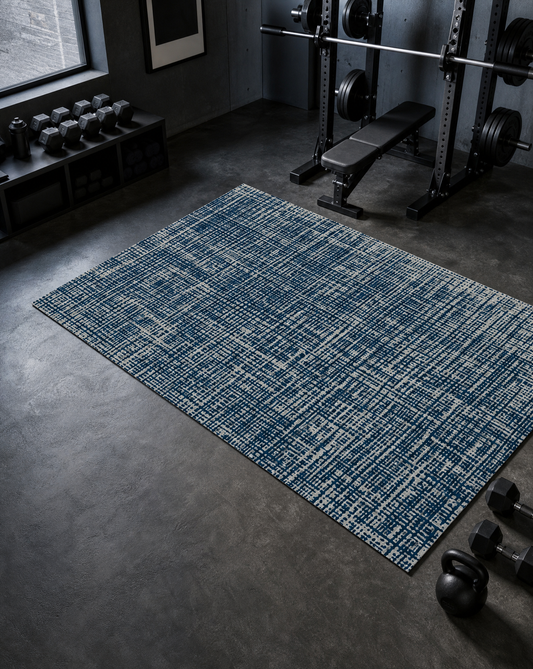
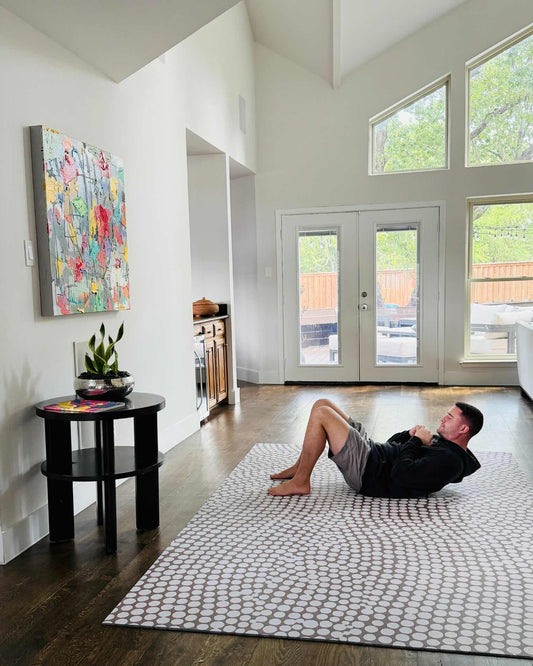
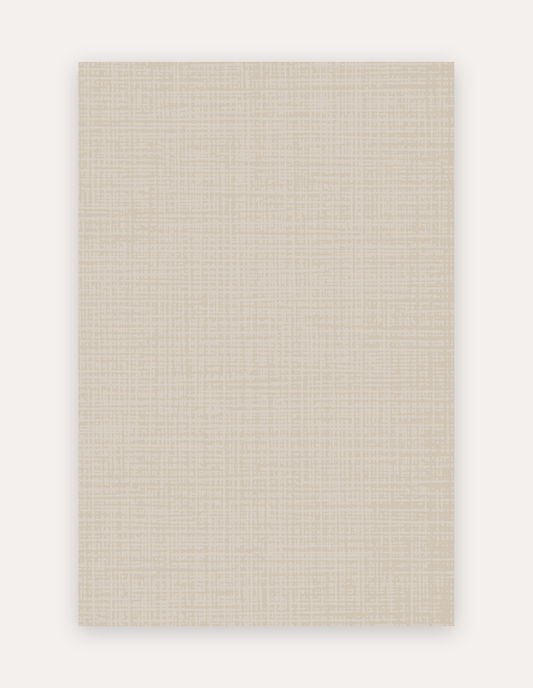
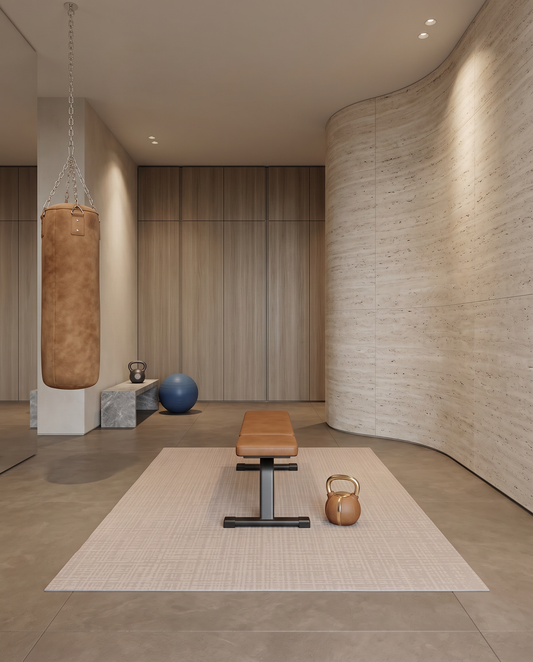
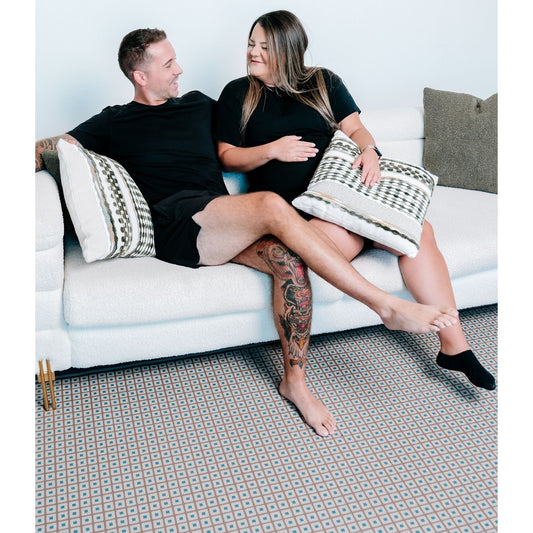
A single-piece mat designed in a neutral palette — limestone, woven warmth, quiet pattern — reads as a rug, not as workout equipment. The room can have weights and a yoga block on it and still feel composed.
2. Choose equipment in colors that already exist in the room
Most workout equipment is sold in primary colors and black. The brands that have started shipping in muted tones — sand, forest, oat — are the ones to look for. A pair of dumbbells in a neutral color disappears on a shelf the same way a stack of books does.
Where neutral options do not exist, look for equipment in materials that match. Leather kettlebell handles, oak resistance band racks, brass-finished wall hooks. The material does the work that color usually has to.
3. Treat the workout zone as part of the room, not a sub-room
The instinct is to define a "gym corner" with a different floor or a different paint color or a curtain divider. The result is almost always a room that has a gym in it instead of a room that supports movement.
The opposite move works better: let the workout zone share the same flooring, walls, and palette as the rest of the space. The mat anchors the floor, equipment lives on a single shelf or a wall hook, and the area reads as continuous with the living space.
4. Choose the lighting that you would use in a living room
Overhead fluorescents and gym-style track lighting are immediately recognizable. Warm dimmable bulbs, a floor lamp, a sconce on a wall — none of these signal "gym," and all of them work for a workout. Lighting is the most overlooked variable in any home space, and it is the one that changes how the room feels most.
5. Plan for what stays out
The mat, a yoga block, a roller, maybe a small kettlebell — these are the pieces that get used daily and benefit from staying out. Decide which pieces are part of the room and choose them accordingly. Everything else can live in storage.
The visual coherence of the space is mostly determined by the items that stay out. Two beautiful pieces of equipment that live in the room beat ten functional pieces hidden in a closet.
Where the Mat Comes In
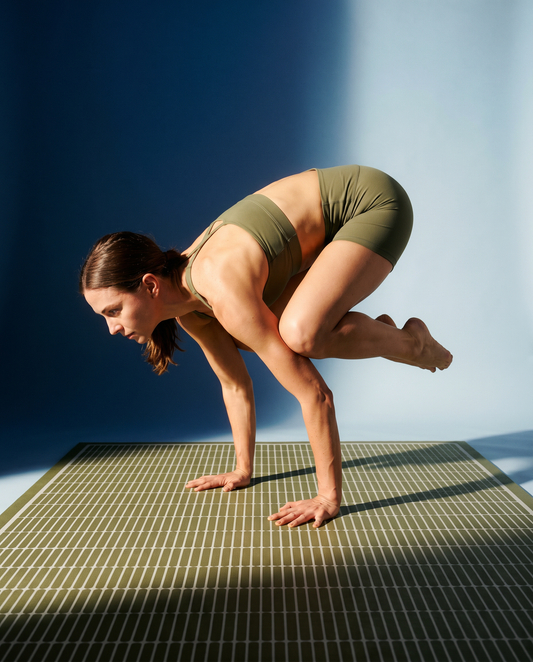
The mat is the foundation of the whole approach. It is the largest visible element, the surface every workout starts on, and the one piece of "gym equipment" that, done right, reads entirely as decor.
What the right mat does for the design of the space:
- Defines the workout zone without walls or dividers.
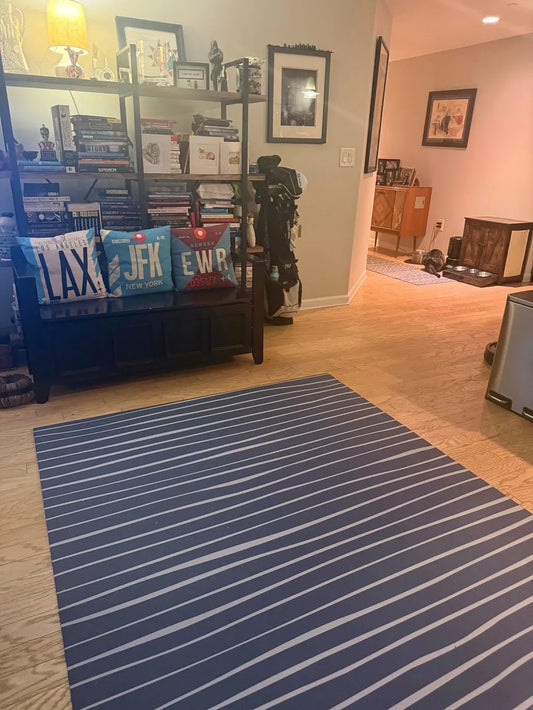
- Replaces a rug, so the floor stays unified across the room.
- Gives the equipment a clean place to live without rubber tiles or carpet squares.
- Holds up to daily use without looking worn down or out of place after a year.
The mat is also the surface you spend the most time on. Material safety, cushion thickness, and durability all matter as much as how it looks. More on what makes a workout mat right for home use here.
What to Pair With a Designed Mat
A short list of equipment that holds up in a styled space:
- Cork or oak yoga blocks. Visually quieter than the standard foam blocks. Stack on a shelf without disrupting the line.
- A wood-handled foam roller or a leather one. Replaces the bright blue or purple foam roller almost any home has.
- A neutral-colored kettlebell or two. Brands like Bala and Equipt have made these in palettes that look more like decor objects than fitness gear.
- A simple wall hook for resistance bands. Brass, blackened steel, or oak. Function plus visual quiet.
- A small bench or low stool that doubles as a step. If it works as a piece of furniture, it works as workout equipment.
Where Swankymat Fits
Swankymat is built specifically for the surface-as-decor approach. Five-by-seven or six-by-nine feet, single piece, six millimeters of cushioned eco-PVC. Patterns and palettes designed to live in a room — Caliza, Modern Loom, neutral tones intended to anchor a space rather than disrupt it. BPA-free, phthalate-free, flame-retardant-free, tested to exceed U.S. and European safety standards. Inks are Greenguard Gold certified.
The mat replaces a rug. It supports yoga, Pilates, strength, recovery, and the dog by week two. It does not get rolled up between sessions because it does not need to.
The Room You Want to Be In
The point of a home gym that does not look like a home gym is not aesthetics for its own sake. It is friction reduction. A space you want to be in is a space you train in more often. The design choices matter because they make the practice easier to keep.
Browse the full Swankymat collection to see how a single-piece mat anchors a room, or shop by color and style to find the palette for your space.