

Habit Stacking for Wellness: The System That Makes New Habits Stick

Habit stacking is the technique of attaching a new habit to an existing routine rather than trying to install it as a stand-alone behavior. Popularized by James Clear in Atomic Habits and rooted in earlier behavioral research, it is one of the more reliable frameworks for building wellness practices that hold up over months rather than collapsing after three weeks.
This post covers what habit stacking is, why it works, and how to apply it to build a wellness routine that lasts.
The Basic Formula
Habit stacking uses a simple formula. After I do a habit I already have, I will do a new habit. The existing habit becomes the cue for the new one, which removes the decision-making step that breaks most attempts to build a new behavior.
Examples:
- After I pour my morning coffee, I will do five minutes of stretching on the mat.
- After I sit down at my desk, I will do a two-minute breathing practice.
- After I brush my teeth at night, I will do a five-minute mobility sequence on the floor.
The structure works because the existing habit is already automatic. The new habit inherits some of that automaticity by being attached to it.
Why It Works Better Than Willpower
Traditional habit-building relies on remembering to do the new behavior each day. That approach depends on motivation and cognitive load, both of which are unreliable. On a busy Tuesday, the mental slot for remembering to stretch loses to fifty other things demanding attention.
Habit stacking removes the memory requirement. The trigger is already in your day. You cannot forget the coffee. Which means you cannot forget the stretching that follows it, provided the two are tightly linked.
The research on cue-based habit formation is consistent. Behaviors attached to specific environmental or routine cues are significantly more likely to become automatic than behaviors that require conscious daily initiation.
Where the Technique Fails
Habit stacking has real limits worth naming.
The anchor habit has to be genuinely automatic. Attaching a new habit to another new habit does not work. The anchor has to be something you do without thinking, every day, without variation.
The new habit has to be short. Stacking a 60-minute workout to your morning coffee does not survive the first week. Two to ten minutes tends to be the sustainable range. Longer sessions can be built up after the short version becomes automatic.
The two habits have to make physical sense together. Stacking meditation to a phone-check does not work because the two are contextually opposite. Stacking stretching to standing up from the couch works because the physical transition supports the new behavior.
Wellness Stacks That Work
Six specific habit stacks that have worked well for customers building wellness routines from scratch.
Morning stack. After I pour coffee, I do five minutes on the mat before drinking it. The coffee waits. The mat practice happens first.
Desk stack. After I sit down at my desk, I set a two-minute timer for slow breathing. The timer ends before the email checking begins.
Post-lunch stack. After I finish lunch, I walk for ten minutes. No phone. The walk covers movement, sunlight, and screen break simultaneously.
Evening stack. After I brush my teeth at night, I do five minutes of stretching before bed. The stretching happens on the mat, in the bedroom.
Sunday stack. After I make Sunday morning coffee, I do thirty minutes of restorative work on the floor. This is the longer weekly version of the daily practice.
Post-workout stack. After I finish any workout, I do five minutes of cooldown on the mat before getting up. The cooldown is where flexibility gains actually happen.
For more on the shortest version of the daily practice, the post on movement microhabits covers the five-minute floor sequences by time of day.
How to Build Your Own Stack
Two-step process. First, list your genuinely automatic daily habits. Not habits you want to have. Habits you already have without thinking. Morning coffee, brushing teeth, sitting down at your desk, coming home from work.
Second, choose one wellness habit you want to build. Attach it to one anchor. Start with two minutes. Give it a full week before adding a second stack.
The Physical Space That Supports the Stack
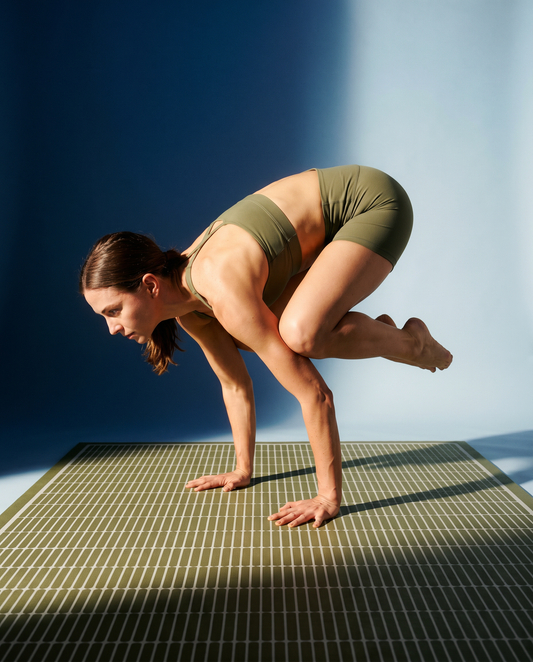
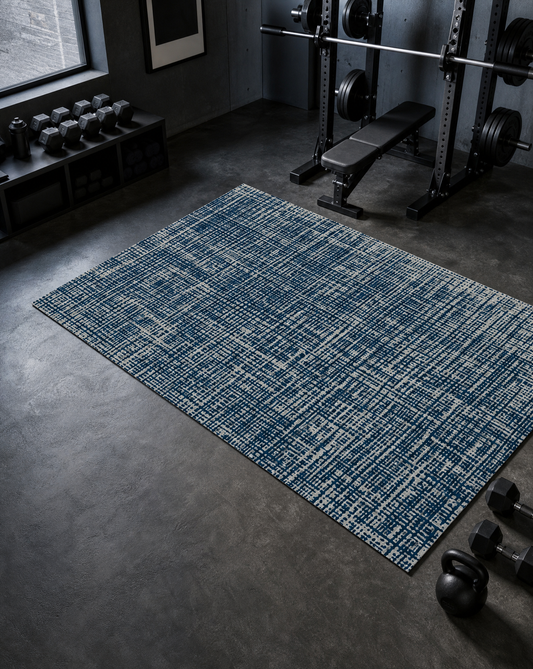
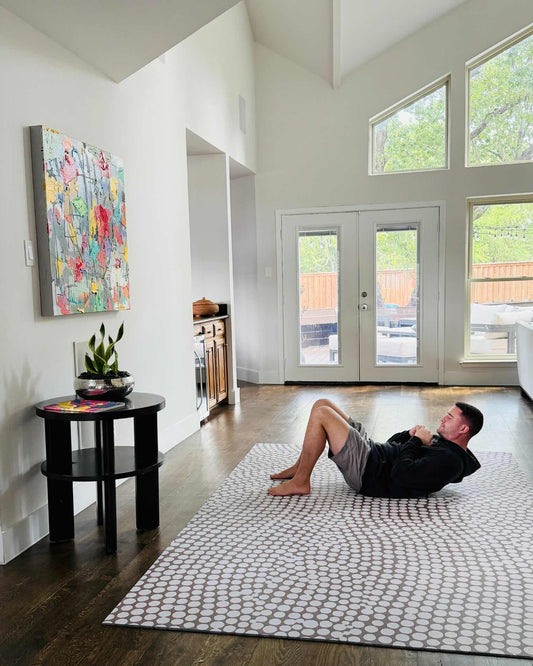
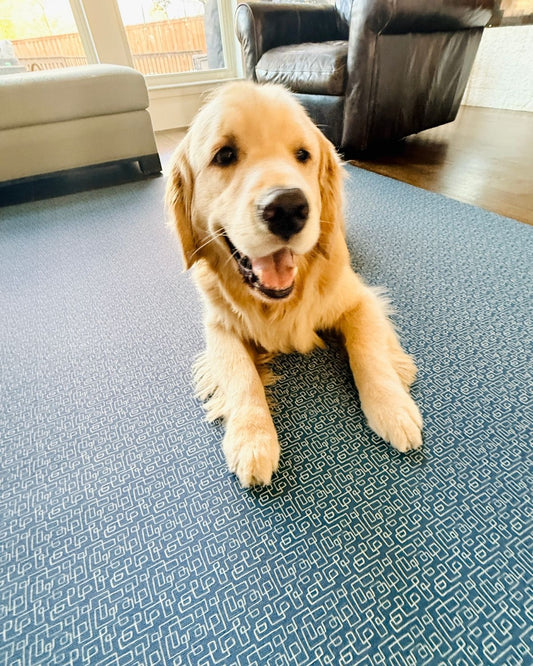
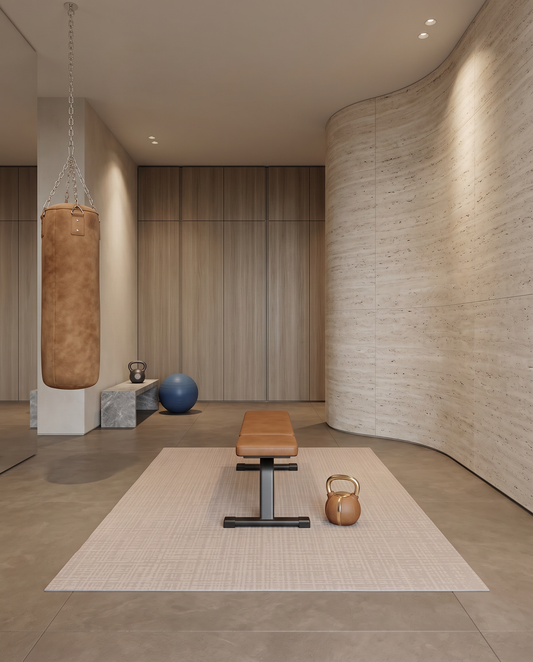
Habit stacks that involve a floor practice depend on the surface being immediately available. A mat rolled up in a closet breaks the stack; the friction of retrieving and unrolling it defeats the purpose. A mat that lives on the floor as part of the room supports the stack automatically.
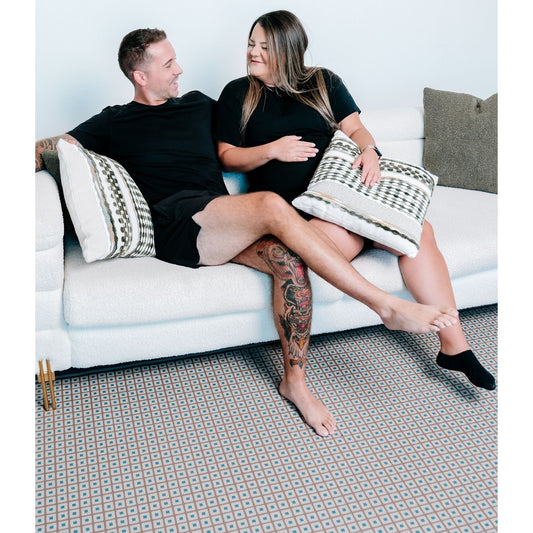
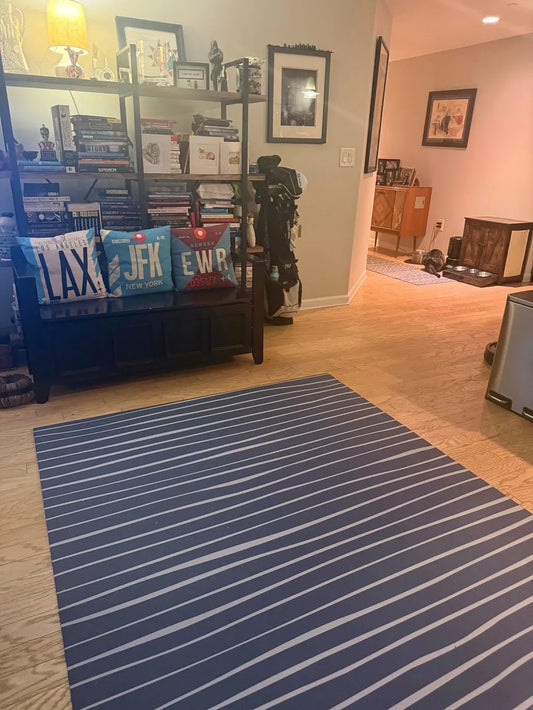
Swankymat is built to stay out. Non-toxic high-density foam with 6mm of supportive cushion, a waterproof wipe-clean surface, and Greenguard Gold certified inks. Designed in patterns that read as area rugs rather than as workout gear. Browse the full collection to see the palettes that work in a designed home.
For a broader look at building movement into a daily schedule, the post on how to make movement part of your daily routine covers the surrounding habit structure.