

How to Create a Calm Meditation Space at Home

Meditation is one of those practices everyone agrees is good for them and almost nobody does consistently. Part of the reason is that we treat it as something that requires the perfect conditions, a silent house, a free half-hour, the right frame of mind, and those conditions rarely arrive. One of the most effective things you can do to actually build the habit is surprisingly physical: create a small, calm space in your home that's ready whenever you are. Here's how to set one up, even in a small or busy household.
Why a dedicated space helps
Habits are easier to keep when they have a cue and a place. When you always meditate in the same spot, that spot becomes a signal to your brain that it's time to settle, the same way a desk signals work or a bed signals sleep. You spend less willpower deciding and more energy actually practicing. The space doesn't have to be elaborate. It just has to be consistent, comfortable, and ready, so that sitting down to meditate is the path of least resistance rather than a small project you have to set up each time.
Choosing the right spot
You don't need a spare room. You need a corner. Look for somewhere relatively low-traffic, away from the busiest paths through your home, ideally with some natural light and a view of something pleasant rather than a pile of laundry. A bedroom corner, a quiet nook in the living room, or a spot by a window all work. If your home is small or shared, even a defined patch of floor that you only use for this purpose can do the job. The point is that it feels a little set apart from the rest of your busy space.
What you actually need
Far less than the wellness aisle would suggest. The essentials:
- A comfortable place to sit. A cushion, a folded blanket, or a supportive mat to sit or kneel on. Comfort matters, because a sore back or numb legs will end a session faster than a busy mind.
- Minimal clutter. A clear, simple space calms the mind in a way a messy one can't. Keep it sparse on purpose.
- Something for the senses, if you like. A candle, soft light, a plant, or a calming scent can help signal that this is a different kind of time. Optional, not required.
- A way to manage sound. Quiet is ideal, but a short playlist, white noise, or simple earplugs work when the house is loud.
- Nothing that pulls you away. Keep your phone out of reach unless you're using it for a timer or a guided session.
Keep it simple
The most common mistake is over-designing the space until setting it up becomes its own form of procrastination. You don't need a meditation room out of a magazine. A clean corner, a comfortable seat, and a little intention are enough. If anything, a simpler space is better, because there's less to maintain and less to stand between you and actually sitting down. Resist the urge to keep adding things. The practice is the point, not the props.
Building the habit
Start smaller than feels meaningful. Two to five minutes a day, at the same time and in the same spot, beats an ambitious twenty-minute plan you abandon by Thursday. Attach it to something you already do, like right after your morning coffee or just before bed, so it rides on an existing routine. Guided apps and videos lower the barrier when you're starting out, since following a voice is easier than sitting in silence. And be patient with a wandering mind, because noticing that you've drifted and gently returning is not a failure of meditation, it is the practice itself.
Why the floor is part of it
A lot of meditation and breath work happens on the floor, whether you sit cross-legged, kneel, or lie down for a body scan. That makes the surface underneath you quietly important. A bare floor is hard and cold and pulls your attention straight to your aching hips and tailbone, which is the opposite of what you want. A rug is softer but rarely defines a space the way a dedicated surface does. Having a comfortable, set-apart spot to sit makes the difference between a practice that feels inviting and one you avoid because your body is uncomfortable before your mind even settles.
A grounding surface for your calm corner
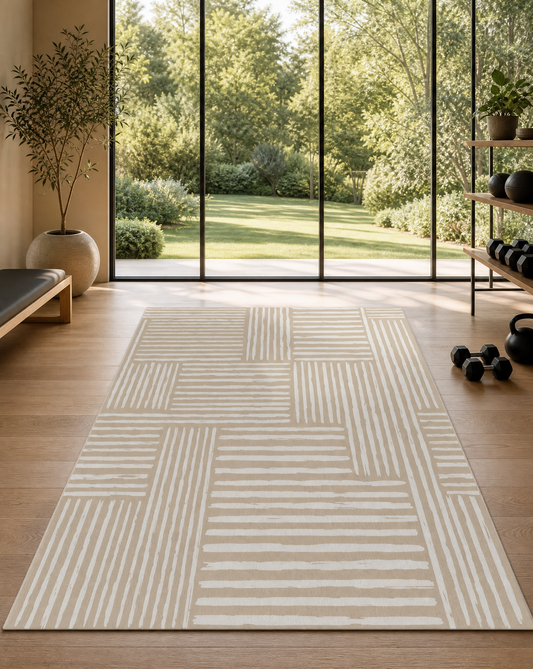
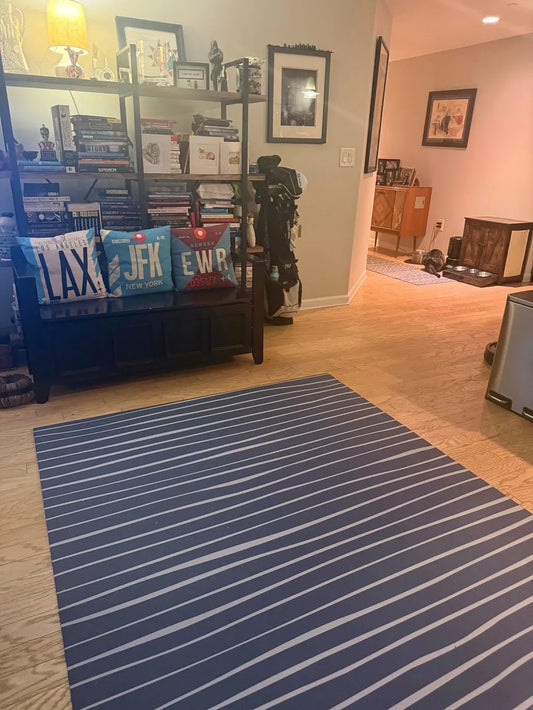
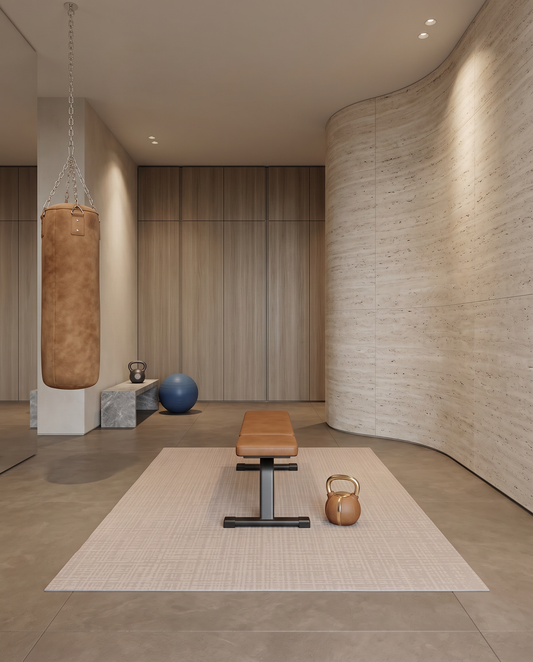
This is a quiet reason a Swankymat works so well as the foundation of a meditation space. Its 6mm cushion is comfortable to sit, kneel, or lie on for breath work and body scans, and it gives your corner a defined, intentional footprint that signals this is your spot. It comes in calm, modern, neutral colorways that suit a space meant to feel serene rather than busy, so it adds to the calm instead of cluttering it. It's made with non-toxic materials and Greenguard Gold certified inks, and it's waterproof and wipe-clean, so it stays fresh with almost no effort. If your practice drifts naturally into gentle stretching or restorative movement, the same surface handles that too, which our yoga mats are built for. A calm space you actually want to sit in is the thing that turns meditation from a good intention into a daily habit.