

Mat vs Rug for Your Home: The Honest 2026 Comparison
For most of the last century, the rug was the unquestioned answer to the bare floor problem. It added warmth, defined a space, absorbed sound, and gave a room a finished quality that hardwood or tile alone could not achieve. Nobody really questioned it. You got a rug because that is what you did.
That default is shifting. Parents with young children are tired of rugs that absorb everything and release nothing. Pet owners are done pretending that a wool rug and a dog are a workable combination. Home fitness practitioners need a surface that handles movement rather than one that bunches, slides, and traps sweat. And a growing number of design-conscious homeowners are simply asking whether a rug is still the right tool for the job or whether something else serves their space better.
This is an honest comparison of mats and rugs across the criteria that matter most for modern home life. Not a verdict handed down from on high, but a practical side-by-side that helps you figure out which one actually fits the way you live.
The Case for Rugs: What They Do Well
Rugs also have a design range that is nearly unlimited. From hand-knotted wool to flat-woven cotton to layered jute, the variety of textures, patterns, and price points available in the rug market is genuinely impressive. For a homeowner whose primary concern is how a room looks and feels during adult entertaining, a rug gives you more creative options than most mat alternatives currently offer.
Sound absorption is another real advantage. A thick rug dampens foot traffic noise, reduces echo in hard-floored rooms, and contributes to the acoustic quality of a space in ways that a thinner mat surface does not fully replicate. For apartments or homes with noise-sensitive neighbors below, this is a meaningful practical consideration.
Where Rugs Fall Short for Modern Homes
The problems with rugs are not design problems. They are life problems. And for many households, those life problems have become impossible to ignore.
Cleanability is the most universal pain point. A rug absorbs everything it comes into contact with — spilled milk, pet accidents, food dropped during dinner, sweat from a workout, whatever a toddler tracks in from outside. Most of that absorption is permanent in a practical sense. You can blot, scrub, and steam clean, but a rug that has lived with a young family or a pet for several years carries the history of that life in its fibers whether you can see it or not. As this closer look at why rugs are so hard to keep clean explains, the maintenance burden of a rug in a busy household is significant and tends to be underestimated at the point of purchase.
Safety is the second issue, and it is particularly relevant for households with babies or young children. Traditional rugs are not designed with floor-level living in mind. The fibers, dyes, and backings used in many woven rugs are not tested or certified for the kind of prolonged contact that happens when a baby spends hours on the floor each day. A rug that looks beautiful from a standing adult's perspective is a very different surface when you are considering what your child is pressing their face into during tummy time.
Versatility is the third limitation. A rug is a rug. It does not double as a workout surface, a play surface, or anything other than a decorative floor covering. In homes where the floor needs to serve multiple purposes across different times of day, a rug requires you to work around it rather than with it.
What a Mat Does Differently
A mat approaches the same floor problem from a different set of priorities. Where a rug optimizes for aesthetics and texture, a mat optimizes for function, safety, and maintainability — ideally without sacrificing the design qualities that make a floor covering worth having in the first place.
The most important functional difference is surface behavior. A mat with a wipe-clean, waterproof surface handles spills, messes, and daily use without absorbing any of it. A damp cloth is all you need for most cleaning situations, which changes the maintenance equation entirely compared to a rug. For households where the floor gets used hard every day, that difference is not a minor convenience — it is a fundamental shift in how much time and energy you spend managing your floor covering.
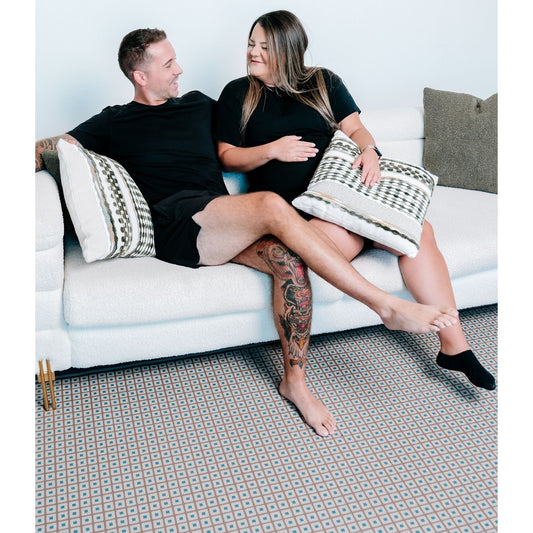
For homes with babies and young children, a non-toxic mat free from phthalates, BPA, and flame retardants provides a level of material safety that a decorative rug simply was not designed to offer. The floor is where young children spend most of their time, and a surface that has been specifically evaluated for that kind of prolonged contact is a meaningfully different proposition than one that has not. This is the core of what makes non-toxic play mats that look like rugs such a practical alternative for families who want both safety and design without choosing between them.
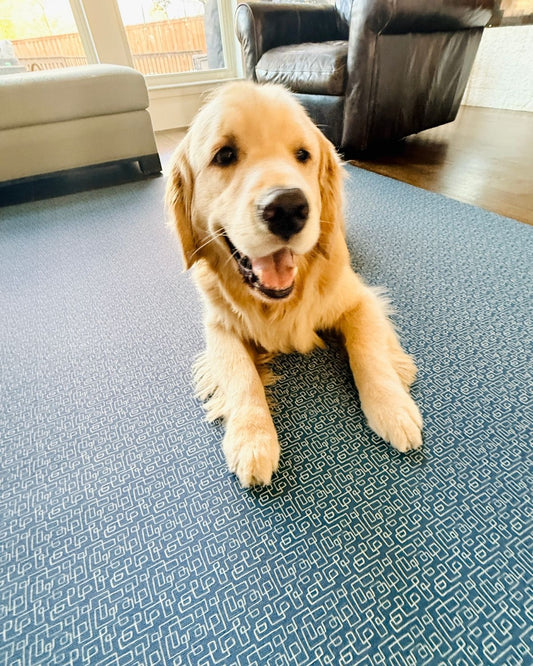
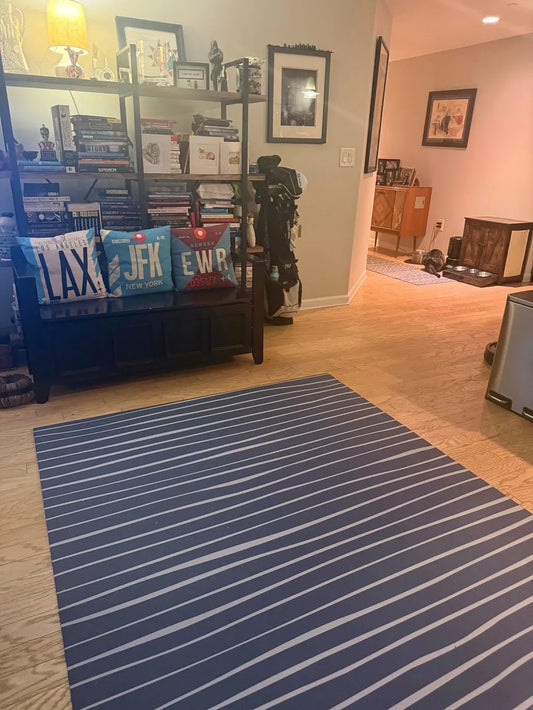
For pet owners, the calculation is similarly straightforward. A wipe-clean mat handles pet accidents, muddy paws, and shedding without the absorption and odor retention that make rugs such a frustrating companion to animal ownership. This is covered in more detail in this guide to pet friendly rug alternatives for modern homes, but the short version is that a mat gives pet owners a floor covering they can actually maintain without professional cleaning or eventual replacement.
Comparing the Two: Cleanability, Safety, Versatility, and Design
Cleanability: Mats win decisively. A wipe-clean waterproof surface handles daily messes in seconds. A rug absorbs them permanently.
Safety: Mats win for households with babies and young children. A non-toxic mat with specific chemical disclosures offers a verifiable safety profile that decorative rugs are not designed or tested to provide.
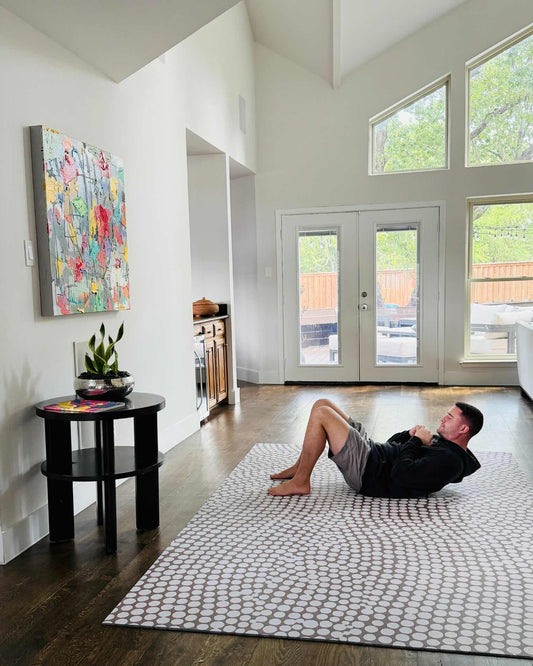
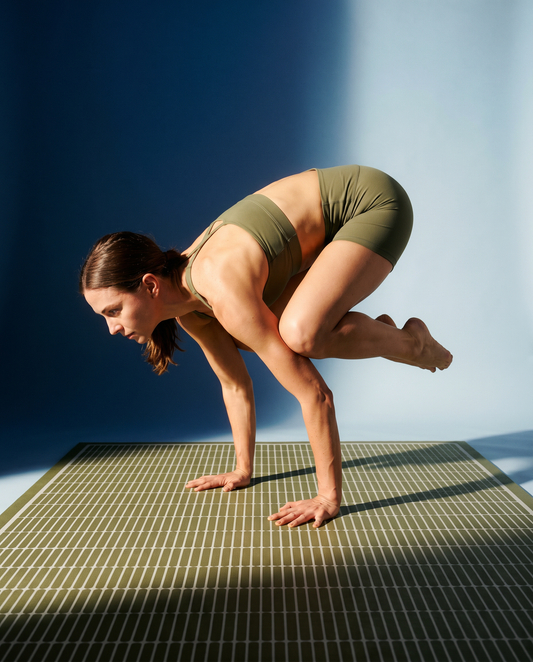
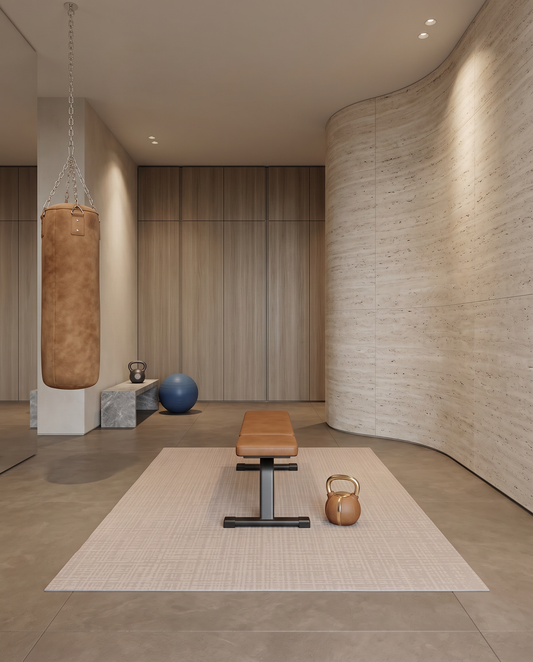
Versatility: Mats win for active households. A large mat handles floor play, home workouts, yoga, stretching, and daily movement in a way that a rug cannot. A rug is a single-purpose surface.
Design: Rugs win on range and texture variety. However, the gap is narrowing. Well-designed mats in neutral tones and intentional patterns can hold their own aesthetically in modern, design-conscious spaces in a way that earlier generations of play mats and exercise mats could not.
Cost over time: Mats win on longevity in active households. A quality rug in a home with children, pets, or a fitness routine typically needs replacing within a few years regardless of its original price. A durable wipe-clean mat maintains its appearance and function significantly longer under the same conditions.
Which One Is Right for Your Home?
The honest answer is that it depends on how your floor actually gets used.
If your living room is primarily a social space for adults, you entertain regularly, and your main priority is texture, warmth, and design range, a rug is probably still the right choice. The aesthetic advantages are real and the practical disadvantages are manageable when a floor does not see heavy daily use from children, pets, or fitness activity.
If your floor is a genuine multi-use surface — somewhere children play, adults work out, pets roam, and life happens at full volume every day — a mat is the more practical choice for most households. The cleanability, safety, and versatility advantages compound over time in a way that the aesthetic advantages of a rug do not outweigh.
For many households, the answer is not either-or. A mat in the primary living and play zone, a rug in a quieter room where aesthetics take priority and practical demands are lower. The floor covering conversation does not have to be a single decision applied uniformly across every room in your home.
One Surface Worth Considering
If you are leaning toward a mat for your main living space, Swankymat's extra-large mats are designed to hold up to exactly this kind of daily use. Available in 5x7 and 6x9 sizes, free from phthalates, BPA, and flame retardants, waterproof and wipe-clean, and designed with modern home aesthetics in mind, they function as a rug alternative that does not ask you to compromise on how your space looks. You can explore the full range here.
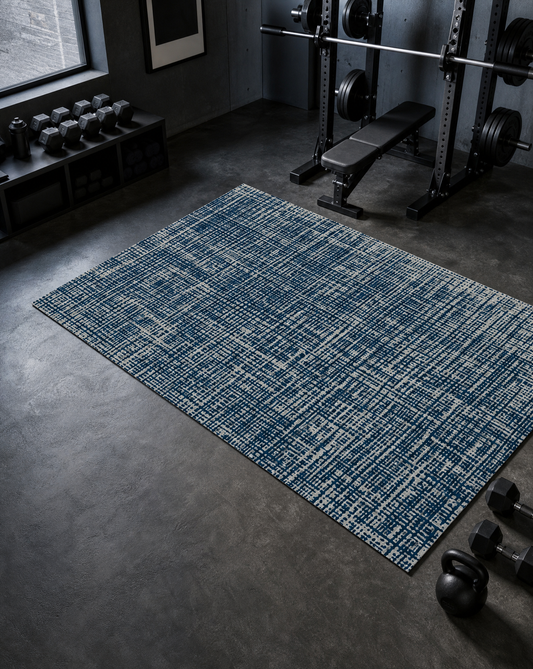
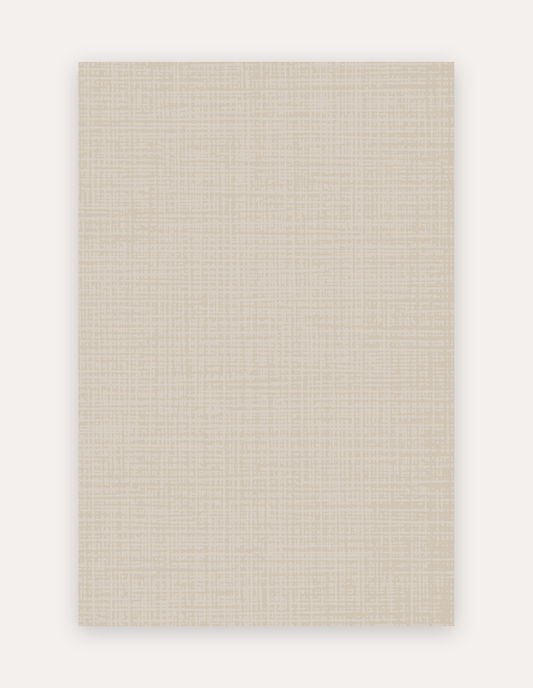
If you want the wipe-clean of a mat with the look of a rug, the Sloane Dust crosshatch and the full Modern collection are designed to sit in a living room like a considered rug — and wipe clean when life happens.