

Non-Toxic Treadmill Mat: What "Non-Toxic" Actually Means
Treadmills used to live in basements and garages. Now they live in bedrooms, offices, and the corner of the living room. The shift makes a lot of practical sense. It also makes the mat underneath the treadmill matter more than it ever did before.
A standard treadmill mat is one of the largest single pieces of plastic most people bring into their homes. It sits there all day. It heats up under the motor. It off-gasses into a room you sleep, work, or eat in. If the marketing copy says "non-toxic" but the product page does not say what that means, the claim is decoration.
Why Treadmill Mats Are Different From Other Floor Mats
A yoga mat sits flat on a hard floor and gets used for thirty to sixty minutes at a time. A treadmill mat sits in the same spot for years with a heavy motor running on top of it. The mat has to do two jobs at once: protect the floor from compression and vibration, and stay chemically stable while the motor warms its surface during every workout.
What "Non-Toxic" Actually Means in This Category
The phrase is not regulated. Any brand can put it on a product page. The certifications and material disclosures behind the claim are what matter.
Five things to look for before you buy:
- Free from phthalates. Phthalates are the plasticizers that make materials flexible. They are linked to hormone disruption and are the single biggest reason to avoid mats with unknown materials. Look for the words "phthalate-free" or a specific testing standard like REACH compliance.
- Free from BPA. Bisphenol-A is a known endocrine disruptor that still appears in plastic-based fitness equipment even after being phased out of food packaging.
- Free from flame retardants. Many foam-based treadmill mats add flame retardants to meet flammability standards. Many of those compounds release toxins over time. A mat that meets flammability requirements without added retardants is the version you want.
- Free from formaldehyde. Formaldehyde shows up in some EVA foam mats as a binder. It off-gasses for years and is most concentrated in the first months of ownership.
- Tested to recognized standards. REACH compliance (the European chemical regulation testing against 350+ harmful substances) and EU POPs compliance (persistent organic pollutants) are real, third-party measures. Greenguard Gold certification on inks and finishes indicates low VOC emissions.
A treadmill mat that is clean on all five is non-toxic in any meaningful sense. A mat that omits these on the product page usually has a reason.
Size and Construction Matter Almost as Much
Material safety is the foundation. The other half of the buying decision is whether the mat does its job.
- Single-piece construction. Treadmill mats made from interlocking tiles trap dust, lint, and motor heat in their seams. The seams also shift over time as the treadmill vibrates, opening gaps that scratch the floor underneath. One seamless piece is cleaner, more stable, and protects better.
- Sized larger than the treadmill base. A mat that ends at the edge of the treadmill leaves the floor exposed where you step on and off. The mat should extend at least a foot beyond the front and sides of the treadmill to catch impact during use and protect the floor when you climb down.
- Enough cushion to dampen vibration without losing support. Mats thinner than 5mm compress under the motor and stop dampening vibration within a year. Six millimeters of high-density material is the practical sweet spot: thick enough to protect the floor and reduce noise for the level below, dense enough not to feel spongy when you step on or off.
- Waterproof, wipeable surface. Sweat falls. Water bottles spill. A surface that cleans with a damp cloth is the difference between a mat that looks new at year three and one you replace at year one.
- Stays put on hard floors. A mat that slides under treadmill vibration is a safety problem. The right material grips hardwood, tile, and laminate without adhesive and without a separate rug pad underneath.
Why Aesthetics Matter If the Treadmill Lives in a Living Space
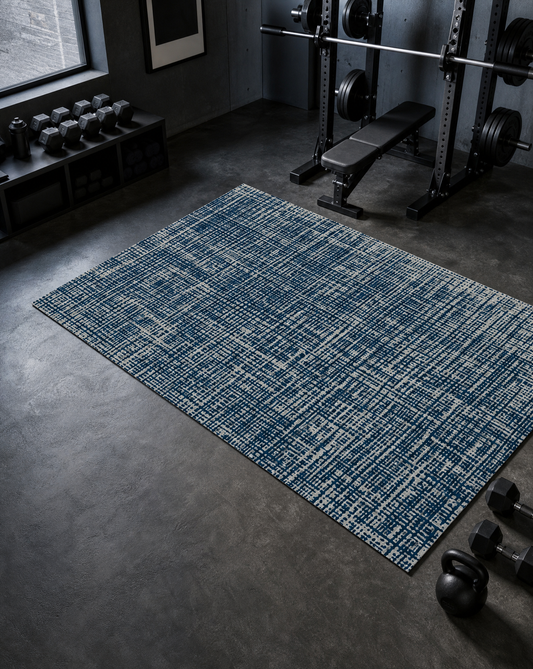
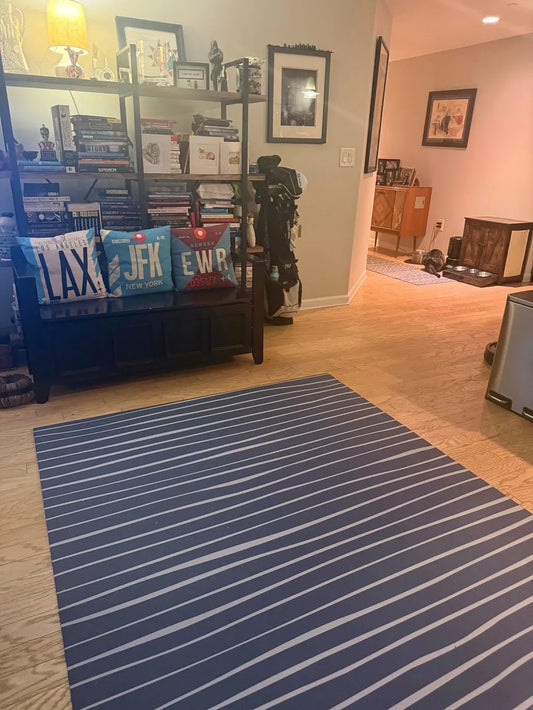
The mats sold in fitness catalogs are almost all black rubber with a coarse texture. They look like equipment because they are designed to look like equipment. That worked when treadmills lived in basements. It does not work when the treadmill is in a bedroom or living room corner you actually see.
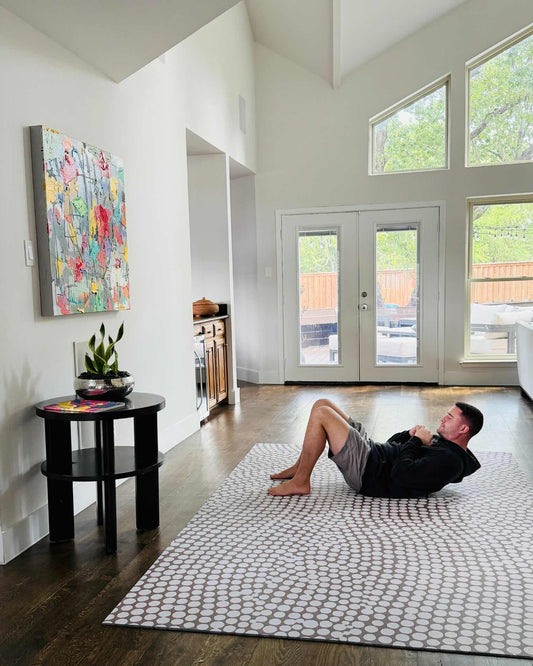
The other reason this matters: a mat that reads as decor stays out. A mat that reads as gym equipment gets stuffed in a closet between workouts, which defeats the entire reason you bought a home treadmill in the first place.
Where Swankymat Fits
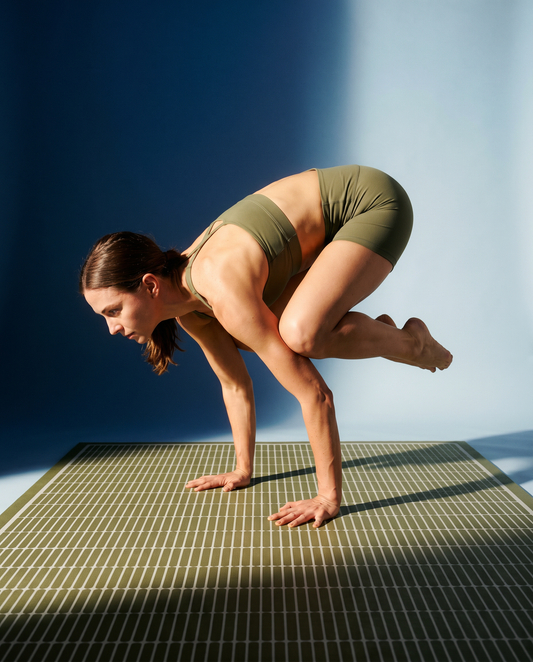
Swankymat is built for the kind of consistent training that fills a home routine. It is six millimeters of high-density closed-cell foam made with eco-PVC that has been tested against more than 350 potentially harmful chemicals. The mat is BPA-free, phthalate-free, flame-retardant-free, and exceeds U.S. and European safety standards. The inks are Greenguard Gold certified.
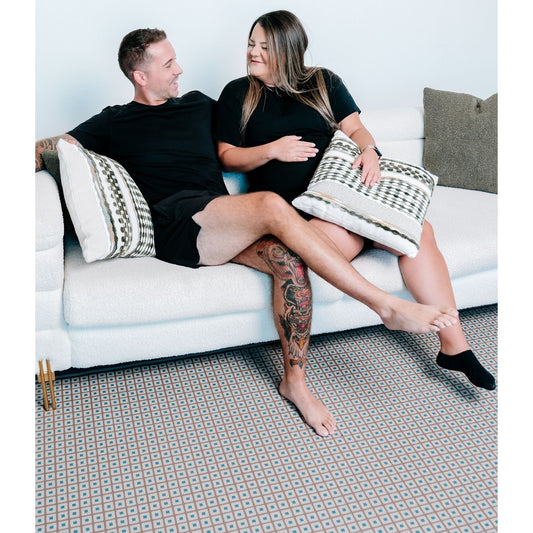
It comes in two sizes (5x7 and 6x9 feet) both of which extend well beyond a standard treadmill base, catch the entry and exit zone, and protect the floor where you actually step. The surface wipes clean. It stays where you put it on hardwood, tile, or laminate. And it is designed in patterns and colors that read as a rug, not a piece of gym equipment, so it earns its place in a room rather than apologizing for it.
Because Swankymat is built for structured movement, it also qualifies as an HSA and FSA eligible mat for qualifying customers, which can offset the upfront cost.
The Test for Any Treadmill Mat Claim
If a brand says non-toxic, ask which standards. If they say eco-friendly, ask what is in the material. If they cannot point to specific certifications, the claim is marketing language. A real non-toxic treadmill mat will tell you, on the product page, exactly what it is free from and which third-party testing it has passed. That is the bar.
See our full breakdown of what to look for in any non-toxic gym mat, or browse the full Swankymat collection to see how a non-toxic single-piece mat reads under a treadmill in a real home.