

What to Look for in a Non-Toxic Gym Mat

Home gyms have changed a lot. Most of the equipment in modern setups is now within reach of design-conscious buyers. Mats are usually the last piece to catch up, and the place where the gap between marketing and reality is widest. The phrase non-toxic gym mat gets used loosely. The actual materials underneath the label vary enormously.
If you are building a home workout space and care about what is in your air and on your skin, knowing what to check is worth more than any single product recommendation.
Why Mat Materials Matter More Than Most People Think
A standard gym mat sits where you spend the most time during a workout. Your face is close to it. Your skin is on it. The room is closed. If the materials off-gas chemicals or shed microparticles, you are breathing them in and absorbing them at higher concentrations than almost any other surface in your home.
The most common materials in low-cost gym mats include EVA foam, standard PVC, and TPE. Each has a wide range. EVA can be made cleanly or with formaldehyde-based binders. PVC can be virgin and untested or thoroughly tested against hundreds of harmful chemicals. TPE is generally cleaner than the cheap end of either, but quality varies. The label on the box rarely tells you which version you are buying.
What Non-Toxic Actually Means
Non-toxic is not a regulated term. Any brand can use it. The certifications and material disclosures behind the term are what matter.
The substantive things to look for:
- Free from phthalates. Phthalates are plasticizers linked to hormone disruption. They are common in low-cost PVC mats and are the single biggest reason to avoid the cheap end of the category.
- Free from BPA. Bisphenol-A is an endocrine disruptor that has largely been replaced in food packaging but still shows up in plastic-based fitness equipment.
- Free from flame retardants. Often added to foam mats to meet flammability standards. Many flame retardants release toxins over time.
- Free from formaldehyde. Used as a binder in some EVA foam. Off-gasses for years.
- Tested to recognized standards. Look for REACH compliance (the European chemical regulation), EU POPs compliance (persistent organic pollutants), and Greenguard Gold certified inks and finishes.
A mat that is clean on all five is non-toxic in any meaningful sense. A mat that omits this information on the product page usually has a reason.
Size and Construction Matter Almost as Much
Material safety is the foundation. The other half of what to look for is whether the mat actually supports the way you train.
- Single-piece construction. Interlocking foam tiles trap dirt, sweat, and bacteria in the seams. They also shift during dynamic movement. One seamless piece is cleaner and more stable.
- At least 6mm of cushion. Anything thinner does not protect knees, wrists, and hips during floor work. Pilates, yoga, mobility, and any kneeling exercise are uncomfortable on a thin mat.
- Sized for real movement. A standard 2x6-foot yoga mat does not fit a full sun salutation, a partner flow, or weight-bearing exercise that uses the floor laterally. A larger surface (5x7 or 6x9) opens up almost everything.
- Waterproof, wipeable surface. Sweat, water, and the occasional spill should come off with a damp cloth.
- Stays put on hard floors. Mats that slide during workouts cause injury. The right surface stays where you placed it.
Why a Gym Mat and a Yoga Mat Are Often Different Animals
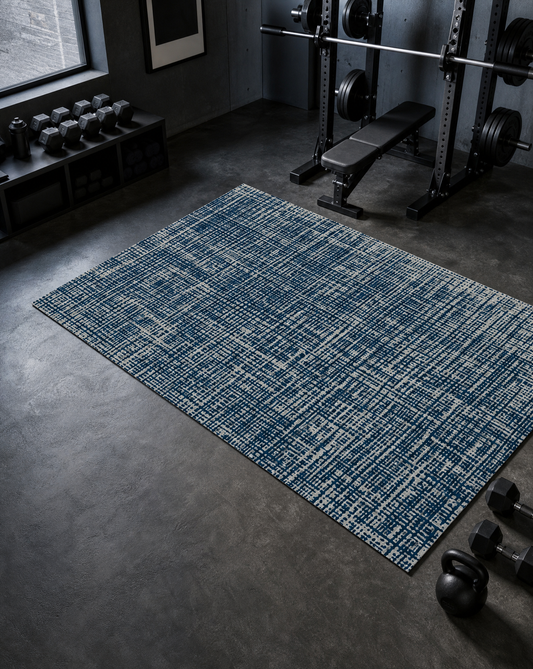
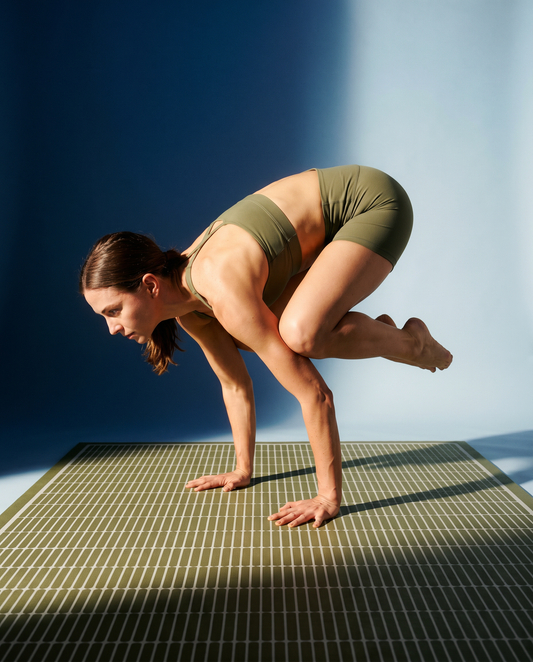
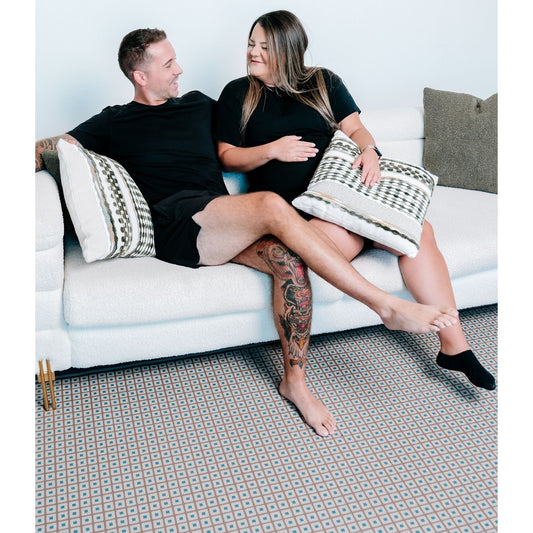
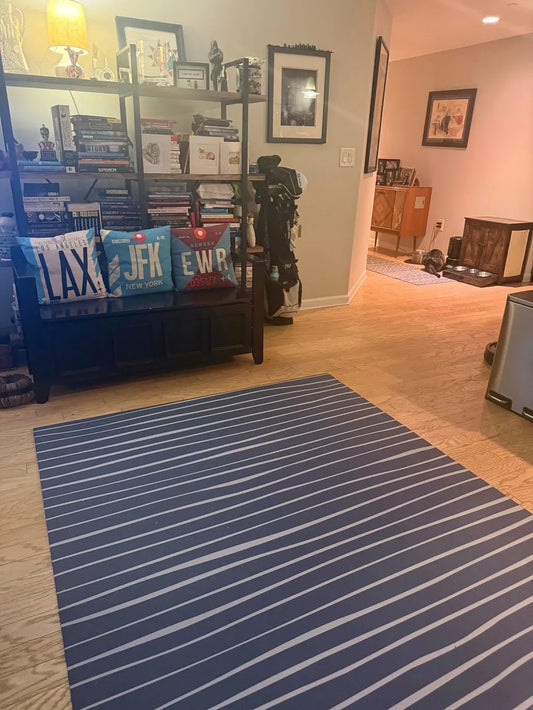
Most yoga mats are too small and too thin for general gym use. Most gym mats, the foam squares from a sporting goods store, are too ugly and too chemically loaded to leave out in a designed space. The middle of the Venn diagram is where Swankymat sits: large enough for full strength and mobility work, cushioned enough for floor exercise, non-toxic on all five material checks above, and designed in colors that read as decor instead of equipment. More on the yoga mat vs exercise mat distinction here.
Where Swankymat Fits
Swankymat is built for the kind of consistent, low-impact training that fills a home workout routine: Pilates, yoga, strength, mobility, recovery. It is six millimeters of non-toxic high-density foam, BPA-free, phthalate-free, flame-retardant-free, tested to exceed U.S. and European safety standards. The inks are Greenguard Gold certified.
It is sized at 5x7 or 6x9 feet, single piece, fully waterproof, and built to stay out as part of the room rather than rolled up between sessions. Qualified customers can use pre-tax HSA or FSA funds toward Swankymat through our partnership with TrueMed. See how HSA/FSA eligibility works.
Choosing a Mat That Will Actually Last
The cheapest gym mats fall apart within a year. The chemicals in them off-gas for longer than that. The right non-toxic gym mat is an upfront investment that ends up costing less per year because you only buy it once.
Browse the full Swankymat collection to see how a non-toxic single-piece mat reads in a real workout space.