


The Working-From-Home Wellness Setup: Movement Breaks by Design
The average knowledge worker sits for six to nine hours a day. For someone working from home, the number is often higher than in an office because the informal walking that happens between meetings, to a coworker's desk, or out for a coffee run does not exist. The body adapts to the sitting by tightening in specific and predictable ways, and the mental focus tends to plateau within 90 minutes of continuous work.
A working-from-home wellness setup addresses both by designing movement into the day rather than hoping it happens. This post walks through what that looks like at home.
Why the Home Office Is a Wellness Design Problem
The traditional office solves part of the movement problem accidentally. Walking to a printer, to a coffee machine, to a colleague's desk, or to a meeting room adds up to 2,000 to 4,000 steps a day for most desk workers. A home office removes all of that. The commute is zero. The kitchen is ten steps away. Meetings are on a screen. A typical WFH day generates 500 to 1,500 steps if no design intervention is made.
The fix is not more discipline. The fix is designing the movement into the layout of the room.
The Five Essentials of a WFH Wellness Setup
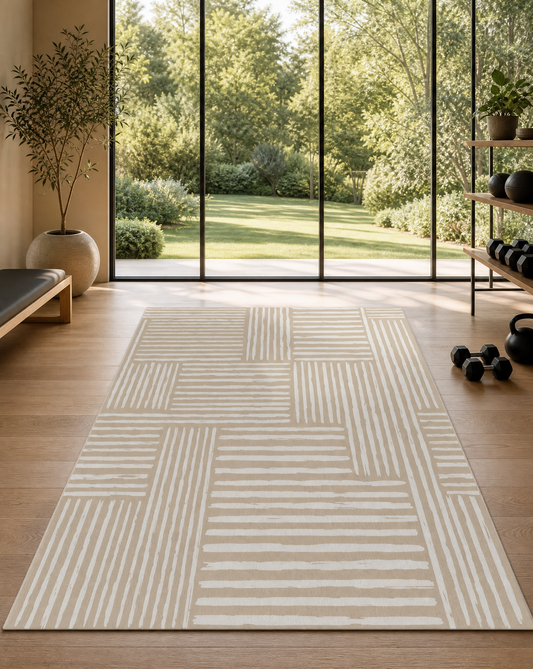
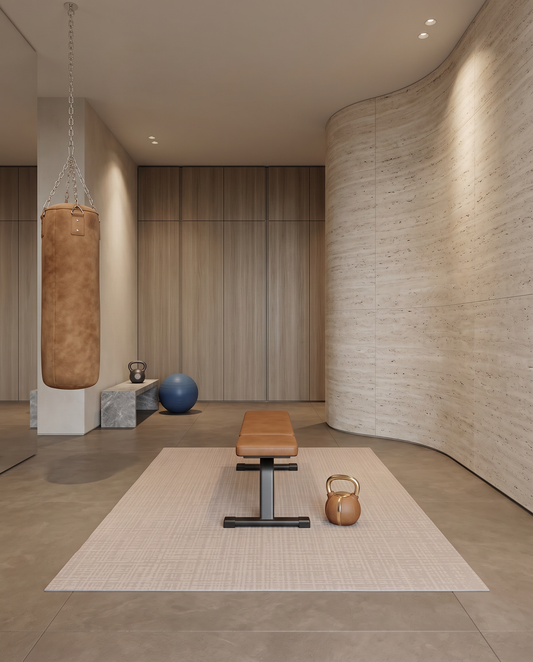
1. A movement zone within eye-line of the desk. A cushioned floor surface, sized as an area rug, placed where you can see it from the chair. The visual cue matters more than most people acknowledge. A mat that lives out of sight lives unused.
2. A standing desk option or high counter. Not a full sit-stand desk if the budget does not allow, but a high surface (a kitchen counter, a raised shelf) where a laptop can sit for the afternoon.
3. A scheduled break rhythm. Every 90 minutes, five minutes on the floor. The interval matches the natural attention span cycle and produces measurable focus benefits over the following work block.
4. A basket of light gear. Resistance bands, a foam roller, a small ball. Nothing that requires setup. Everything that can be picked up and used for two minutes without leaving the room.
5. A closing routine. A 5 to 10 minute floor routine at the end of the workday. Not a workout. A transition that closes the work block and moves the body out of the desk position before the evening begins.
The 90-Minute Break Structure
Five minutes every 90 minutes is the highest-leverage movement break rhythm for a WFH day. Six to eight breaks across an eight-hour workday adds 30 to 40 minutes of movement without carving out a workout window.
What to do in the five minutes. One low lunge each side. One doorway chest opener. One thread-the-needle each side. Three minutes on a specific stiffness zone (neck, hip flexors, or shoulders, depending on which is tightest that day). No agenda, no equipment.
For the specific five-zone breakdown of desk worker tightness, the post on floor stretching for desk workers covers the routine in detail.
The Closing Routine
The 5 to 10 minute closing routine at the end of the workday does one specific job. It marks the transition between work mode and evening mode, which the WFH environment does not do naturally the way a commute does.
A simple version. Down dog to child pose, three minutes. Legs up the wall, five minutes. Done. The transition is short enough to happen even on busy days, and the physiological shift is real enough that the evening feels distinctly different from the work block.
For a broader look at the ritual side of a floor-based practice, the post on the Sunday reset routine covers the weekly version of the same principle.
What Not to Buy for a WFH Wellness Setup
Two categories that get marketed to the WFH audience and rarely deliver the value.
Walking pad treadmills for use during meetings. They work for some people but tend to accumulate in closets after a few months. If you are considering one, borrow a friend's for two weeks before committing.
A full home gym adjacent to the home office. The commute to a garage or basement gym is often the piece that breaks WFH wellness. A floor surface within eye-line of the desk is used ten times more often than a gym in another room.
The Floor That Anchors the WFH Wellness Setup
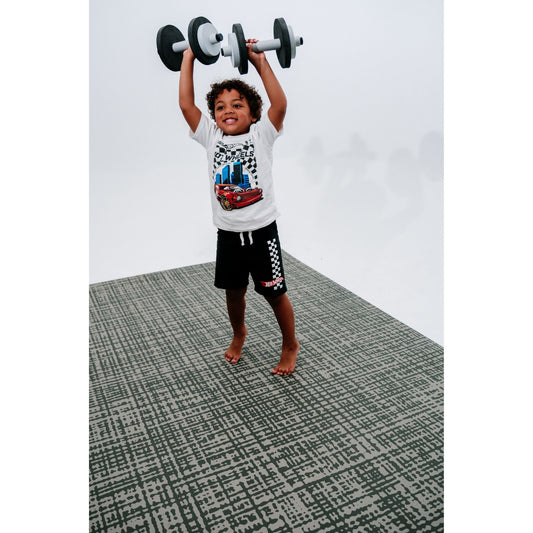
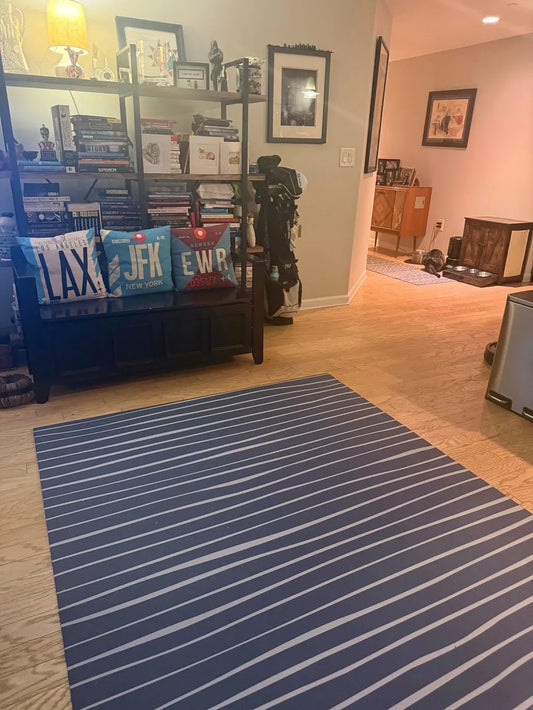
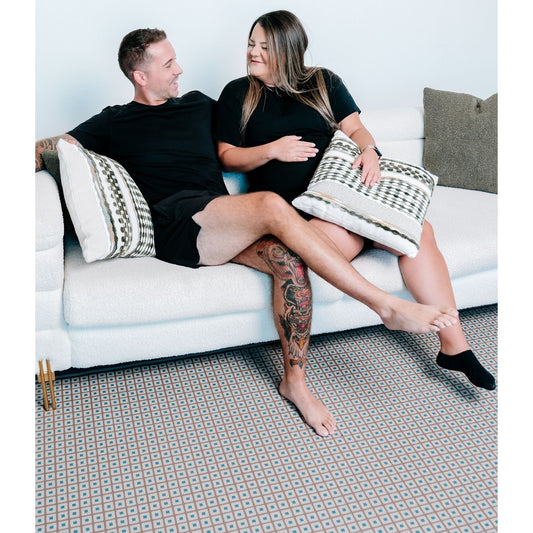
The single piece of the setup that has the largest impact on whether the breaks and routines happen is the floor surface. A visible, cushioned, ready-to-use mat within a few steps of the desk removes the setup step from every break and closing routine. Swankymat is built for exactly this role. Non-toxic high-density foam with 6mm of supportive cushion, a waterproof wipe-clean surface, and Greenguard Gold certified inks. The patterned designs read as an area rug in a home office rather than as a workout mat.
For placement decisions specific to office setups within a designed home, browse the neutral mats collection for the palettes that work alongside a home office aesthetic. For the broader wellness corner framework the WFH setup borrows from, the post on designing a calm movement space at home covers the elements in more detail.