

The Best Floor for a Home Garage Gym

A garage is the most common place a home gym goes, and a bare concrete slab is the worst surface to train on. It is hard on joints, unforgiving when a dumbbell slips, cold most of the year, and prone to dust that never quite goes away. The floor is the first thing to solve, before the rack, before the bench, before anything else gets carried in.
The right answer depends on what you do on it. Here is how the main options compare, and how to choose without over-buying.
What Garage Gym Flooring Actually Has to Do
Three jobs, in order of how often they matter:
Protect the slab and your equipment. Dropped weights crack concrete and chip cast iron. A cushioned layer absorbs the impact that would otherwise travel straight into the floor.
Support the body. Concrete has zero give. Floor work, stretching, planks, and any movement that puts a knee or a spine against the ground needs cushion. The right thickness for floor-based training sits between 5 and 8mm. Thinner than 4 to 5mm and bone-heavy work starts to feel like punishment.
Stay usable. Garage floors get dust, road salt, the occasional spill. Whatever goes down has to wipe clean and stay put, not curl at the edges or trap grit underneath.
The Main Options
Rubber Rolls and Tiles
The default for heavy lifting. Three-quarter-inch rubber tiles or rolls handle dropped barbells and protect the slab better than anything else. The tradeoffs are real: they are heavy, they off-gas a strong rubber smell for weeks in a closed garage, and the interlocking tile seams collect dust and shift over time. Rubber is the right call if you are dropping loaded barbells regularly. It is overkill if you are mostly doing dumbbell work, mobility, and conditioning.
Foam Puzzle Tiles
Cheap, light, and easy to install, which is why they are everywhere. They are also the option people replace first. The interlocking edges separate under lateral movement, the surface dents permanently under a rack or bench, and the soft EVA compresses within months. They work for a light bodyweight setup and almost nothing else.
Stall Mats
Agricultural rubber mats sold for horse stalls, repurposed for garage gyms because they are thick and inexpensive. They do the job for a lifting platform. They are also industrial, oily out of the package, and not something you want to do floor work on or have kids near.
A Large Single-Piece Mat
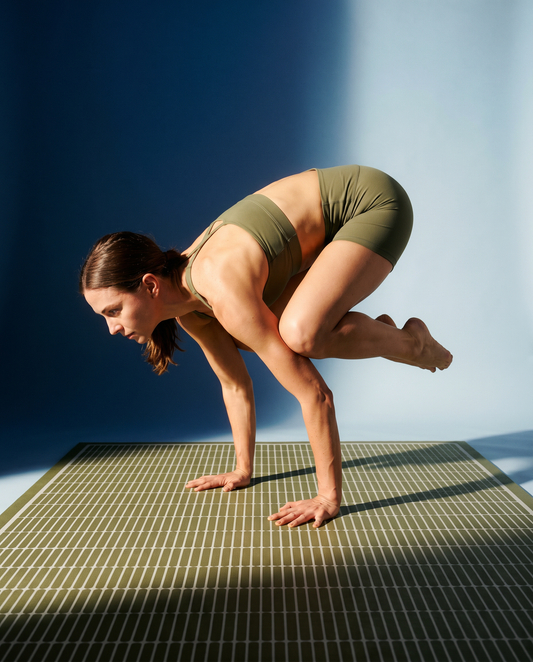
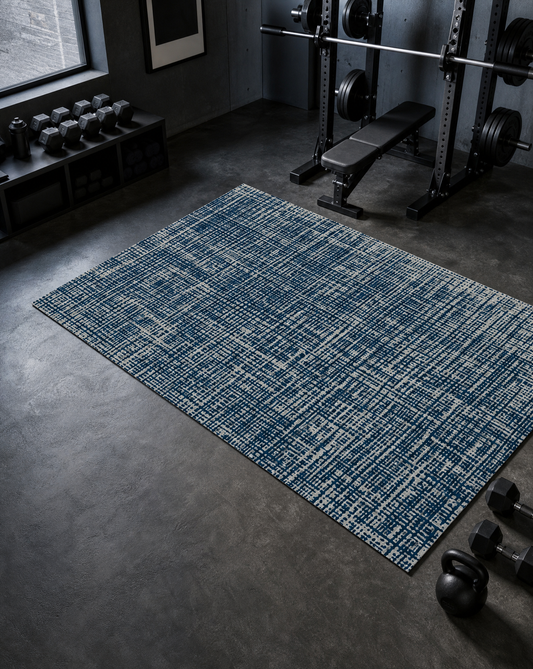
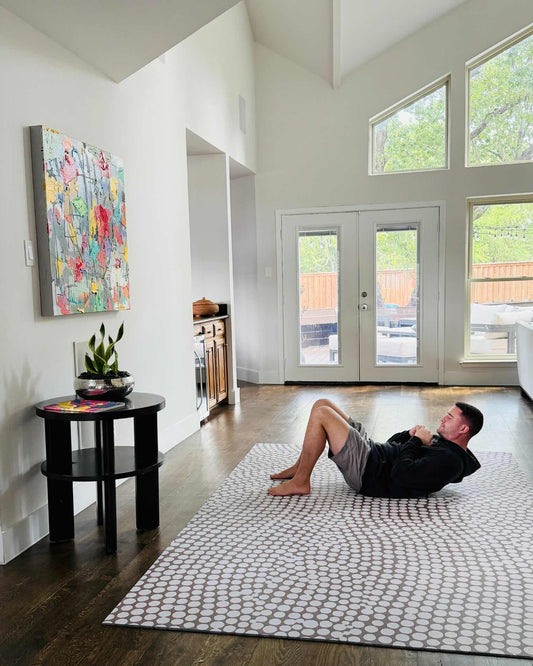
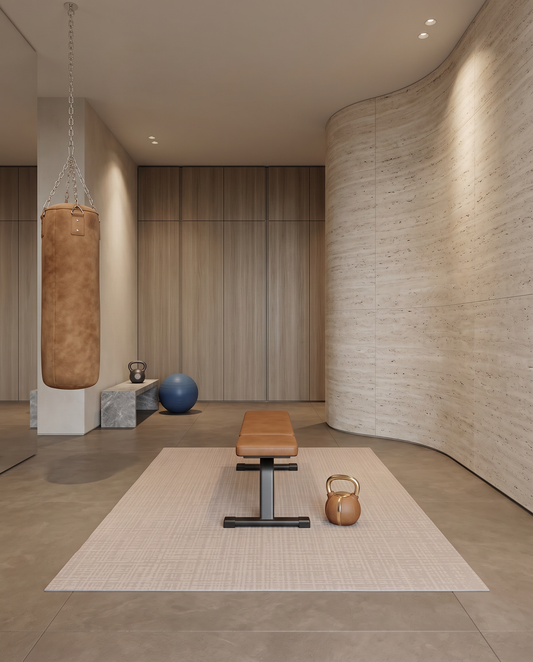
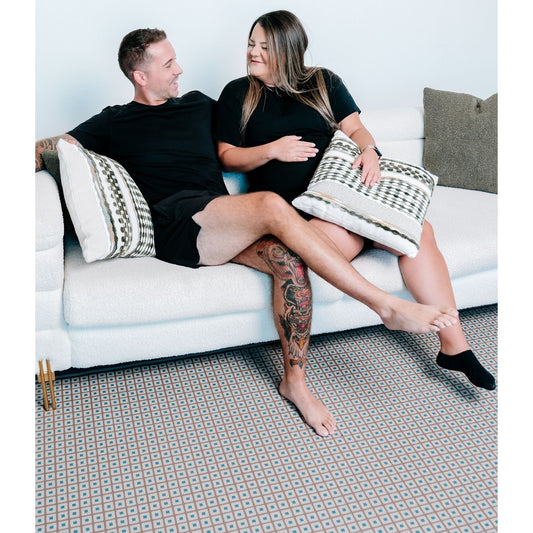
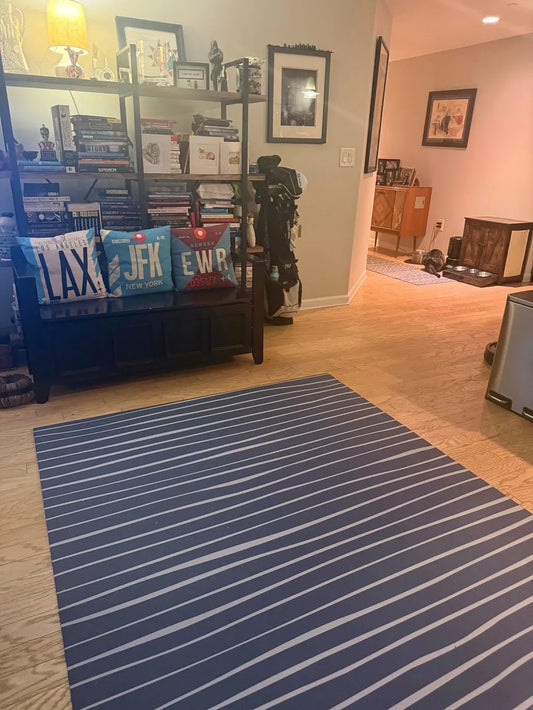
For a garage gym built around mobility, conditioning, dumbbell work, yoga, and floor training rather than max-effort barbell drops, a large single-piece mat covers the actual training zone without the downsides of tile. A Swankymat is 6mm of high-density cushion in one seamless piece, sized at 5x7 or 6x9 feet. No seams to separate, no puzzle edges to curl, a closed-cell surface that wipes clean and does not absorb the odors a garage tends to hold. It is built for the surface you actually move on.
How to Choose
Match the floor to the training, not to the most extreme thing you might do once.
If you drop loaded barbells: rubber rolls or tiles under the platform, full stop. Add a mat on top in the floor-work zone for cushion the rubber does not provide.
If you do dumbbells, kettlebells, conditioning, and mobility: a large single-piece mat covers it, and covers it better than tile because there are no seams underfoot and nothing to trip on during lateral work.
If the garage doubles as anything else, a play space, a yoga corner, somewhere the dog ends up, the single-piece mat wins on every count that matters once the weights are racked.
A garage gym only works if it gets used, and the floor is a bigger factor in that than people expect. A space that feels like an industrial loading dock gets used less than a space that feels like part of the home. The training surface sets that tone. A clean, considered floor that you do not mind kneeling on, sitting on, or doing a slow mobility session on at the end of the day is the floor that keeps the habit alive through the months motivation does not.
For more on building a setup that holds up, see our guide to designing a home gym that doesn't look like a home gym, or read what to look for in a non-toxic gym mat before anything goes on the slab.