

The Workout Mat for Hardwood Floors: A Renter's Guide to Protecting Your Place
Working out at home and renting an apartment used to be a contradiction. Hardwood floors do not love jumping. Drywall does not love kettlebells. Downstairs neighbors do not love either one. For a long time the only options were "go to the gym" or "buy ugly foam tiles and hope you get the deposit back."
That has shifted. Home workouts are normal. Apartment living is normal. The mat under the workout is the thing that quietly makes the whole setup work or not work. This is a guide to what to look for, what most product pages will not tell you, and what actually protects a hardwood floor in a rental.
What Hardwood Floors Are Actually Vulnerable To
Hardwood damage from home workouts shows up in three modes, and each one needs different protection. Most workout mats only address one or two.
- Compression dents. Heavy equipment (a rowing machine, a treadmill, a power tower) sits in the same place for years. The weight slowly presses into hardwood and leaves marks that do not buff out. This is the slowest form of damage and the hardest to undo.
- Impact damage. Dropped dumbbells, kettlebells set down too hard, jump landings. Hardwood is hard but it is not impact-resistant. A 30-pound kettlebell dropped on oak from waist height leaves a visible dent.
- Surface scratching. Grit between the workout equipment and the floor acts like sandpaper every time something moves. Yoga blocks slide. Dumbbells get re-positioned. The mat itself, if it shifts, can scratch.
The fourth, less talked-about issue: sweat damage. Hardwood and sealed laminate floors do not love sweat that pools and sits. Most yoga and exercise involves enough sweat to leave the floor wet underneath a thin or open-cell mat. A waterproof mat eliminates that problem entirely.
Why Interlocking Foam Tiles Are the Wrong Answer in an Apartment
Foam tiles are the default home gym flooring because they are cheap and they sort of work. In an apartment, the tradeoffs get worse fast.
- Gaps trap dirt. Every seam catches dust, hair, and grit that scratches the floor underneath when the tiles shift.
- Tiles shift during dynamic movement. Lateral lunges, mountain climbers, and jumping rope all push tiles around. The floor underneath gets exposed in spots.
- Foam compresses unevenly. Heavy equipment over time pushes some tiles down more than others, which warps the workout surface.
- They look bad. Foam tile floors read as "this is a workout room." Most renters cannot dedicate a whole room. The tiles end up rolled up in a closet and unused.
- Off-gassing. Many cheap EVA foam tiles use formaldehyde binders that off-gas in a closed apartment for months.
What to Look For in a Workout Mat for Hardwood Floors
The criteria below are what matter when the mat sits on hardwood, tile, or laminate in a space you will eventually move out of.
- Single-piece construction. No seams to catch grit. No tiles to shift. The mat moves as one piece or not at all.
- Six millimeters of high-density cushion. Thick enough to absorb dropped weights and jump impact. Dense enough that the cushion does not compress to nothing within a year.
- Non-slip on hard floors. The mat should grip hardwood without adhesive, without a rug pad underneath, and without curling at the corners.
- Waterproof, wipeable surface. Sweat, spilled water bottles, and the inevitable post-workout wipe-down should all clean with a damp cloth. The floor underneath stays dry.
- Large enough for full lateral movement. Most yoga mats are 24 inches wide. Most apartment workouts need at least 5 feet of width for lunges, squats with feet wide, and any work that uses the floor sideways.
- Aesthetically livable. A mat that reads as decor stays out. A mat that reads as gym equipment gets rolled up and forgotten. The mat that stays out is the one that gets used.
- Non-toxic materials. A mat that lives in your apartment for years should not off-gas phthalates, BPA, formaldehyde, or flame retardants into the air you breathe.
The Equipment Most Renters Actually Use, and What the Mat Has to Handle
Different home workouts put different stresses on the mat and on the floor underneath. The most common setups in a rental:
- Yoga and pilates. Sweat and joint pressure. A 5x7 mat with 6mm cushion handles this comfortably.
- Dumbbell work. Compression and the occasional drop. A dense closed-cell mat distributes the load. For heavier sets (over 50 pounds), consider a small rubber drop pad on top for the lift area.
- Kettlebell flow. Lateral movement and set-down impact. Single-piece construction matters here. Foam tiles would shift during clean-and-presses.
- Rowing machine, walking pad, or compact treadmill. Continuous compression and vibration. The mat needs to extend at least a foot beyond the equipment base on all sides.
- HIIT or jumping rope. Impact. The right mat dampens the impact for joints and dampens the sound for downstairs neighbors. A thicker mat (or one with an underlay) helps a lot.
Renter-Specific Things to Think About
Three considerations that do not show up in most workout mat reviews:
- Move-out condition. Hardwood damage often surfaces when the mat is finally pulled up. A mat that does not shift, does not trap grit, and does not stain the floor underneath is the version that gives back the deposit.
- Downstairs neighbors. Impact noise transmits through the floor. A 6mm dense mat reduces it noticeably. For HIIT or jumping rope in a rental, consider doubling the mat or adding a separate underlay for those specific workouts.
- Storage. If the mat needs to be put away between every workout, you will stop using it within three months. The mat that fits the rental aesthetic and stays out wins.
Where Swankymat Fits
Swankymat is a 5x7 or 6x9 foot single-piece mat with 6mm of high-density closed-cell cushion. It grips hardwood, tile, and laminate without adhesive or a rug pad. The surface is fully waterproof and wipes clean. The material is BPA-free, phthalate-free, flame-retardant-free, and exceeds U.S. and European safety standards. The inks are Greenguard Gold certified.
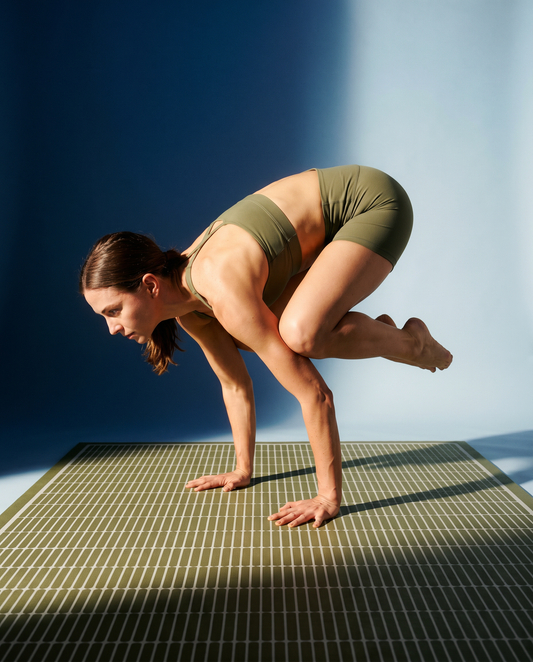
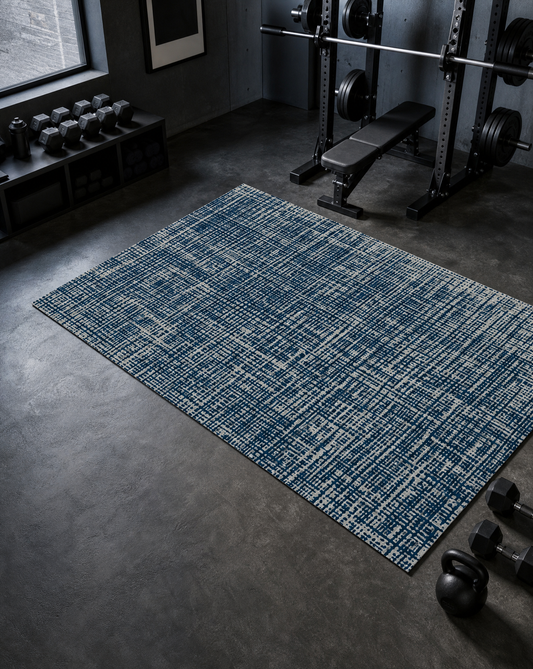
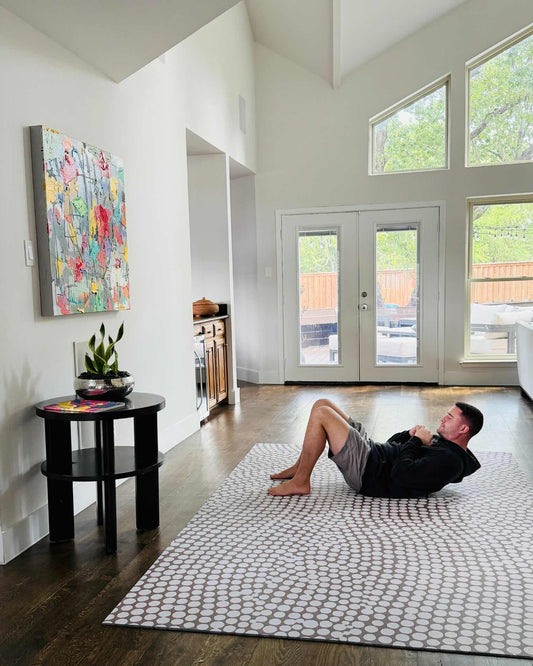
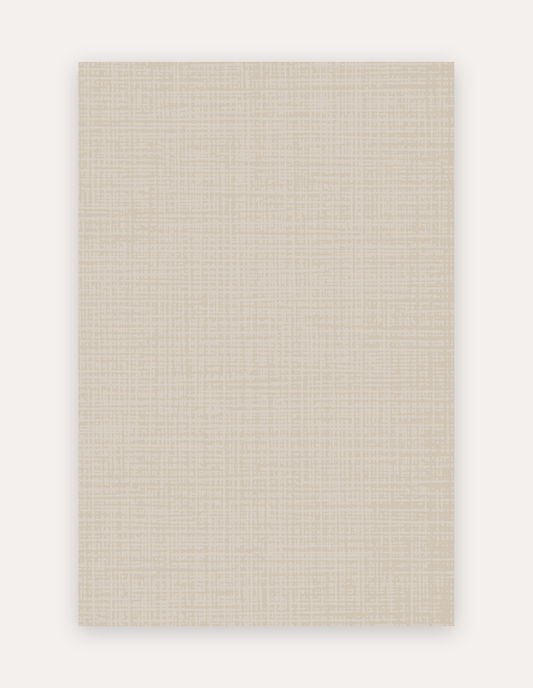
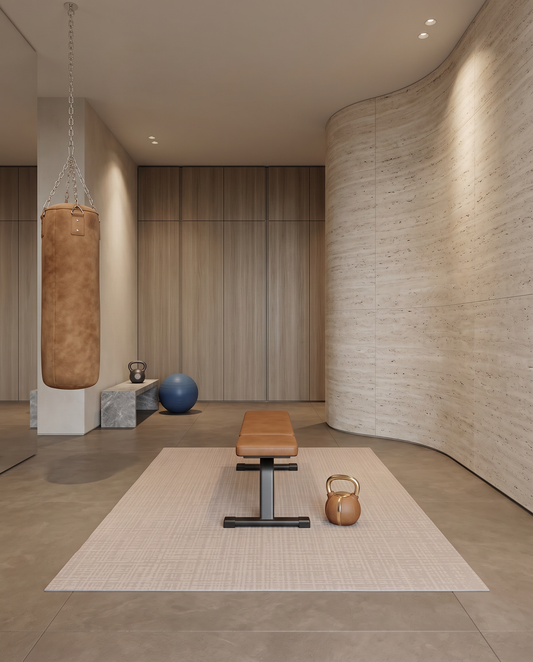
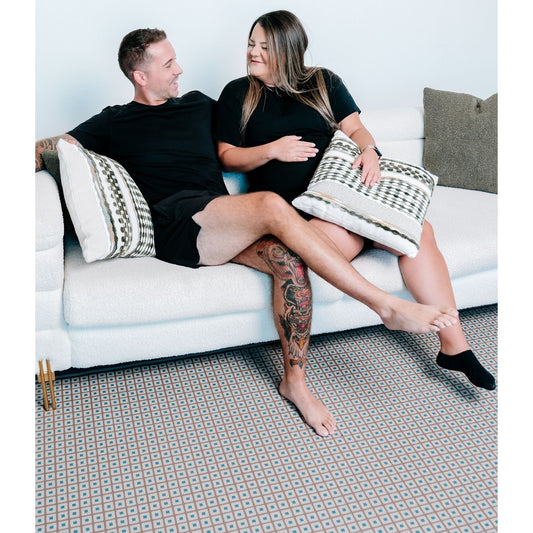
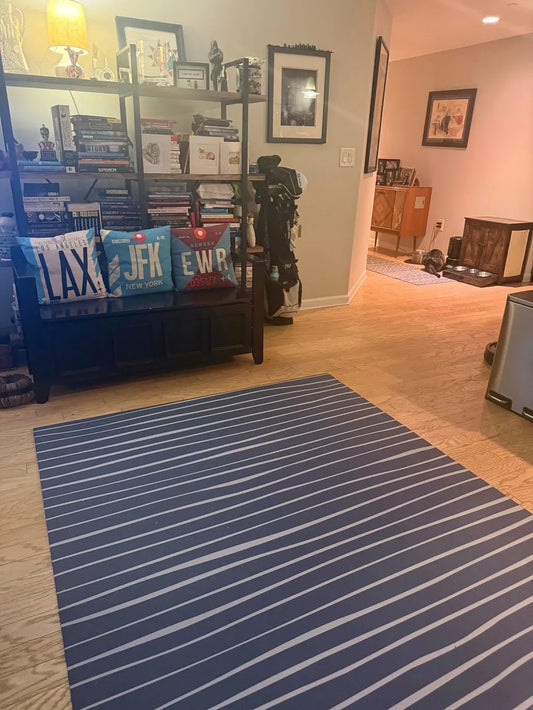
The mat is designed in patterns and colors that look like a rug, which is the difference between "a workout setup in a corner" and "this rug is also where I work out." In a one-bedroom apartment, that is the whole game.
Because Swankymat qualifies as an HSA and FSA eligible exercise mat for qualifying customers, pre-tax dollars can offset the upfront cost when the mat is part of a medically-supported movement routine.
The Test for Any Workout Mat in a Rental
The question is not "will this mat work for my workout." Most mats handle a basic workout. The question is "will this mat protect the floor underneath, look livable in my apartment, and still be useful in three years when I move." A single-piece, dense, waterproof, non-toxic mat that reads as decor passes all three tests. Most mats on the market pass one or two.
For more on building a home workout setup that fits an apartment, see how to create a home workout space in your living room or browse the full Swankymat collection to see how a workout mat reads in a real apartment.