

The Best Mat for Barre Workouts at Home

Barre has quietly become one of the most popular ways to work out at home, and it's easy to see why. It's low-impact, it builds real strength and control, and a session leaves you feeling long and worked rather than wrecked. But barre asks something specific of your setup that a lot of people don't think about until their knees are aching or their feet are slipping mid-plié. The surface you practice on matters more for barre than for almost any other home workout. Here's what to look for, how to set up a barre space at home, and why the floor is the piece most people get wrong.
What makes barre different
Barre blends ballet-inspired movement with elements of Pilates and strength training. The hallmark is small, controlled movements repeated until the muscle fatigues, often in a high half-toe stance or down on the mat for glute and core work. That combination of precise standing balance work and floor work in a single session is what makes the surface so important. You need grip and stability when you're up on the balls of your feet, and cushion and comfort the moment you drop down to your knees or back.
What barre demands from a surface
Run through a typical class in your head and the requirements become obvious:
- Grip for standing work. Pliés, relevés, and balance sequences on a slippery floor are a recipe for a turned ankle. You need a surface that keeps your feet planted.
- Cushion for floor work. Glute bridges, kneeling sequences, and core work grind your knees and tailbone into the floor. A thin surface makes those segments miserable.
- Stability underfoot. A mat that shifts or bunches when you push off ruins the precision barre is built on. It needs to stay put.
- Enough room. Barre moves through standing, kneeling, and lying positions, sometimes within the same minute. A cramped little mat leaves you constantly repositioning.
- Easy to clean. Barre gets sweatier than it looks. A wipe-clean surface keeps things simple.
Why a standard yoga mat falls short
Most people start barre on whatever they have, usually a thin yoga mat, and quickly find its limits. Yoga mats are built thin for a reason, since stability in standing poses benefits from being close to the floor, but that same thinness punishes your knees during barre's floor segments. They're also often too narrow and too short for the lateral and transitional movement barre involves. You end up choosing between protecting your knees and having room to move, when you shouldn't have to choose at all.
How to set up a barre space at home
The good news is you don't need a studio. A few square feet of open floor is enough. For the barre itself, a sturdy chair, a countertop, or a windowsill at about hip height works perfectly as a substitute, since the barre is mostly there for light balance support, not to bear your weight. A mirror helps you check form but is optional. Light hand weights, a small ball, and a resistance band cover most of the props a home class will call for. The non-negotiable piece is the surface underneath you, because it's the one thing that affects every minute of the session, standing and on the floor alike.
Getting started with home barre
If you're new to it, follow along with a beginner class and focus on control over range. The movements are small on purpose, and the burn comes from precision and repetition rather than big motions. Keep your core engaged, move slowly, and expect your muscles to shake, which is normal and part of the method. Start with two or three sessions a week and let your body adapt. Because barre is low-impact, it's friendly to a wide range of fitness levels, but that doesn't mean it's easy.
The surface that handles both halves of class
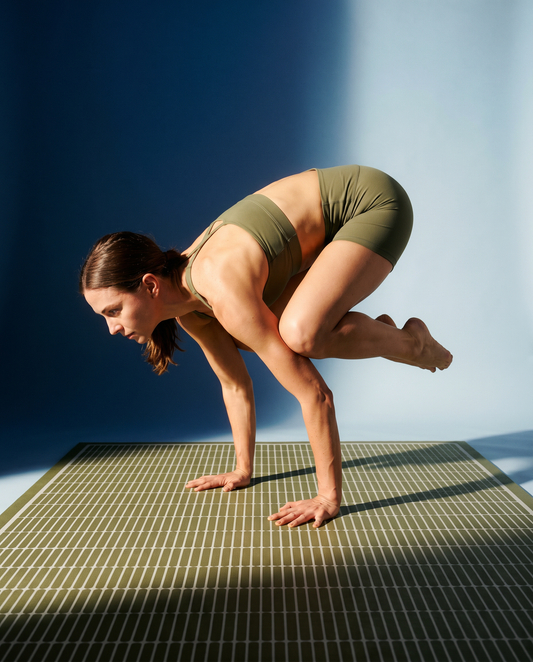
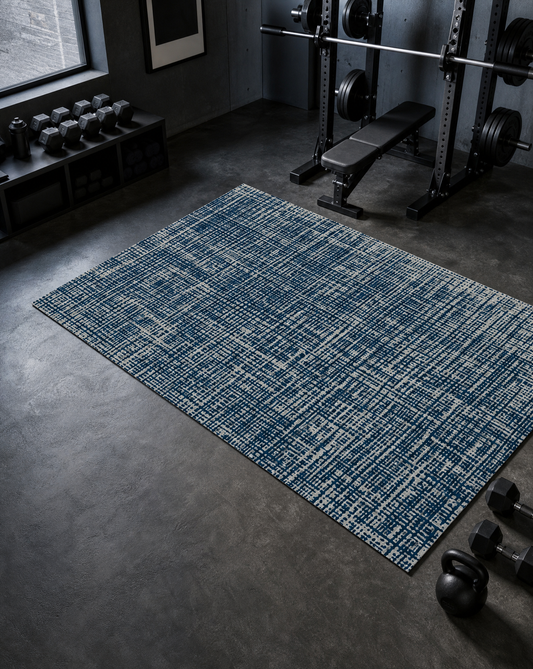
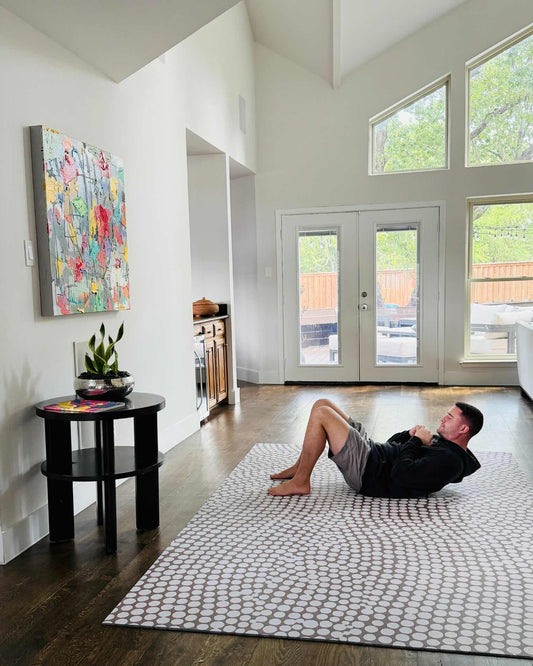
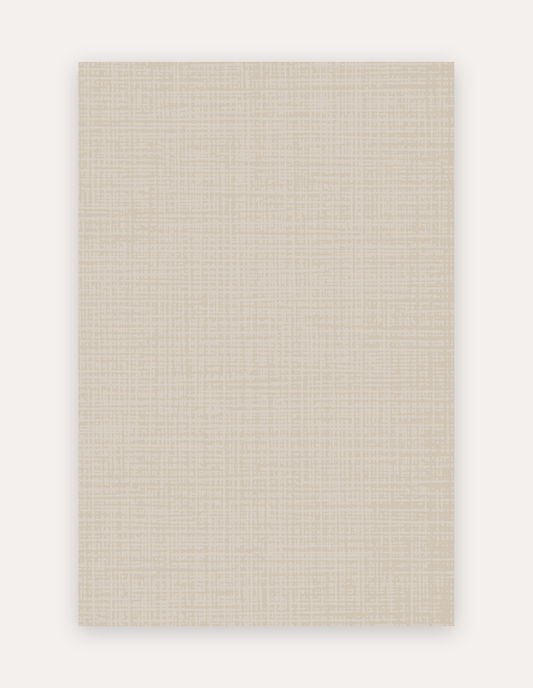
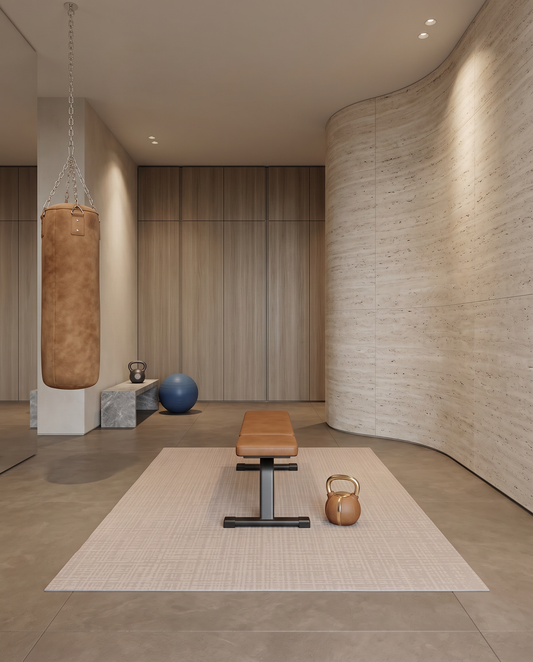
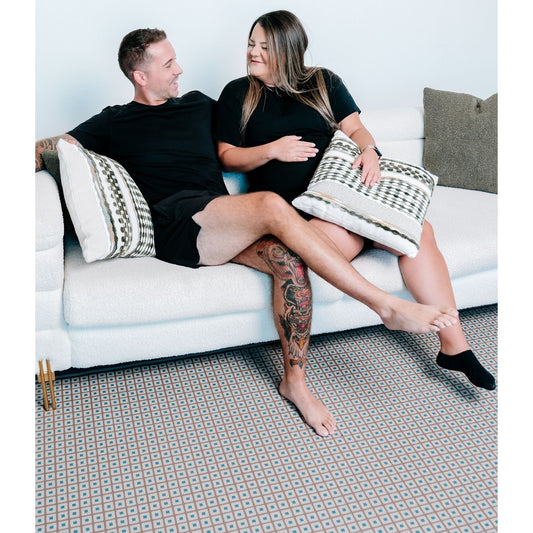
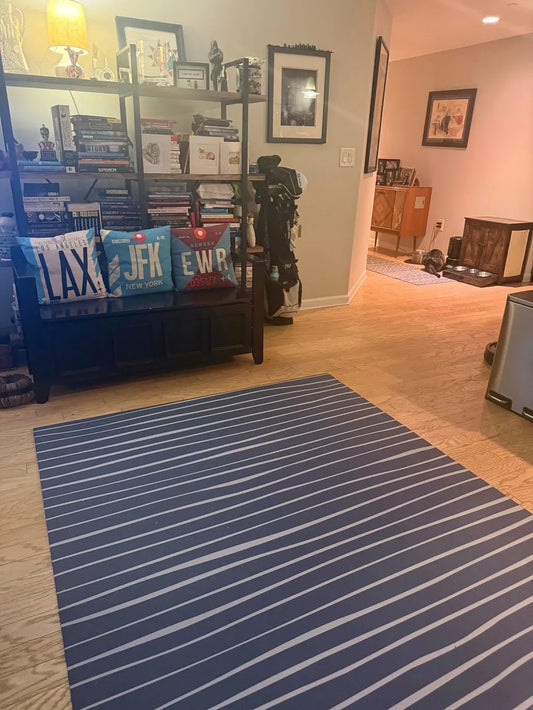
This is where a Swankymat fits barre almost perfectly. It gives you a large, 6mm-cushioned surface that protects your knees and tailbone during floor work while staying stable and grippy enough for standing balance sequences, so you don't have to trade one for the other. It's big enough to flow from a standing plié to a kneeling sequence to a back-lying core set without running off the edge. It's made with non-toxic materials and Greenguard Gold certified inks, and it's waterproof and wipe-clean for a sweatier-than-expected session. Because it looks like part of your living room rather than studio equipment, it can stay out and ready, which makes it far more likely you'll actually press play. And since it's HSA/FSA eligible, the surface that makes your home barre practice comfortable may qualify for tax-advantaged dollars. Barre rewards consistency and control, and a floor that supports both halves of every class makes showing up a lot easier.