

Cycle-Synced Training: How to Match Movement to Your Menstrual Cycle

Cycle-synced training is the practice of matching workout intensity to the four phases of the menstrual cycle. The idea has moved from niche women's health content into mainstream fitness advice over the past three years, driven by research on hormonal fluctuations and by the increased availability of cycle-tracking apps. Some of the popular claims are well-supported; others are not.
This post covers what the research actually supports, a practical framework for adjusting home practice by cycle phase, and where the mat matters more than in generic training programs.
This is general information, not medical advice. Consult a healthcare provider for individual cycle-related questions.
The Four Phases
The menstrual cycle divides into four hormonally distinct phases, each roughly one week long in a 28-day cycle.
Menstrual (days 1 to 5). Estrogen and progesterone at low. Energy tends to be lower. Muscle strength holds relatively steady but perceived effort is often higher.
Follicular (days 6 to 14). Estrogen rising. Energy, mood, and cognitive function often increase. Muscle recovery tends to be faster. Peak physical capacity for most women in the second half of this phase.
Ovulatory (days 12 to 16, overlapping with late follicular). Estrogen peak, then rapid decline. Injury risk to knees and ankles may be slightly elevated for a few days due to ligament laxity changes. Otherwise, capacity remains high.
Luteal (days 15 to 28). Progesterone rising. Body temperature increases slightly. Recovery from intense training may be slower. Late luteal often includes PMS symptoms including fatigue, water retention, and reduced motivation.
What the Research Supports
The strongest evidence supports adjusting training intensity rather than exercise selection. Research generally suggests that heavy strength training and high-intensity work are best done during follicular and early ovulatory phases. Steady-state cardio and moderate strength work tend to feel most sustainable in the mid-luteal phase. Gentler movement, mobility, and restorative work often fit menstrual and late luteal phases best.
What the research does not strongly support is prescribing specific exercises for specific days or restricting training entirely during any phase. The variation between individuals is significant enough that generic prescriptions are less useful than a general framework the individual adjusts to her own experience.
A Practical Framework for Home Practice
Rather than a strict day-by-day plan, most women find a phase-level framework more sustainable.
Menstrual phase (days 1 to 5): Restorative yoga, gentle mobility, walking. Lower-intensity movement supports blood flow and eases cramping without adding fatigue.
Follicular phase (days 6 to 14): The window for progressive strength training, high-intensity intervals, longer runs, or personal record attempts. Energy and recovery both support harder work.
Ovulatory phase (days 12 to 16): Peak training capacity for most women. Prioritize compound strength movements. Be mildly cautious with dynamic single-leg work if you have knee sensitivity, given the temporary ligament changes.
Luteal phase (days 15 to 28): Steady-state cardio, moderate strength (65 to 75 percent of one-rep max rather than 85 percent), Pilates, and yoga. The late luteal week often benefits from a deload week if you train hard year-round.
What Home Practice Enables
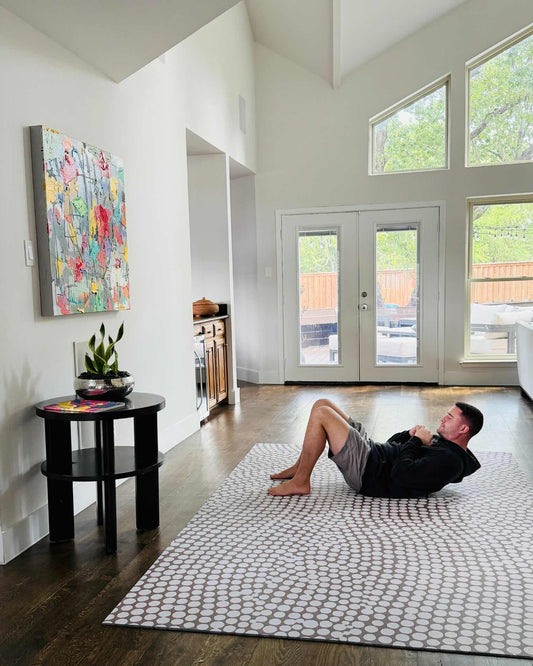
Cycle-synced training is easier to sustain at home than at a gym. The reason is autonomy. A commercial gym schedule pushes toward the same workout every week regardless of energy. A home practice can shift from a heavy strength session in follicular to restorative yoga in menstrual without having to negotiate class times or equipment availability.
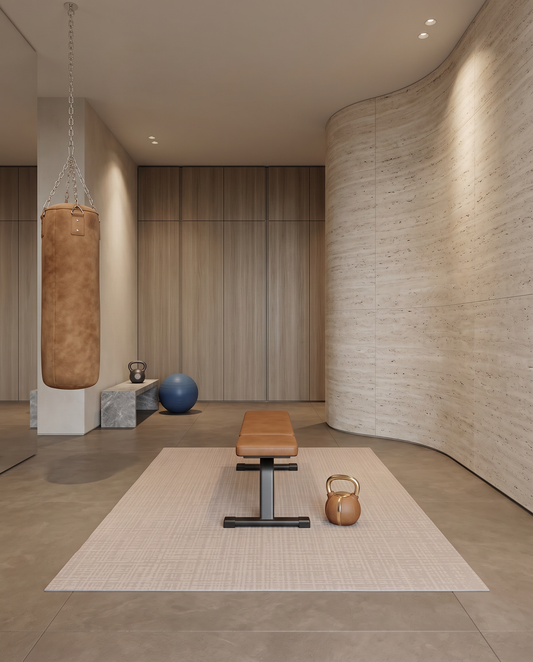
The home setup that supports this flexibility is the same as any other well-designed home practice: a cushioned mat that stays out, a small equipment kit, and the ability to switch between formats without setup friction.
The Mat for Multi-Format Practice
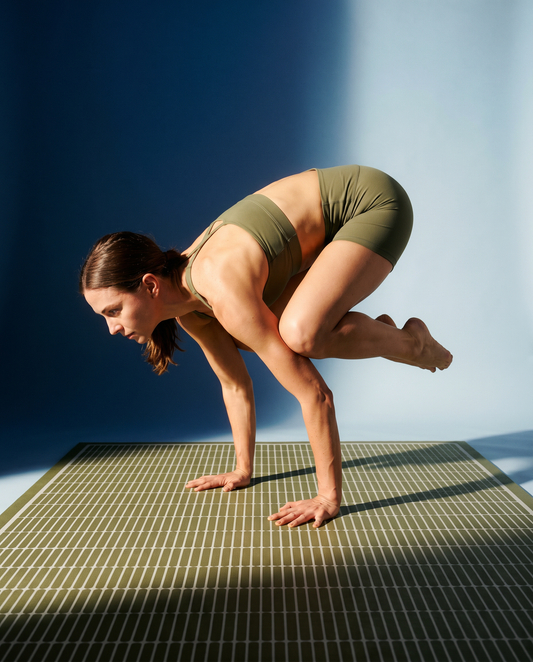
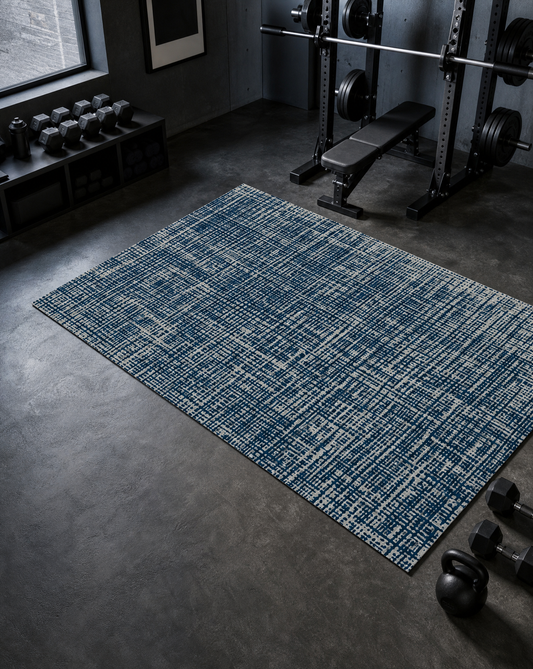
Cycle-synced training requires a floor surface that supports every training format the cycle demands. Heavy strength work with dumbbells during follicular. Long restorative holds during menstrual. Steady-state Pilates during luteal. The mat has to hold up to all of it.
Swankymat is calibrated for exactly this range. Non-toxic high-density foam with 6mm of supportive cushion, firm enough for dumbbell work and stable enough for balance sequences, soft enough for long supported holds. Waterproof wipe-clean surface and Greenguard Gold certified inks.
For a broader look at how a mat supports mixed-format training, the post on the best mat for yoga and HIIT at home covers the calibration. For the specific case for a home practice that adapts across the cycle, the post on making movement part of your daily routine covers the sustainable habit structure.