

Elevated At-Home Pilates Without a Reformer

The reformer gets all the attention, and it's easy to see why. It's elegant, it's effective, and a studio full of them looks like a place serious people go. But a reformer is also expensive, large, and more than most people need to build a strong, capable body at home. Mat Pilates, the original form of the method, asks for almost nothing and delivers a great deal. Done well, in a space you've set up with care, it's every bit as worthy of the word elevated. Here's how to build a beautiful, effective Pilates practice at home without a reformer in sight.
Why mat Pilates is worth taking seriously
Mat work is the foundation of Pilates, not a watered-down version of it. It builds deep core strength, control, mobility, and the kind of postural awareness that carries into everything else you do. Because it relies on your own body rather than machinery, it travels, it fits any space, and it scales from gentle to genuinely demanding. For most people, a consistent mat practice does more for how they move and feel than an occasional reformer class, simply because it's so much easier to actually do.
The few props you actually need
- A proper mat. The single most important piece, and the one most worth getting right. More on why below.
- A small ball. Inexpensive and versatile, it adds support and challenge across dozens of exercises.
- A magic circle, optional. The classic Pilates ring adds gentle resistance, though you can progress a long way without one.
- Light weights or a band. For adding load to upper-body and arm work as you get stronger.
That's it. A complete, progressive practice fits in a basket in the corner of a room, which is part of the quiet appeal of mat Pilates.
Setting up an elevated practice space
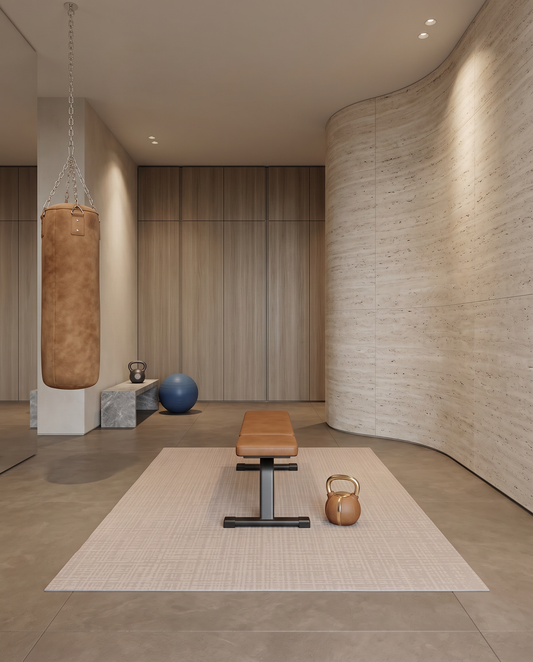
What makes a home practice feel elevated isn't equipment, it's intention. A calm, dedicated corner with good light, a tidy place for your few props, and a beautiful surface to work on turns a routine into a ritual. You don't need a studio. You need a space that feels considered enough that stepping onto the mat feels like a small luxury rather than a chore. The aesthetics aren't vanity here, they're what keeps you coming back.
What Pilates demands of a surface
Pilates is unusually hard on a cheap mat, and unusually rewarding on a good one. So much of the work happens on your spine, tailbone, and the bony points of your hips, rolling down through the vertebrae, balancing on your sit bones, pressing through your shoulder blades. On a thin mat or a bare floor, those movements range from uncomfortable to genuinely painful, and discomfort is the fastest way to abandon a practice. What you need is real cushion to protect the spine, enough grip to stay stable through controlled movement, and enough room to extend fully without running off the edge. Our guide to the best Pilates mat covers exactly what to look for, and our take on yoga mats versus exercise mats helps if you're deciding what your routine really needs.
Why thin mats fail at Pilates
Standard yoga mats are built thin on purpose, because closeness to the floor helps with standing balance. Pilates is the opposite case. The roll-downs, the spinal articulation, the work balanced on the tailbone all demand cushion, and a couple of millimeters simply isn't enough to protect the bones pressing into the floor. This is the single most common reason people find mat Pilates uncomfortable and assume they need a reformer, when really they just need a better surface underneath them.
The surface that makes home Pilates a pleasure
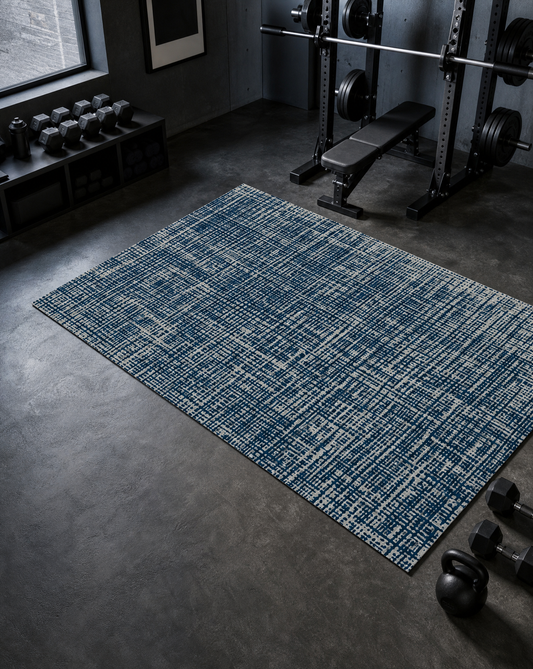
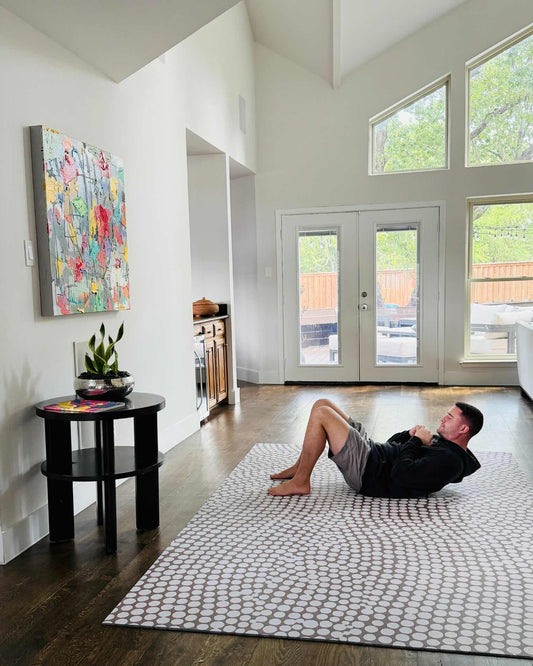
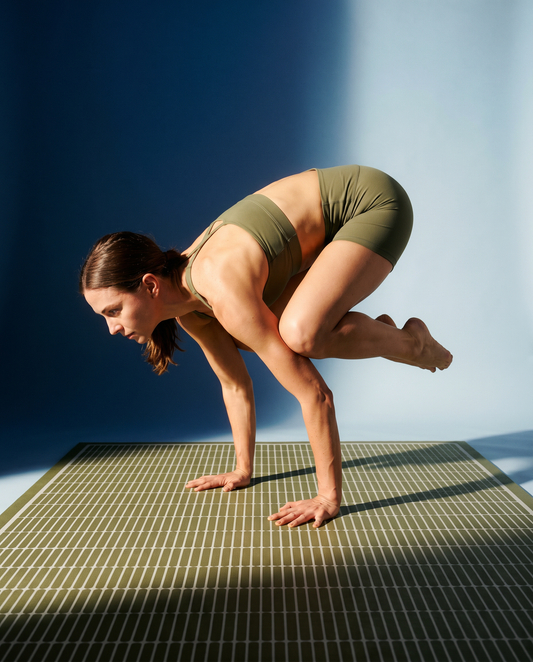
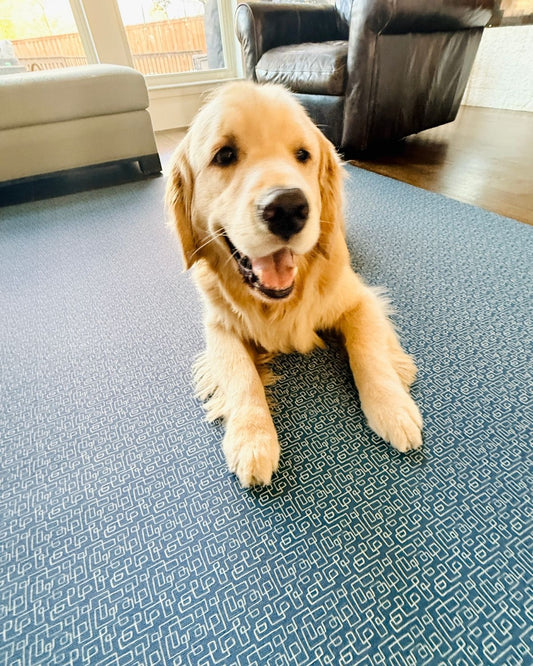
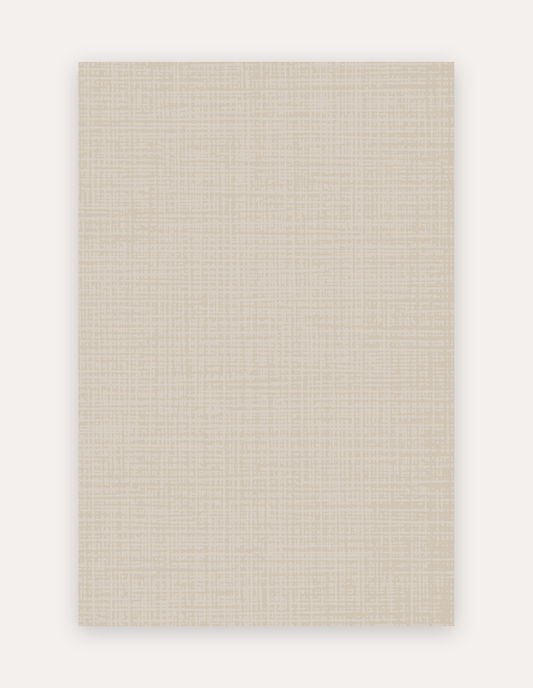
This is where a Swankymat elevates a home Pilates practice. Its large, 6mm-cushioned surface protects your spine and tailbone through every roll-down and balance, while staying grippy and stable for controlled, precise work, and it gives you room to extend fully in any direction. It's made with non-toxic materials and Greenguard Gold certified inks, and it's waterproof and wipe-clean, so it stays beautiful through a sweaty session. Because it comes in modern, neutral colorways like Circa Sandstone that look like part of the room, it makes the whole space feel intentional, and it's HSA/FSA eligible, so the foundation of your practice may qualify for tax-advantaged dollars. You don't need a reformer to take Pilates seriously. You need a little space, a few simple props, and a surface that makes the work feel as good as it looks.