

How to Choose a Play Mat: The Honest 2026 Buyer's Guide
The play mat category has expanded well beyond its origins. What was once a brightly colored foam square designed exclusively for infants has become a broad and varied product category used by parents, home fitness practitioners, pet owners, and design-conscious homeowners who want a floor surface that works harder than a traditional rug. The problem is that the category has expanded faster than the buying guidance around it, leaving most people choosing between options without a clear framework for what actually matters.
Choosing the right play mat comes down to three things: how your floor gets used, who is using it, and what you need the surface to do beyond simply covering the floor. Get those three things right and the rest of the decision follows naturally. Here is how to think through each one.
Start With How Your Floor Actually Gets Used
The single most useful question to ask before choosing a play mat is not what size you need or what material you want. It is what happens on your floor on a typical day.
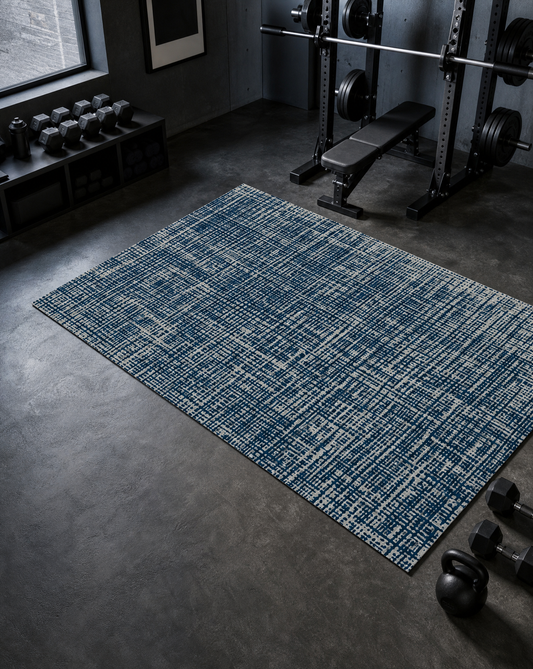
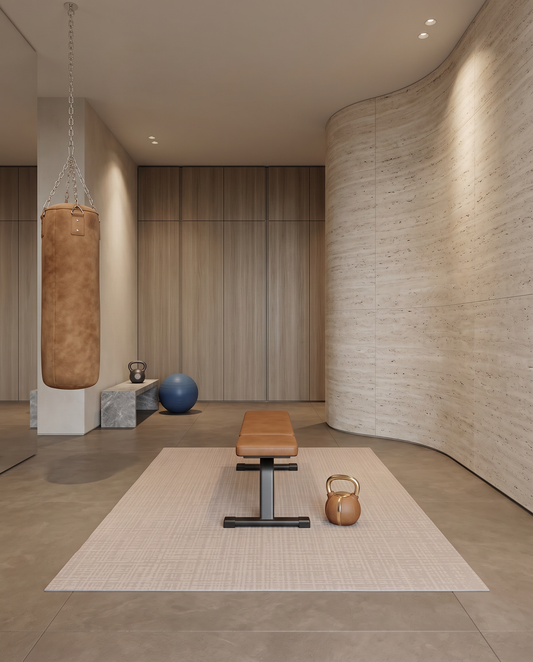
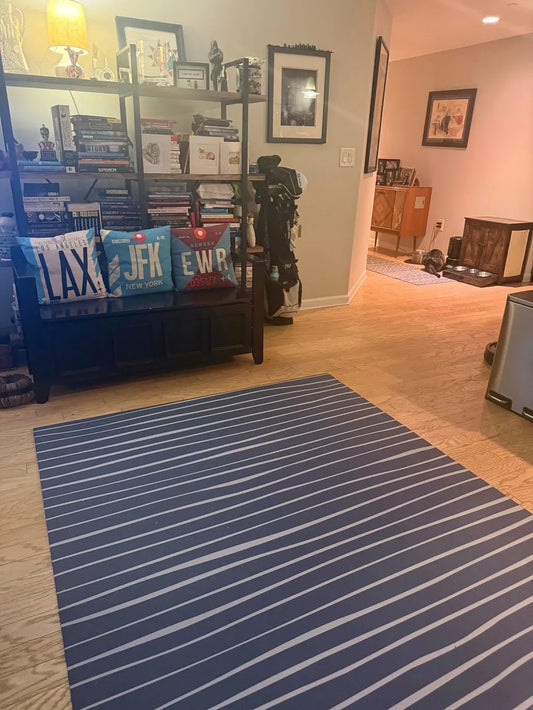
A floor used primarily for infant tummy time and early play has different requirements than a floor used for adult yoga and bodyweight training. A floor shared by a toddler and a dog has different requirements than a floor used as a dedicated home gym space. A floor in a living room that needs to look intentional and designed has different requirements than a floor in a basement workout room where aesthetics are secondary to function.
Most people approach the play mat decision the other way around — they start with the product and try to fit their life around it. Starting with your floor's actual use pattern gives you a much clearer filter for evaluating every other variable in the decision.
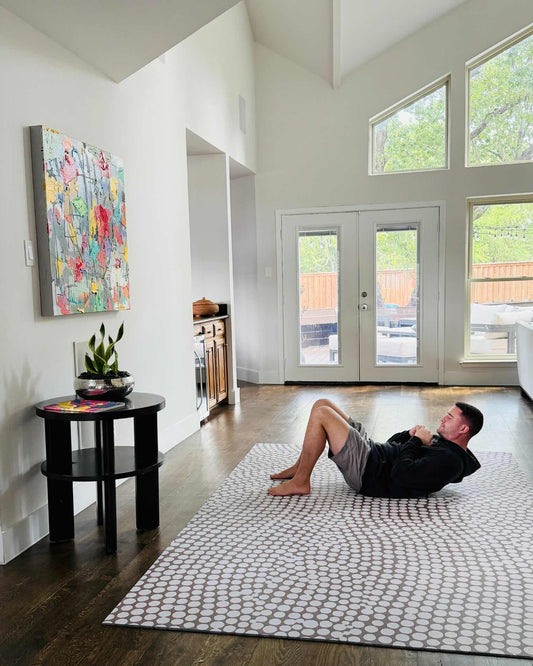
If your floor sees a combination of uses across different times of day — morning workout, afternoon baby play, evening family time — that is important information too. A mat that handles all of those scenarios without requiring you to swap surfaces is a fundamentally different product than one optimized for a single use case, and knowing that upfront saves you from buying something that solves one problem while creating another.
Size: Why Bigger Is Almost Always Better
Once you know how your floor gets used, size is the next decision and the one most people get wrong. The instinct is to buy a mat that fits the activity rather than the space, which typically means buying something too small.
A standard play mat for infants measures roughly 4x4 or 4x6 feet. That is adequate for a newborn during supervised tummy time sessions but becomes a constraint almost immediately as your baby begins rolling, reaching, and moving with more intention. A mat that a three-month-old fits comfortably on is the same mat that a seven-month-old rolls off of constantly.
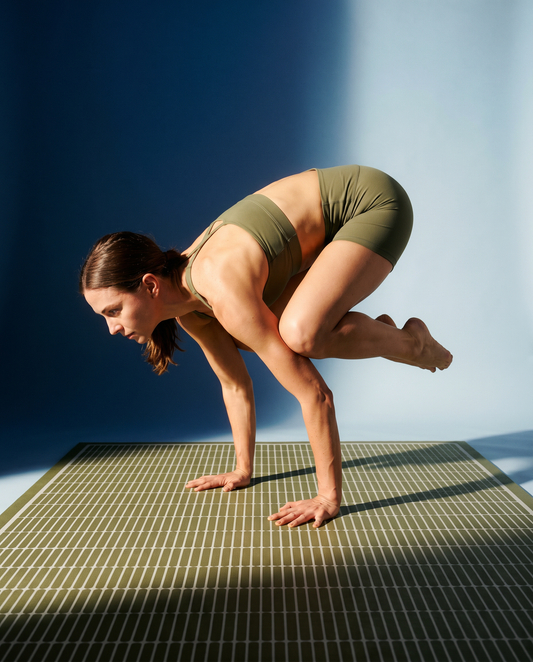
For home fitness use, the size problem is even more pronounced. A standard yoga mat at 68 by 24 inches is too narrow for any movement involving lateral steps, wide stances, or dynamic direction changes. A mat used for HIIT, stretching, strength work, or any combination of disciplines needs to be large enough to accommodate the full range of that movement without constant repositioning.
The practical minimum for a play mat that serves multiple purposes across different life stages and use cases is 5x7 feet. A 6x9 mat is the more generous choice for households where the floor sees heavy use from multiple people or multiple activities. At that size the mat stops feeling like a piece of equipment and starts functioning as a dedicated zone within your home — a surface with a clear purpose that everything else orients around.
The one scenario where a smaller mat makes sense is a highly specific single-use application in a space where size is genuinely constrained. In most homes and for most use cases, choosing the larger size is a decision you will not regret and the smaller size is one you often will.
Material Safety: What to Look for and Why It Matters
Material safety is the criterion that gets the least attention in most play mat buying guides and deserves significantly more. A play mat is a surface you or your child is in prolonged close contact with every day. The materials it is made from matter in a way that a floor covering used occasionally does not.
The three chemical categories worth specifically looking for are phthalates, BPA, and flame retardants. Phthalates are plasticizers commonly found in foam and PVC products that have raised concerns around hormonal disruption with prolonged exposure. BPA is a chemical used in some plastics with similar concerns. Flame retardants are added to many foam products and have been associated with health risks that become more significant with daily contact over time, particularly for young children who spend extended time on floor surfaces.
A play mat that explicitly states it is free from all three is the baseline standard worth insisting on regardless of who is using the mat or what it is being used for. This is not a premium feature reserved for baby products — it is a reasonable expectation for any surface used daily in a home environment.
Be cautious of mats that use broad language like natural, eco-friendly, or green without specifying what chemicals they do not contain. Those terms are unregulated and widely used across the play mat category regardless of actual material composition. Specific chemical exclusions — phthalate-free, BPA-free, flame retardant-free — are the clearest signal that a brand is being transparent about what their product is made from. As this guide to whether baby play mats are safe for daily use explains, the gap between marketing language and actual material disclosure is wider than most buyers realize.
Surface and Construction: Single Piece vs Interlocking Tiles
The construction of a play mat affects how it performs, how it cleans, and how long it lasts more than most buyers anticipate before they own one.
Interlocking foam tiles are the most common play mat format and the most problematic for everyday home use. The gaps between tiles collect debris, liquid, and the general residue of daily life in ways that are difficult to clean thoroughly. The edges create tripping hazards for adults and crawling babies alike. The tiles shift and separate with use, particularly under the kind of dynamic movement that home fitness involves. And the overall appearance is almost impossible to make look intentional in a designed living space regardless of the color or pattern.
A single-piece mat eliminates all of those problems. One surface with no gaps, no edges between tiles, and no separation under use. Cleaning is a single wipe rather than a tile-by-tile operation. The surface stays flat and stable under movement. And the overall appearance is significantly easier to integrate into a room that is supposed to look like a home rather than a daycare.
For most households choosing a play mat for a primary living space, a single-piece construction in a size large enough to serve the full range of intended use is the more practical and durable choice. Interlocking tiles have their place in dedicated playrooms and garage gyms where aesthetics and maintenance are secondary concerns, but for a living room, family room, or open-plan space they create more problems than they solve.
Design: Finding One That Fits Your Home
Design is the criterion that most play mat buying guides treat as secondary and most buyers discover is more important than they expected. A play mat that gets put away because it does not fit the room is not serving anyone.
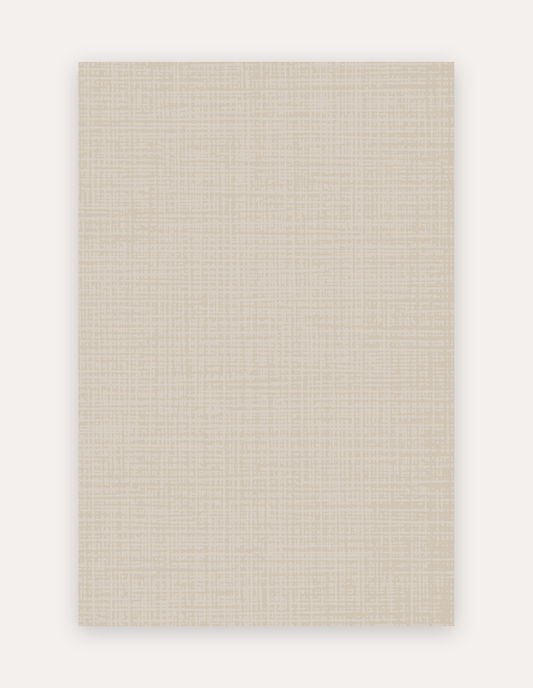
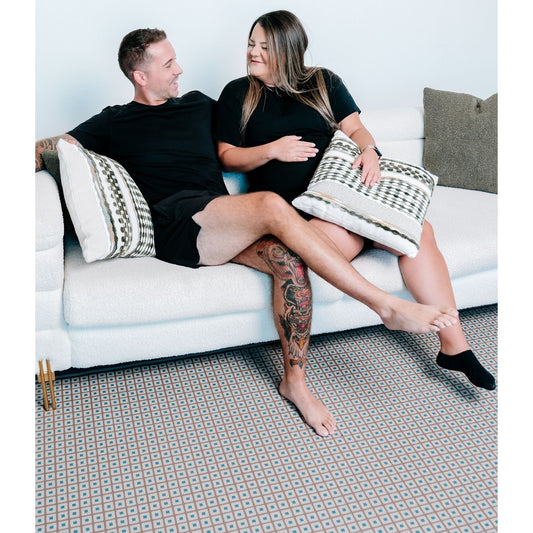
The play mat market has improved significantly on this front in recent years. Options in neutral tones, geometric patterns, and intentional colorways that complement modern home interiors rather than clashing with them are increasingly available and increasingly good. The days of the primary-colored foam square being the only practical option are behind us.
When evaluating design, think about the room the mat will live in permanently rather than the room it will be stored in when not in use. A mat you are willing to leave out is a mat you will actually use. A mat you roll up or stack in a corner because it disrupts the room is a mat that stops serving its purpose within weeks of purchase. The design question is not about vanity — it is about whether the mat integrates into your home well enough to stay out and be used every day. This is the thinking behind non-toxic play mats designed to look like rugs — the design standard that makes a mat worth keeping out permanently.
Cleanability: The Feature That Determines Long-Term Satisfaction
However good a play mat looks and however well it performs on day one, the feature that determines whether you are still happy with it a year later is how easy it is to clean.
A wipe-clean, waterproof surface handles the full range of what a busy household puts a floor covering through — spilled drinks, food, pet accidents, sweat, mud — without absorbing any of it. A damp cloth handles most situations in under a minute. That ease of maintenance is what allows a play mat to stay out permanently and continue performing its function without becoming a source of frustration.
Mats without a wipe-clean surface — including most fiber-based options and many foam tiles — absorb liquids and require significantly more involved cleaning. For a mat used daily in a busy household, that maintenance burden compounds quickly and often leads to the mat being used less, cleaned less, and eventually replaced sooner than expected.
When choosing a play mat, cleanability is worth treating as a primary criterion alongside size and material safety rather than an afterthought. How to clean a mat for home fitness and family use is something worth thinking through before purchase rather than after.
Finding the Right Mat for Your Home
If you are looking for a single mat that handles babies, home fitness, pets, and daily family life without requiring you to compromise on how your home looks, Swankymat's extra-large mats are worth a close look. Available in 5x7 and 6x9 sizes, free from phthalates, BPA, and flame retardants, waterproof and wipe-clean, and designed to integrate into modern home interiors rather than disrupt them, they are built for exactly the kind of multi-use, permanent floor surface this guide has been describing. You can explore the full range here.