Pilates at Home: The Setup Guide for a Real Home Practice

Mat Pilates does not need a reformer, a studio membership, or a certified instructor to be effective. The classical mat sequence, developed by Joseph Pilates in the 1930s, was designed to be practiced at home with no equipment. A modern home Pilates setup adds a few props to expand the range of exercises available, but the practice itself remains built around the floor.
This post walks through what a home Pilates setup actually looks like: the mat, the props, the space, and a starter routine that covers the classical mat sequence in 30 minutes.
What Pilates Requires from the Floor Surface
Mat Pilates is more demanding on the floor surface than most people realize. The sequence involves a large amount of supine spinal work, which means the spine and pelvis load directly onto the mat for extended periods. A thin surface causes discomfort in the sacrum, tailbone, and thoracic spine within a few exercises.
The other unusual requirement is stability. Many Pilates exercises involve isometric holds and slow controlled movement rather than dynamic transitions. The mat has to stay in place through the entire session without sliding or bunching underfoot.
The combination points to a mat that is at least 6mm thick and single-piece rather than layered or tiled. For a broader look at mat requirements specifically for Pilates, the post on choosing the right Pilates mat covers the specifications in detail.
The Props That Expand the Practice
The classical mat sequence uses no equipment. Modern home Pilates practice tends to add a few props that expand what is available at home.
A small Pilates ball (7 to 9 inch). Adds support for spinal work, resistance for leg exercises, and stability variations for core work. Stores in a basket.
A resistance band or ring. Adds arm and leg resistance without weights. Flat-packs into a drawer.
A pair of light dumbbells (2 to 5 pounds). Optional. Adds resistance for arm-focused sequences. Not required for the classical practice.
A folded blanket or thin cushion. Provides support behind the head for exercises where the neck needs additional lift.
The Space
Home Pilates works in any room with clear floor space for a full-length mat. Living room, bedroom, dedicated wellness corner, or spare room. The requirements are minimal: floor space slightly longer than the mat itself, and enough ceiling height for a standing overhead reach (most homes accommodate this).
Quiet matters more for Pilates than for many other formats because the practice depends on cueing the breath. If the space allows, put the mat somewhere where household noise is minimal during the practice window.
A 30-Minute Starter Routine
The sequence below covers the essential classical mat repertoire in 30 minutes. Do it two or three times a week for four weeks to build a baseline.
Warm-up (5 minutes): Cat-cow, roll-down from standing, breathing on the mat.
Core series (10 minutes):
- The Hundred (100 breath pumps in tabletop or leg-extended position)
- Roll-up (8 to 10 reps)
- Single-leg circles (5 each direction, each leg)
- Rolling like a ball (6 to 8 reps)
- Single-leg stretch (10 reps each side)
- Double-leg stretch (6 to 8 reps)
Spinal articulation (10 minutes):
- Spine stretch forward (6 reps)
- Saw (6 reps each side)
- Swan prep (6 reps)
- Side kicks (8 reps each direction, each side)
- Teaser prep (5 reps)
Cool-down (5 minutes): Child pose, spinal twist, breathing on the mat.
What This Setup Cannot Cover
Two categories of Pilates work that a home mat setup does not replicate. Reformer, tower, chair, and barrel work require the equipment they are named after. Home versions exist but are expensive and take significant floor space. Second, cueing from an instructor is not replaced by video. For form-heavy exercises, a periodic in-person class remains useful even for an established home practitioner.
For more on the equivalent Pilates mat comparison in the studio-class-mat category specifically, the post on the best Pilates mat for home practice covers the size and cushion tradeoffs.
The Studio Mat and the Oversized Setup
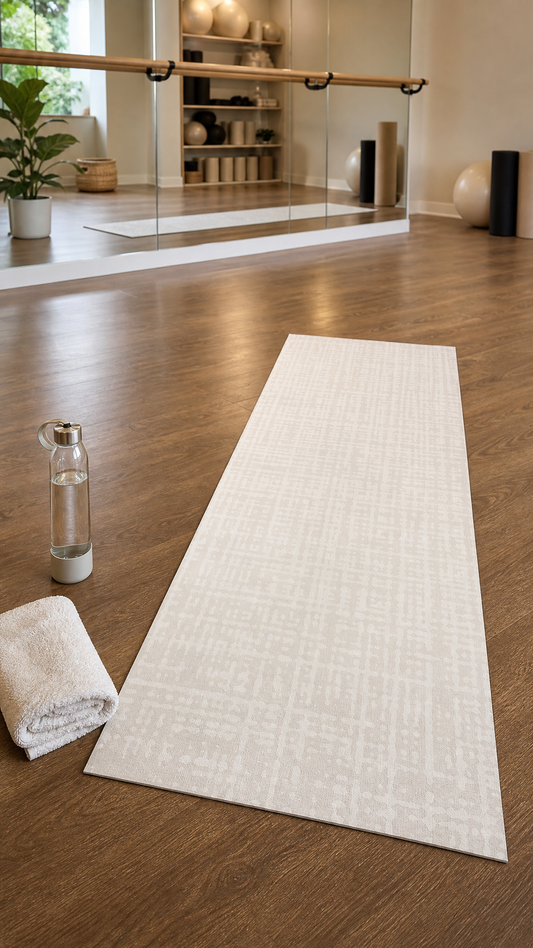
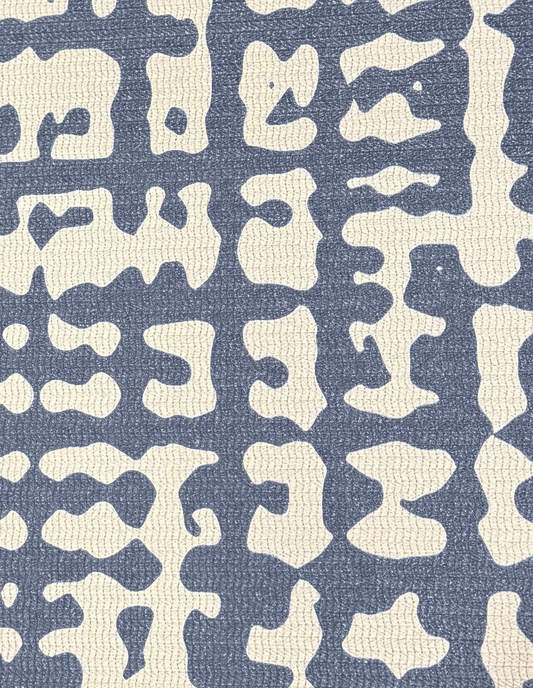
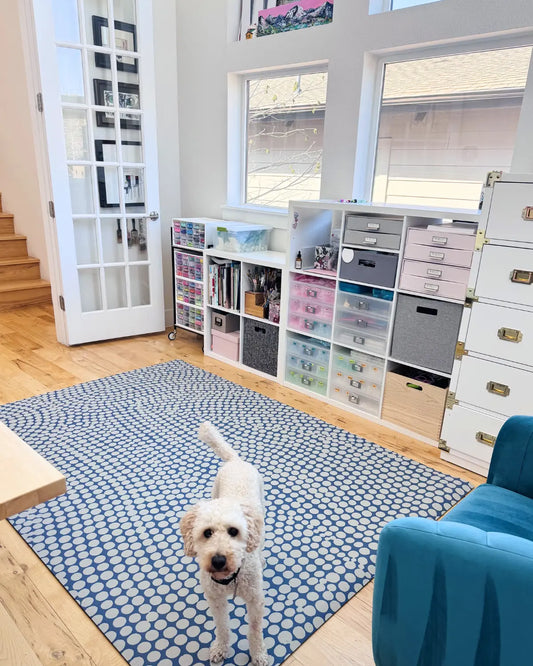
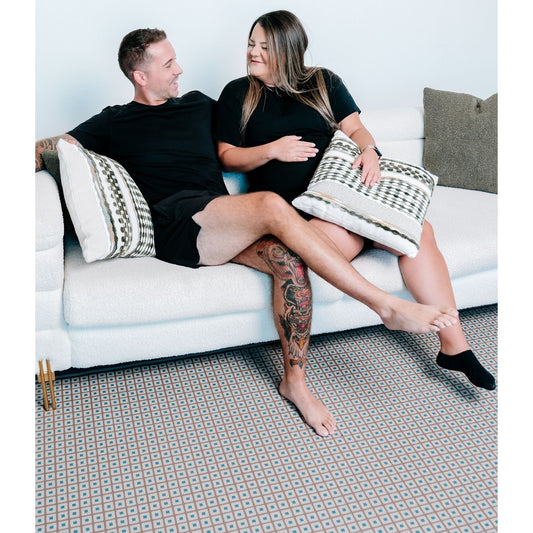
For home Pilates specifically, the Swankymat Studio Mat is the most direct fit. Sized at 26 by 71 inches in the traditional studio class shape, it rolls up between sessions, works in any room, and provides the 6mm cushion the mat sequence requires. Browse the Studio Mats collection for the pattern options.
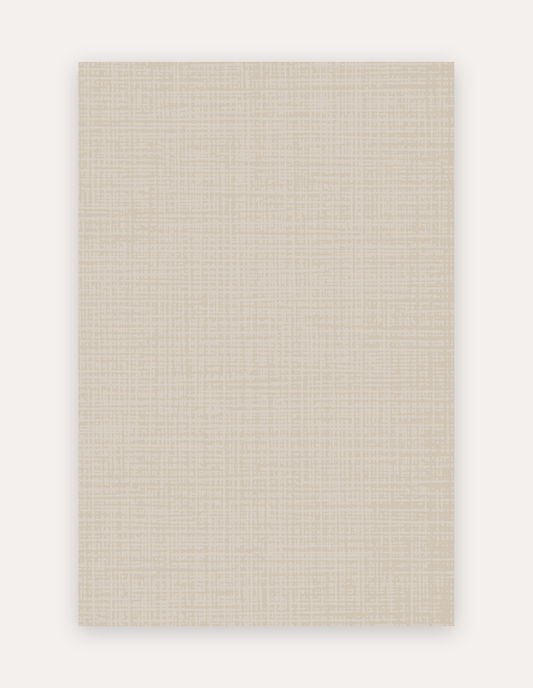
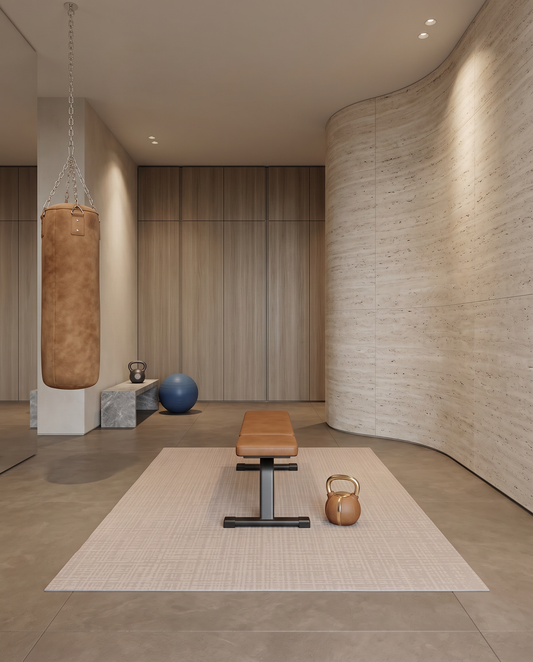
For practitioners who want the mat to double as a permanent floor surface for other movement types (yoga, floor stretching, mobility, floor play with kids), the Oversized 5x7 or 6x9 covers Pilates and every other floor practice on the same surface. For more on that decision, the post on 5x7 vs 6x9 sizing walks through when each is the right call.