

How to Work Out at Home Without Annoying Your Downstairs Neighbor

Working out in an apartment comes with a particular kind of guilt. Every jump, every dropped weight, every burpee lands on someone else's ceiling. You want to move, but you don't want a passive-aggressive note under your door or a knock from the neighbor below. The good news is that an effective home workout in a small apartment doesn't have to be loud, and with a few adjustments you can train hard while keeping the peace. Here's how to build a routine that respects the walls and floors around you without watering down the results.
Why apartments amplify everything
Sound and impact travel through floors and shared walls far more than most people realize. There are actually two things happening. Airborne sound is the noise that travels through the air, like music or a grunt. Impact noise is the thud that travels through the structure itself when something hits the floor, and it's the bigger culprit in apartments. A jump that feels minor to you can land as a real thump in the unit below, because the building carries it straight down. Hard floors make it worse, turning every footfall and dropped dumbbell into transmitted noise. The fix is partly about what you do and partly about what you do it on.
Quieter ways to train
- Swap jumps for low-impact versions. Step back instead of jumping back in a burpee. March or step side to side instead of doing jumping jacks. You keep the heart rate and lose the thud.
- Lean into strength and resistance. Resistance bands, bodyweight work, and slow controlled dumbbell movements are nearly silent and seriously effective. A band-based session can be as challenging as you want with almost no noise.
- Go slow on purpose. Controlled, slower reps, sometimes called tempo training, build more strength and stability than explosive ones while making far less noise. Lower under control instead of dropping.
- Mind your timing. Save anything with even mild impact for daytime or early-evening hours rather than early morning or late night, when noise carries most and patience runs thin.
- Set weights down, don't drop them. Obvious, but it's the single biggest source of complaints. Lower dumbbells and kettlebells to the floor with control every time.
- Choose quieter cardio. Shadowboxing, mobility flows, and band circuits raise your heart rate without the pounding of jump-heavy formats.
A sample quiet workout
If you want a template, try this. Warm up with five minutes of marching in place and arm circles. Then move through three rounds of a quiet circuit: bodyweight squats, slow push-ups, a glute bridge, a resistance-band row, and a plank hold, resting as needed between rounds. Finish with a few minutes of stretching. Nothing in that sequence sends a shock through the floor, and it still hits your legs, push, pull, and core. You can make it harder by slowing the tempo or adding band tension, not by adding impact.
The floor is doing more than you think
Here's the part most people overlook: the surface under you is your first line of defense against noise and impact. A cushioned floor absorbs the sound of footwork, softens the landing when you do move dynamically, and protects both your joints and the floor itself from dropped equipment. Working out directly on hardwood does the opposite, sending every movement straight through to your neighbor and straight up through your knees. Think of a good mat as the foundation that makes every other quiet-workout tactic work better, and as cheap insurance against both noise complaints and a damaged floor you'd have to answer for at move-out.
Protecting your floors and your deposit
Beyond noise, there's the question of wear. Dropped weights dent and scratch, and even careful training grinds at a finish over time. In a rental, that's your security deposit on the line. A large, cushioned mat creates a defined training zone that takes the abuse instead of the floor, which is a small thing that can save you a real expense later. It also keeps your equipment from sliding, which makes the whole session safer and, yes, quieter.
Train hard, keep the peace
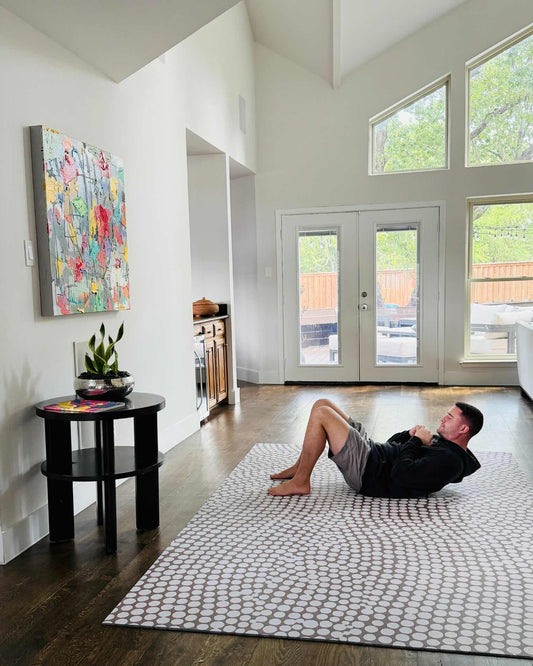
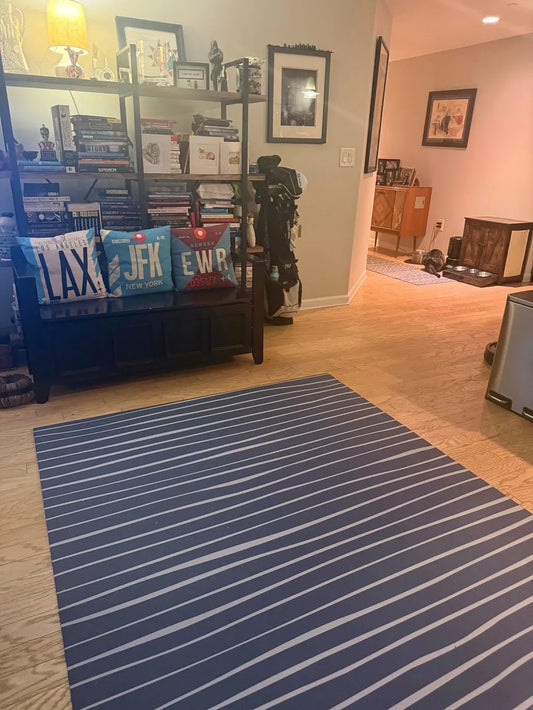
This is one of the most practical reasons people bring home a Swankymat. The 6mm cushion absorbs impact and dampens the sound of your workout, so step-backs, planks, and strength work stay between you and your living room. It's large enough for a full range of movement, made with non-toxic materials and Greenguard Gold certified inks, and waterproof and wipe-clean so post-workout sweat isn't a problem. It also protects your apartment's floors from weights and wear, which your security deposit will thank you for. And because it looks like a stylish part of the room rather than gym equipment, you can leave it out between sessions without your apartment feeling like a fitness studio. Quiet, effective, and easy to live with is exactly what apartment training should be.