

How to Build a Self-Care Practice That Actually Lasts

Most self-care practices fail for the same reason most fitness programs fail. They are designed for a life that is not the person's actual life. A 90-minute morning routine works for someone with a childless schedule and unlimited discretion over morning time. It does not work for most adults. When the practice does not fit the life, the practice ends within weeks.
A self-care practice that actually lasts is smaller, less product-driven, and more structural than most content suggests. This post covers the design principles that produce sustainable practice, the specific structure that tends to hold up across years, and how to protect the practice from becoming another obligation.
Why Most Self-Care Practices Fail
Three failure patterns show up consistently in self-care attempts that do not stick.
Over-scoped. A practice built around three hours of daily rituals cannot sustain past the first busy week. The scope has to fit the actual life, not the aspirational life.
Product-dependent. A practice that depends on specific products (a particular candle, a specific face oil, a subscription box) fails when the product runs out or the subscription lapses. The dependency creates friction and cost that eventually break the practice.
Emotionally motivated rather than structurally supported. A practice sustained by motivation lasts as long as motivation lasts, which for most people is a few weeks. A practice sustained by structural cues (physical space, calendar blocks, habit stacks) lasts indefinitely.
The Design Principles That Work
Five principles that produce self-care practices sustainable over years rather than weeks.
Short. Daily practices need to fit in windows that consistently exist. Fifteen to twenty minutes daily beats an hour weekly on almost every outcome. Building the practice to fit the smaller window produces both immediate participation and long-term durability.
Structural rather than motivational. The practice needs an environmental or scheduled cue. A mat on the floor is a cue. A calendar block is a cue. A habit stack anchored to an existing routine is a cue. Nothing that depends on remembering to do the practice each day tends to hold up.
Free or nearly so. Practices with real ongoing cost tend to fail during any budget-conscious month. The practices with the strongest evidence for actual impact are also the cheapest: movement, sleep consistency, time outdoors, real meals, in-person connection.
Boundaried. The practice happens in a specific space and a specific window. Boundless self-care tends to become self-care that never happens. A specific corner of the home, a specific twenty minutes of the day, a specific weekly commitment.
Unglamorous. The practices that actually work tend not to be photogenic. Fifteen minutes of stretching on a Tuesday morning does not read as content. It does the work.
A Specific Structure That Holds Up
The structure below has produced sustainable self-care practice for a range of adults across years. Adjust the specifics; keep the structure.
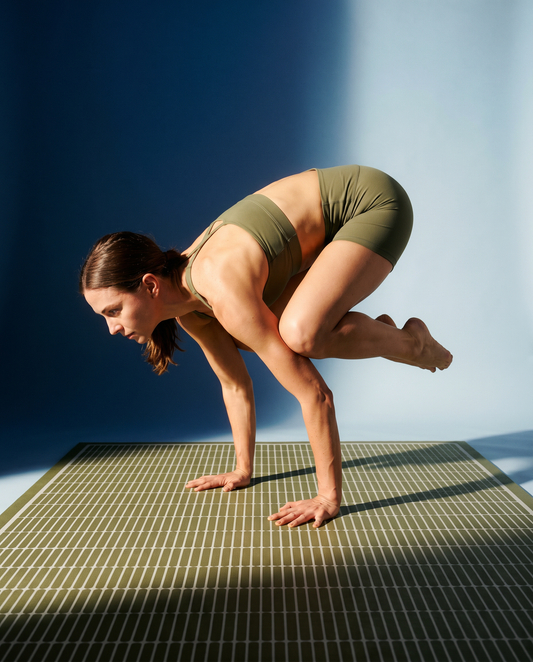
Morning (20 minutes). Anchor: waking. Practice: fifteen minutes of movement on the mat, five minutes of stillness or coffee before checking the phone. Physical cue: the mat on the floor at the foot of the bed or in a corner of the living room.
Midday (5 minutes). Anchor: lunch break. Practice: a short walk outside, or five minutes of stretching if outside is not an option. Physical cue: leaving the desk deliberately at a specific time.
Evening (15 minutes). Anchor: end of workday. Practice: any one of the following. A wind-down walk. Ten minutes of stretching. A conversation with a family member or friend. Reading a physical book. Physical cue: closing the laptop and going somewhere else in the house.
Weekend (30 minutes on Sunday). Anchor: Sunday morning. Practice: a longer restorative session, planning the coming week loosely, and time outside. Physical cue: Sunday morning coffee.
That is the full practice. Everything else is optional layer.
How to Start
Start with one anchor rather than four. The morning window is usually the highest-leverage starting point. Build only the morning practice for two weeks. Once it feels automatic, add the midday walk. After four weeks, add the evening piece. The weekend piece comes last.
The order matters because each element needs to become automatic before the next one is added. Trying to install all four simultaneously produces the same failure pattern as trying to install a full 90-minute routine on day one.
The Boundary Between Practice and Obligation
The single failure mode that surprises most people is when the self-care practice itself becomes another obligation that produces stress. Missing a day feels like failure. The practice becomes a source of guilt rather than support.
The boundary between practice and obligation is protected by three rules. Missing days do not count against the practice; only patterns do. The specific movements or minutes are flexible; the anchor and window are not. The practice serves you rather than the reverse; when it stops doing that, it needs to be adjusted rather than defended.
The Physical Setup
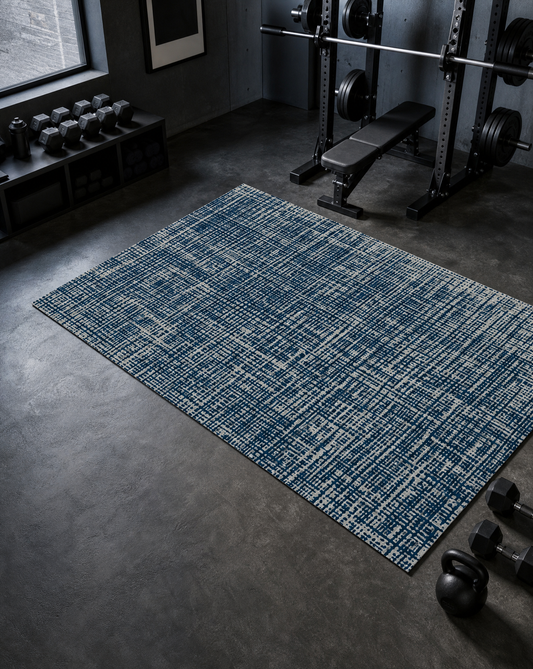
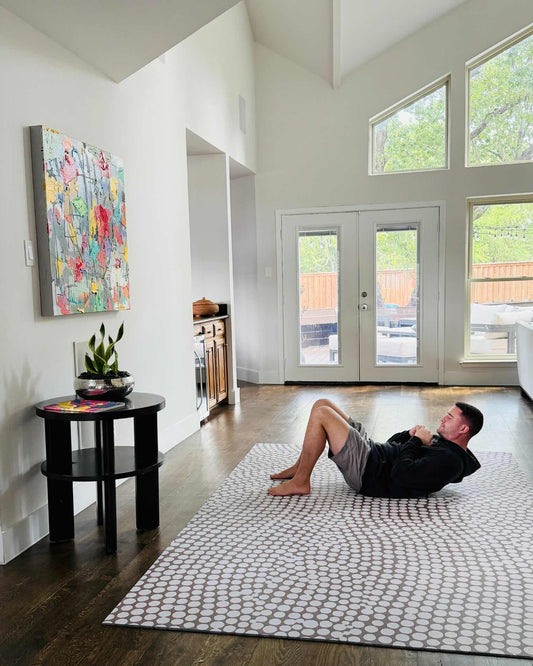
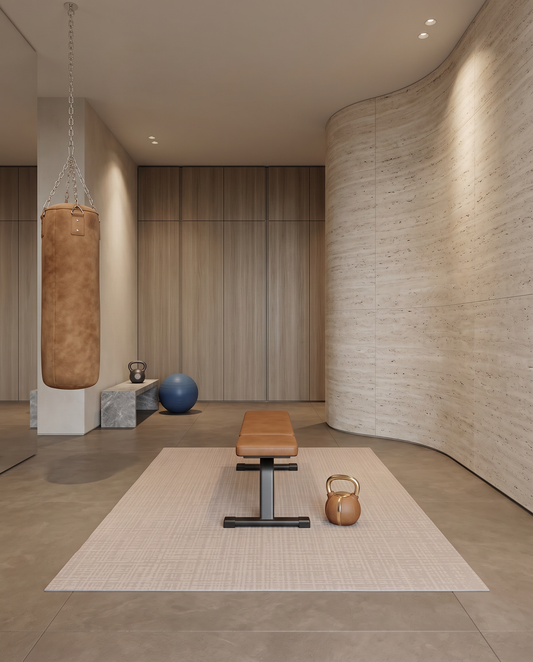
The single infrastructure decision that most affects the long-term durability of a self-care practice is the physical space it happens in. A mat that lives on the floor as part of the room provides the environmental cue that the practice depends on. A mat rolled in a closet does not.
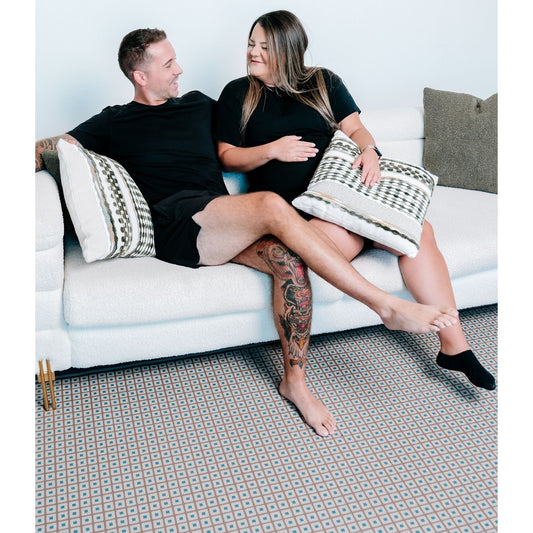
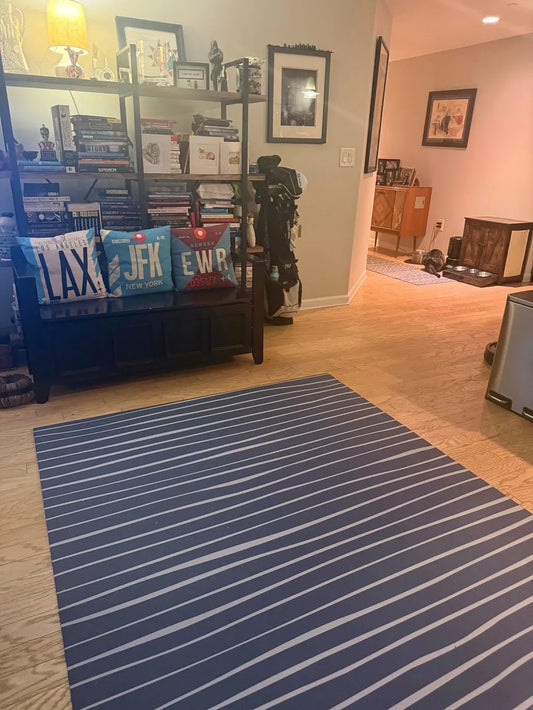
Swankymat is calibrated for this exact role. Non-toxic high-density foam with 6mm of supportive cushion, a waterproof wipe-clean surface, and Greenguard Gold certified inks. Designed to live on the floor permanently in patterns that read as area rugs rather than as gym gear. Browse the neutral mats collection for the palettes that fit a designed home.
For the shorter daily anchor specifically, the post on movement microhabits covers the five-minute practice. For the surrounding day, the post on simple wellness at home covers the broader context.